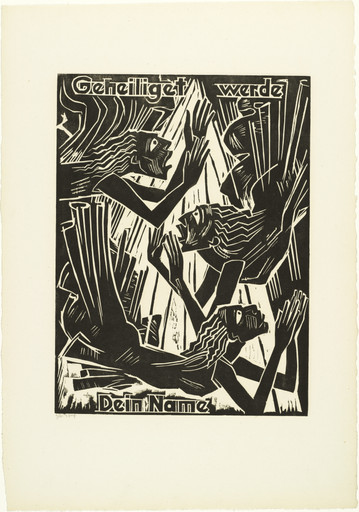
In paintings, drawings, and prints, Otto Dix portrayed the corruption and social apathy of German society after World War I with harsh, critical realism. Completing some three hundred prints during his lifetime, he experimented extensively with etching, lithography, and woodcut, making his most significant printed work during the early 1920s in response to the horror of the war and its aftermath.
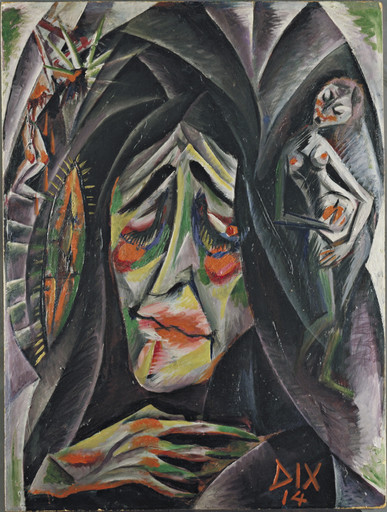
In 1909 Dix moved to Dresden to study art. At the onset of World War I he volunteered to serve as a machine gunner and suffered serious wounds in front-line advances through Belgium and France. When he returned to Dresden to resume his studies, Dix joined a group of young radical Expressionists and also had contact with Dadaists, whose anarchism encouraged his growing nihilism. Directing a critical eye toward German society, Dix became preoccupied with subjects like veterans and urban decay, as well as prostitution and the destructive power of sex. In Syphilitic, evil temptation literally fills a man's head, as he suffers from the madness brought on by this disease.
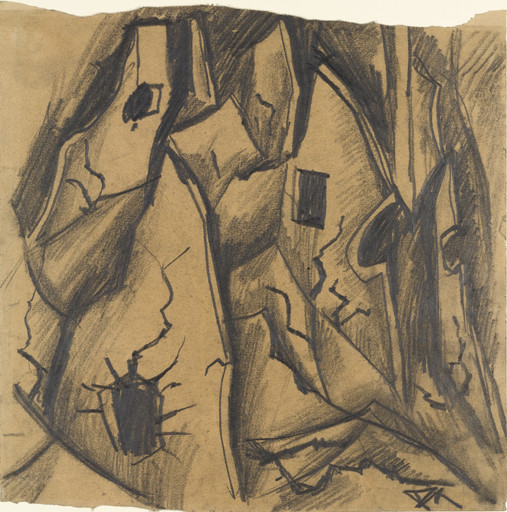
In the early 1920s, Dix was encouraged by art dealer Karl Nierendorf to make prints for broad distribution. He turned to illustrating the devastation of the trench warfare he had experienced, creating an epic series of fifty intaglios that have been compared to Goya's The Disasters of War. The imagery in this series differs radically from the 1916–18 Futurist-influenced sketches he had made at the front, when, deeply interested in the philosophy of Friedrich Nietzsche, he enthusiastically embraced war as an inevitable part of life. In these later images, Dix portrays the destructive effects of war, including rotting corpses and bombed cities and landscapes, as well as its dehumanizing impact. In Storm Troops Advance under Gas Attack, soldiers are shown as menacing ghouls whose depravity is emphasized by terrifying gas masks.
Originally from TextEntryID 69314 (TextTypeID 127)
The Disasters of War (see page 18)
an essay by Harper Montgomery, in Deborah Wye, Artists and Prints: Masterworks from The Museum of Modern Art, New York: The Museum of Modern Art, 2004, p. 92.
Explore more
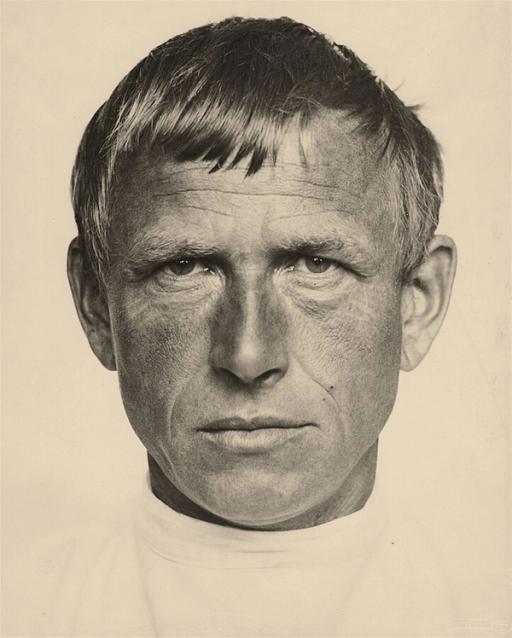
Otto Dix
German, 1891–1969 94 works onlineGerman artist Wilhelm Heinrich Otto Dix is best known for paintings and prints filled with anguished, exploited human figures representing the turmoil of his time.
Learn more →

From MoMA Design Store


Installation views
We have identified this work in the following photos from our exhibition history.
Provenance Research Project
This work is included in the Provenance Research Project, which investigates the ownership history of works in MoMA's collection.
Harry Lunn, Graphics International, Washington, D.C .; sold to The Museum of Modern Art, New York, 1974
Provenance research is a work in progress, and is frequently updated with new information. If you have any questions or information to provide about the listed works, please email [email protected] or write to:
Provenance Research Project
The Museum of Modern Art
11 West 53 Street
New York, NY 10019
Licensing
Artwork or archival images
If you would like to reproduce an image of a work of art in MoMA's collection, or an image of a MoMA publication or archival material (including installation views, checklists, and press releases), please contact Art Resource (publication in North America) or Scala Archives (publication in all other geographic locations).
Audio and film clips
MoMA licenses archival audio and select out of copyright film clips from our film collection. At this time, MoMA produced video cannot be licensed by MoMA/Scala. All requests to license archival audio or out of copyright film clips should be addressed to Scala Archives at [email protected]. Motion picture film stills cannot be licensed by MoMA/Scala. For access to motion picture film stills for research purposes, please contact the Film Study Center at [email protected]. For more information about film loans and our Circulating Film and Video Library, please visit Circulating Film and Video Library.
Text from a publication or the archives
If you would like to reproduce text from a MoMA publication, please email [email protected]. If you would like to publish text from MoMA's archival materials, please fill out this permission form and send to [email protected].
Feedback
This record is a work in progress. If you have additional information or spotted an error, please fill out this feedback form.