Photographs made from above or below or at odd angles are all around us today—in magazine and television ads, for example—but for Rodchenko and his contemporaries they were a fresh discovery. To Rodchenko they represented freedom and modernity because they invited people to see and think about familiar things in new ways. This courtyard certainly was familiar to Rodchenko; he made the picture from the balcony of his own Moscow apartment.
The photograph strikes a perfect balance between plunging depth and a flat pattern—two darker forms enclosing a lighter one—and between this simple pattern and the many irregular details that enliven it. Rodchenko's control over the image is suggested by his particular point of view: to keep the balcony below him from intruding its dark form into the lighter courtyard, he was obliged to lean rather precariously over the railing of his own balcony.
The Museum of Modern Art, MoMA Highlights, New York: The Museum of Modern Art, revised 2004, originally published 1999, p. 111.
Explore more
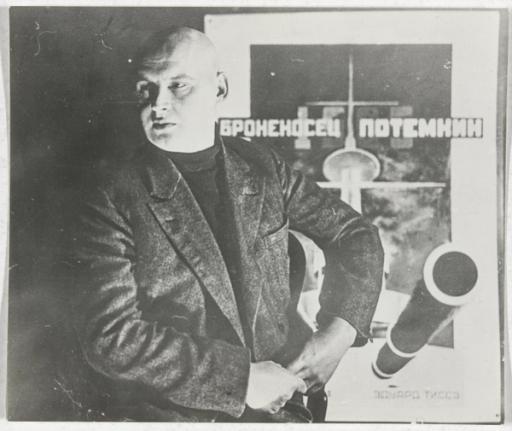
Aleksandr Rodchenko
Russian, 1891–1956 246 works onlineWhen The Museum of Modern Art’s first director, Alfred H. Barr, Jr. , met Aleksandr Rodchenko on his trip to Moscow in 1927—one of the first times an Anglophone art historian had visited the Soviet Union in the years since the Russian Revolution—he wrote, “Rodchenko showed us an appalling variety of things— Suprematist paintings (preceded by the earliest geometrical things I’ve seen, 1915, done with compass)— woodcuts , linoleum cuts , posters , book designs, photographs , kino sets, etc….
Learn more →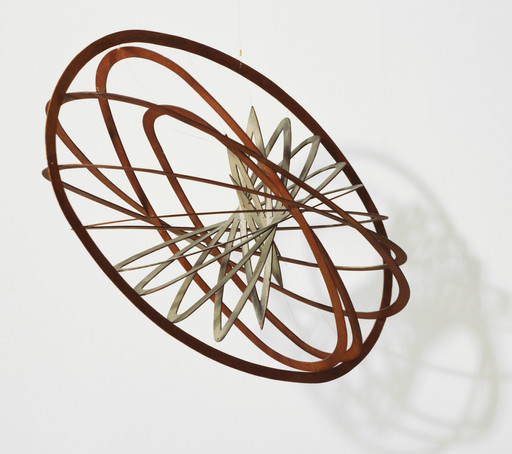


From MoMA Design Store


Installation views
We have identified this work in the following photos from our exhibition history.
Licensing
Artwork or archival images
If you would like to reproduce an image of a work of art in MoMA's collection, or an image of a MoMA publication or archival material (including installation views, checklists, and press releases), please contact Art Resource (publication in North America) or Scala Archives (publication in all other geographic locations).
Audio and film clips
MoMA licenses archival audio and select out of copyright film clips from our film collection. At this time, MoMA produced video cannot be licensed by MoMA/Scala. All requests to license archival audio or out of copyright film clips should be addressed to Scala Archives at [email protected]. Motion picture film stills cannot be licensed by MoMA/Scala. For access to motion picture film stills for research purposes, please contact the Film Study Center at [email protected]. For more information about film loans and our Circulating Film and Video Library, please visit Circulating Film and Video Library.
Text from a publication or the archives
If you would like to reproduce text from a MoMA publication, please email [email protected]. If you would like to publish text from MoMA's archival materials, please fill out this permission form and send to [email protected].
Feedback
This record is a work in progress. If you have additional information or spotted an error, please fill out this feedback form.