Early in 1922, after leaving New York for Paris, Man Ray began to experiment with making camera-less “photos,” placing found objects upon photosensitized paper and exposing the arrangements to light. The immediacy of this process did away with the drawn-out steps of darkroom photography, addressing the goal Man Ray outlined when he wrote, “I am trying to make my photography automatic—to use my camera as I would a typewriter.” He nicknamed the results of his experiments “rayographs,” a combination of his name and the word “photograph.” This rayograph toys with the role of film in photography—instead of developing the film to create a photo in the traditional manner, Man Ray unspooled the roll across the light-sensitive paper to create a spiraling form.
2019
Kids label from 2024
Did you know you can make a photograph without using a camera? Man Ray made this picture by placing objects on light-sensitive paper, then shining a bright light over them. The shadows cast by each object are white and light gray. The artist called these images “rayographs,” naming them after himself. What objects can you recognize here?
2024
Explore more
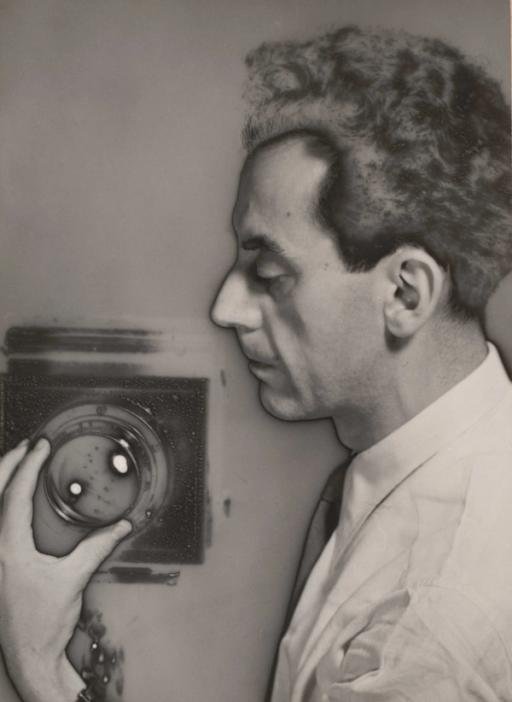
Man Ray (Emmanuel Radnitzky)
American, 1890–1976 193 works onlineSo enthused Man Ray (born Emmanuel Radnitzky) in 1922, shortly after his first experiments with camera-less photography. He remains well known for these images, commonly called photograms but which he dubbed “rayographs” in a punning combination of his own name and the word “photograph.
Learn more →
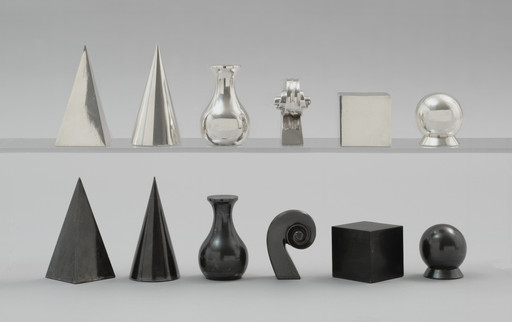

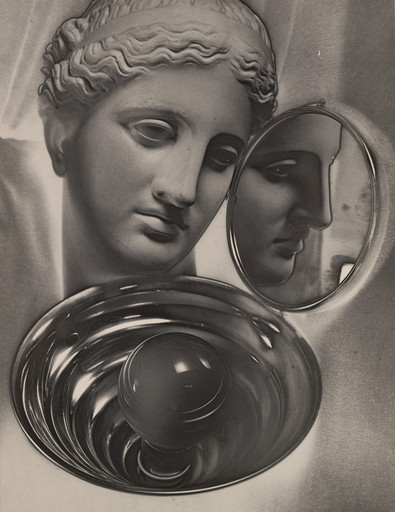

From MoMA Design Store


Installation views
We have identified this work in the following photos from our exhibition history.
Licensing
Artwork or archival images
If you would like to reproduce an image of a work of art in MoMA's collection, or an image of a MoMA publication or archival material (including installation views, checklists, and press releases), please contact Art Resource (publication in North America) or Scala Archives (publication in all other geographic locations).
Audio and film clips
MoMA licenses archival audio and select out of copyright film clips from our film collection. At this time, MoMA produced video cannot be licensed by MoMA/Scala. All requests to license archival audio or out of copyright film clips should be addressed to Scala Archives at [email protected]. Motion picture film stills cannot be licensed by MoMA/Scala. For access to motion picture film stills for research purposes, please contact the Film Study Center at [email protected]. For more information about film loans and our Circulating Film and Video Library, please visit Circulating Film and Video Library.
Text from a publication or the archives
If you would like to reproduce text from a MoMA publication, please email [email protected]. If you would like to publish text from MoMA's archival materials, please fill out this permission form and send to [email protected].
Feedback
This record is a work in progress. If you have additional information or spotted an error, please fill out this feedback form.