Lacquered wood and metal rods
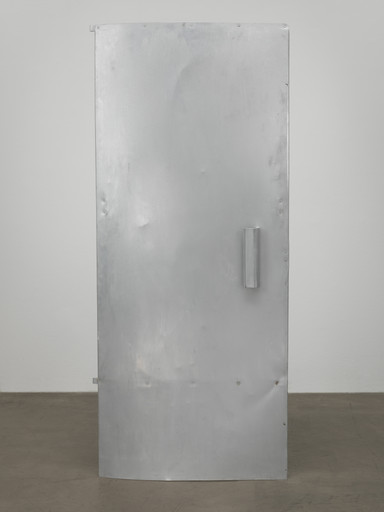
This freestanding lacquered wood screen functions both as a movable wall to divide living spaces and as an abstract modern sculpture composed of solid shapes and empty space. “Art is not just the expression of abstract relationships,” Gray believed, “it must also encapsulate the most tangible relations, the most intimate needs of subjective life.” Working in Paris after World War I, Gray popularized the meticulous art of lacquered furnishings, which aligned with the contemporary taste for imported materials, such as those used in Japanese decorative arts.
2025
Gallery label from 2019
“Art is not just the expression of abstract relationships,” Gray has written, “It must also encapsulate the most tangible relations, the most intimate needs of subjective life.” Consistent with these aims, this freestanding lacquered wood screen functions both as a movable wall to divide space and as an abstract modern sculpture composed of solids and voids. Working in Paris after World War I, Gray popularized and perfected the meticulous art of lacquered furnishings, which struck a chord with the contemporary taste for exotic materials, especially those used in Japanese decorative arts.
2019
Publication excerpt from MoMA Highlights: 375 Works from The Museum of Modern Art, New York (New York: The Museum of Modern Art, 2019)
This black lacquered-wood screen, made of seven horizontal rows of panels joined by thin vertical metal rods, is not only a movable wall but also a sculpture composed of solids and voids with an underlying Cubist influence. It is among the most striking and elegant creations by Gray, who was one of the leading designers working in Paris after World War I. Gray popularized and perfected the art of lacquered furnishings, and her preference for this meticulous finish reveals a predilection for exotic materials, in particular those used in Japanese decorative arts.
Based on a larger version that Gray designed in 1922 for the Paris apartment of Madame Mathieu-Lévy, the owner of an exclusive millinery shop, the freestanding screen can be seen as a bridge between furniture, architecture, and sculpture. Gray also was an accomplished textile designer and architect. Her first major architectural project, the E-1027 House in Roquebrune-Cap-Martin, France, was composed of multifunctional rooms and furniture, and was much admired by the Swiss-French architect Le Corbusier. The flexibility inherent in that project was a continuation of Gray’s primary fascination in her earlier designs: pivoting parts and movable elements that transform both object and space.
MoMA Highlights: 375 Works from The Museum of Modern Art, New York (New York: The Museum of Modern Art, 2019)
Gallery label from Designing Modern Women 1890–1990 , October 5, 2013–October 1, 2014
This lacquered wood screen is composed of several horizontal rows of panels joined by thin vertical metal rods. It functions not only as a movable wall that demarcates space but also as a sculpture composed of solids and voids. Gray, one of the leading designers working in Paris after World War I, popularized and perfected the art of lacquered furnishings. Her preference for the meticulous finish of lacquer reveals the contemporary taste for materials used in Japanese decorative arts.
Designing Modern Women 1890–1990, October 5, 2013–October 1, 2014
Explore more
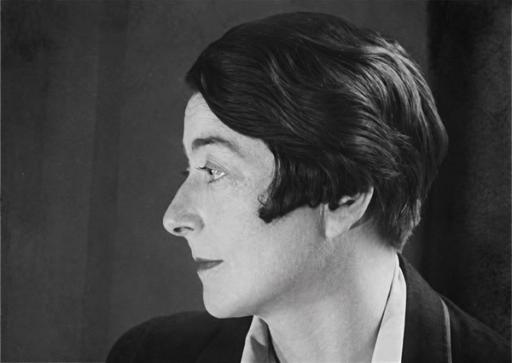
Eileen Gray
Anglo-Irish, 1879–1976 16 works onlineLacquer, leather, cork, steel, gold leaf, wool, incandescent tubes. These are just a few of the materials you might encounter when stepping into an interior created by Anglo-Irish modern designer Eileen Gray.
Learn more →
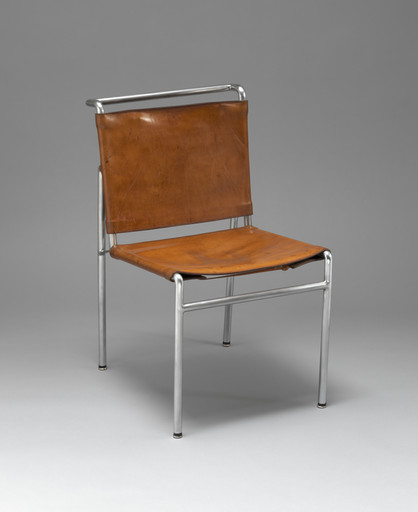
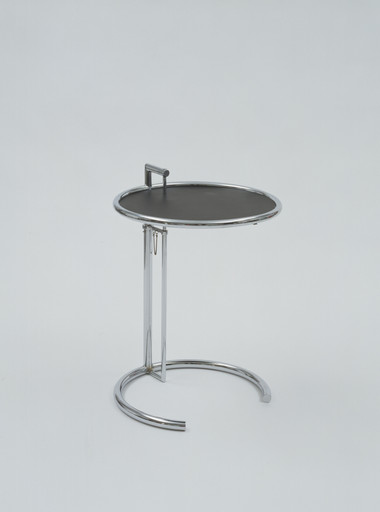
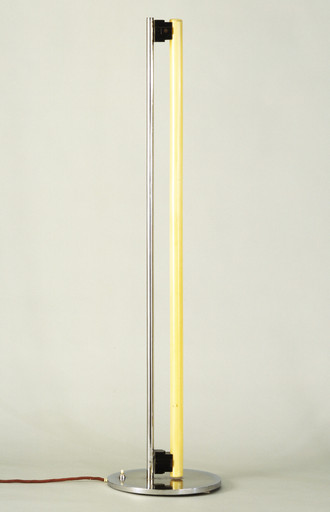

The New Spirit in Paris
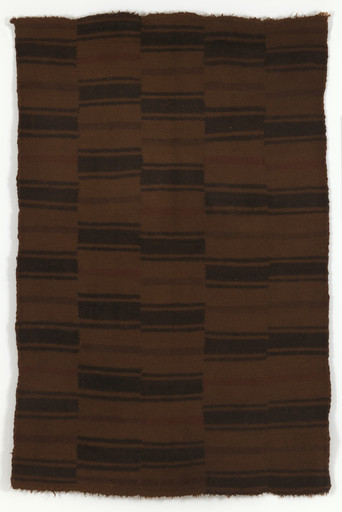
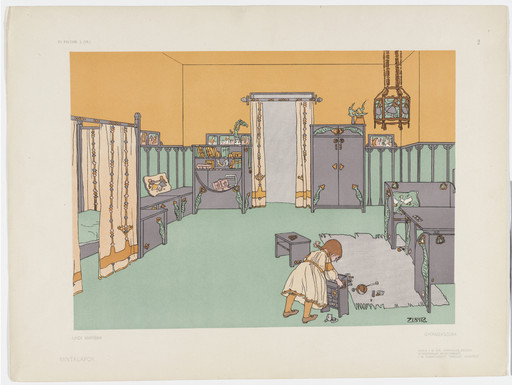
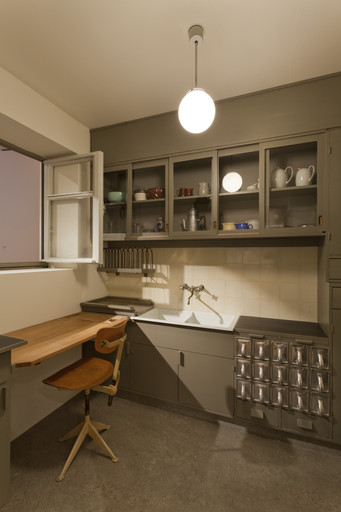
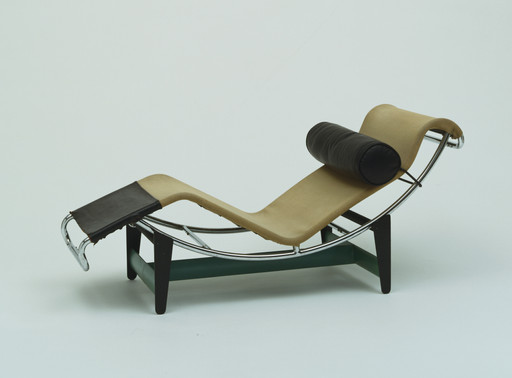
Gallery 513This wide-ranging list, which appeared on the cover of the inaugural issue of the journal L’Esprit nouveau, in 1920, summarizes the energetic, boundary-crossing spirit of Paris between the two world wars.
Learn more →



Audio
Audio from the playlist Collection 1880s–1940s
From MoMA Design Store


Installation views
We have identified this work in the following photos from our exhibition history.
Licensing
Artwork or archival images
If you would like to reproduce an image of a work of art in MoMA's collection, or an image of a MoMA publication or archival material (including installation views, checklists, and press releases), please contact Art Resource (publication in North America) or Scala Archives (publication in all other geographic locations).
Audio and film clips
MoMA licenses archival audio and select out of copyright film clips from our film collection. At this time, MoMA produced video cannot be licensed by MoMA/Scala. All requests to license archival audio or out of copyright film clips should be addressed to Scala Archives at [email protected]. Motion picture film stills cannot be licensed by MoMA/Scala. For access to motion picture film stills for research purposes, please contact the Film Study Center at [email protected]. For more information about film loans and our Circulating Film and Video Library, please visit Circulating Film and Video Library.
Text from a publication or the archives
If you would like to reproduce text from a MoMA publication, please email [email protected]. If you would like to publish text from MoMA's archival materials, please fill out this permission form and send to [email protected].
Feedback
This record is a work in progress. If you have additional information or spotted an error, please fill out this feedback form.