Oil and enamel paint on cardboard
Not on view
This work delivers a barrage of puns, transforming the language of fine art into one far less refined. The inscription at the top, Portrait a l’huile de Ricin! (Portrait with castor oil), connects castor oil, a foul-smelling substance, with l’huile de lin (linseed oil), the binder used in oil paint. Another inscription reads Ratelier d’artiste (False teeth of the artist), a play on atelier d’artiste (artist’s studio). Peinture crocodile (Crocodile painting) associates art with the hypocrisy of crocodile tears.
2011.
Explore more
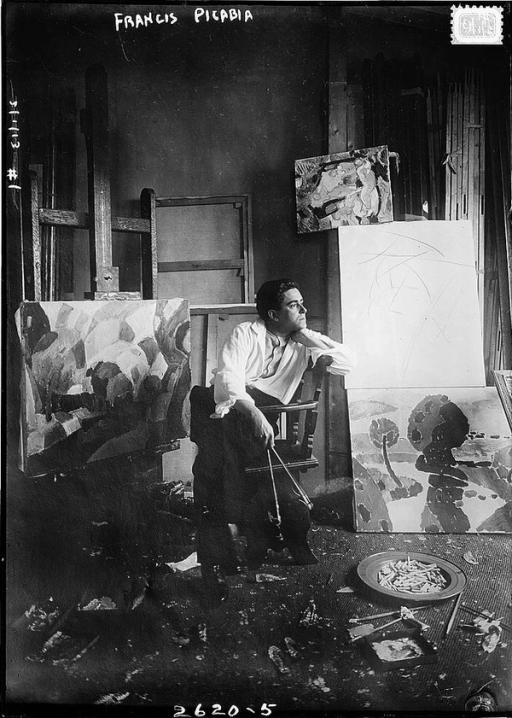
Francis Picabia
French, 1879–1953 79 works onlineIn 1922, Francis Picabia wrote, “If you want to have clean ideas, change them like shirts.” Throughout his audacious and inventive career, which spanned almost 50 years and encompassed painting, performance, poetry, publishing, and film, Picabia lived out that prescription.
Learn more →

![Francis Picabia. Dances at the Spring [II]](https://www.moma.org/media/W1siZiIsIjI0MzcwNiJdLFsicCIsImNvbnZlcnQiLCItcXVhbGl0eSA5MCAtcmVzaXplIDUxMng1MTJcdTAwM2UiXV0.jpg?sha=8ef3abbd803c7016)
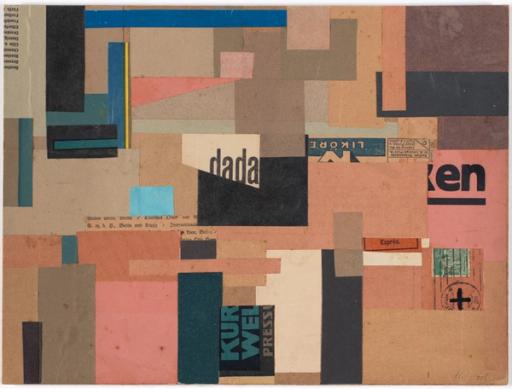
Dada
An artistic and literary movement formed in response to the disasters of World War I (1914–18) and to an emerging modern media and machine culture.
Learn more →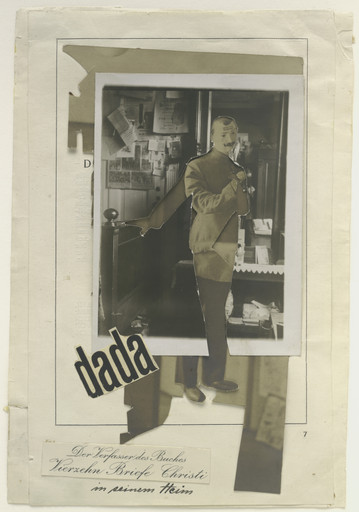


From MoMA Design Store


Installation views
We have identified this work in the following photos from our exhibition history.
Provenance Research Project
This work is included in the Provenance Research Project, which investigates the ownership history of works in MoMA's collection.
Francis Picabia, Paris.
Gabrielle Buffet-Picabia (the painter's wife).
1930s - 1966, Jean (Hans) Arp (1886-1966), acquired by exchange with Gabrielle Buffet-Picabia.
1966 - 1968, Estate of Jean Arp / Marguerite Hagenbach Arp (Jean Arp's widow), Clamart, France, and Locarno-Solduno, Switzerland, inherited from Jean Arp.
1968, The Museum of Modern Art, New York, purchased from Madame Jean Arp.
Provenance research is a work in progress, and is frequently updated with new information. If you have any questions or information to provide about the listed works, please email [email protected] or write to:
Provenance Research Project
The Museum of Modern Art
11 West 53 Street
New York, NY 10019
Licensing
Artwork or archival images
If you would like to reproduce an image of a work of art in MoMA's collection, or an image of a MoMA publication or archival material (including installation views, checklists, and press releases), please contact Art Resource (publication in North America) or Scala Archives (publication in all other geographic locations).
Audio and film clips
MoMA licenses archival audio and select out of copyright film clips from our film collection. At this time, MoMA produced video cannot be licensed by MoMA/Scala. All requests to license archival audio or out of copyright film clips should be addressed to Scala Archives at [email protected]. Motion picture film stills cannot be licensed by MoMA/Scala. For access to motion picture film stills for research purposes, please contact the Film Study Center at [email protected]. For more information about film loans and our Circulating Film and Video Library, please visit Circulating Film and Video Library.
Text from a publication or the archives
If you would like to reproduce text from a MoMA publication, please email [email protected]. If you would like to publish text from MoMA's archival materials, please fill out this permission form and send to [email protected].
Feedback
This record is a work in progress. If you have additional information or spotted an error, please fill out this feedback form.