Not on view
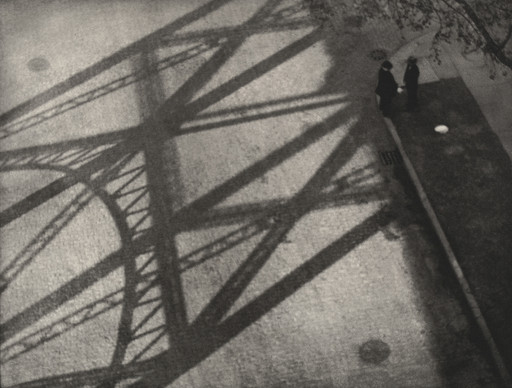
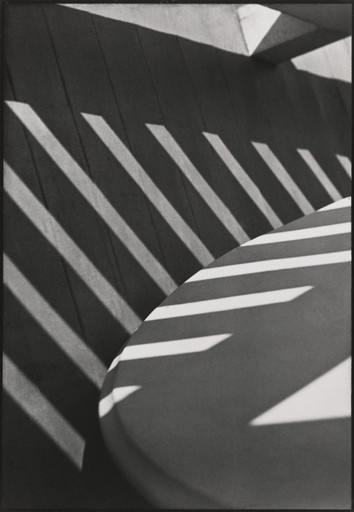
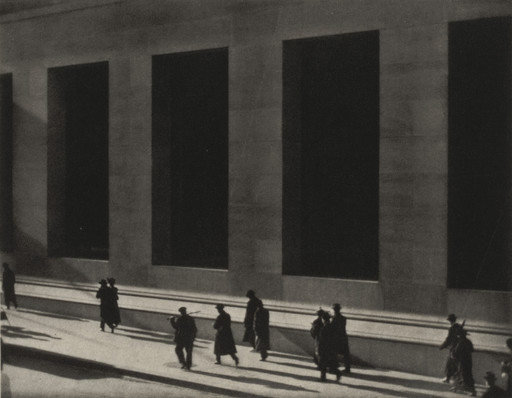
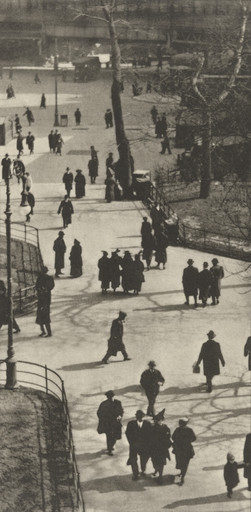
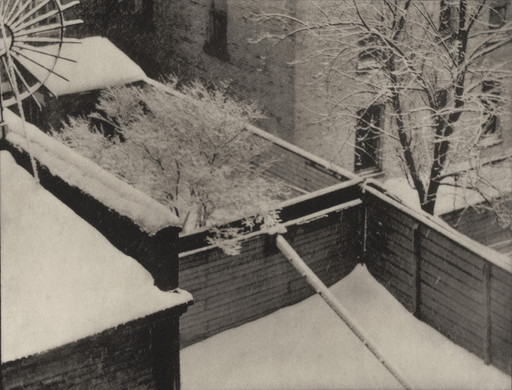
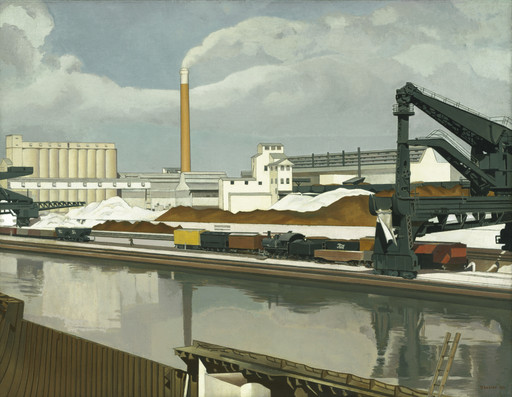
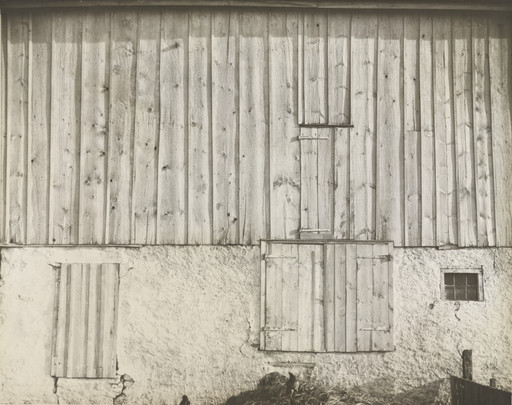
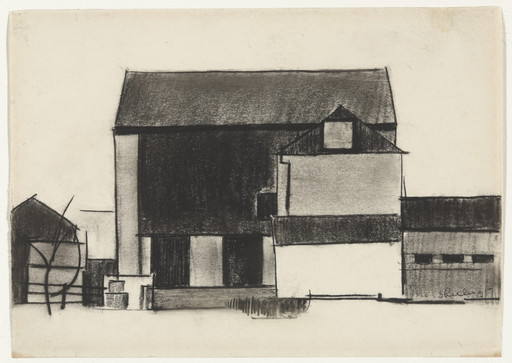
In 1920, photographer and painter Charles Sheeler asked photographer Paul Strand to collaborate on a filmed portrait of Manhattan. Both artists would come to be known, in part, for their documentation of urban and industrial America in work that emphasized the bold geometry of its buildings and cityscapes. The film they made, titled Manhatta after Walt Whitman’s poem, “Mannahatta,” which inspired it, echoes the form and spirit of the poet’s exalting verse. Structured more as a series of vignettes than as a linear narrative, it is cited as the first avant-garde film to have been made in America.
But for all its art, Manhatta is also documentary. It leads viewers through a day in the life of Manhattan, introduced by lines from one of Whitman’s many odes to his beloved home: “City of the world (for all races are here) / City of tall facades of marble and iron, / Proud and passionate city.” The film opens onto a view of New York Harbor, the camera moving slowly toward the shadowed mouth of the Staten Island Ferry terminal squat against a wall of buildings. It cuts to a shot of the iconic Brooklyn Bridge before returning again to the terminal, this time for a bird’s-eye-view of commuters massed on a docking ferry’s decks, then spilling forth into the city to begin their workday.
A silent-era film, Manhatta includes intertitles. But unlike other silent films, whose intertitles communicated plot explanations or dialogue, here they hold lines of Whitman’s verse. The poet’s lines relate to the scenes beside which they appear, but they are impressionistic, lilting, fragmentary, much like the film itself. Shots of bustling streets and sidewalks give way to thickets of raised and rising skyscrapers, a jigsaw puzzle of rooftops, steamships, trains, and other examples of human ingenuity—the mighty size of these industrial inventions dwarfing their inventors.
Manhatta ends at the close of the day. Sheeler and Strand turn the camera to the sky, lingering on the sunset over The City That Never Sleeps.
Gallery label from The Shaping of New Visions: Photography, Film, Photobook , April 16, 2012–April 29, 2013.
In 1921, Sheeler and Strand collaborated to make Manhatta, considered to be the first American avant-garde film. Inspired by Walt Whitman's poem "Mannahatta," which is quoted in one of the intertitles, the film portrays life in New York City in sixty-five nonnarrative shots. The sequences display one epic day in Lower Manhattan, beginning with a ferry approaching the city in early morning and ending with a sunset view from a skyscraper. Shot from extreme camera angles, the film captures the dynamic qualities of the new metropolis.
The Shaping of New Visions: Photography, Film, Photobook, April 16, 2012–April 29, 2013.
Explore more

Audio
Audio from the playlist 1880–1950: Works from the Collection
Articles and videos
From MoMA Design Store


Installation views
We have identified this work in the following photos from our exhibition history.
Licensing
Artwork or archival images
If you would like to reproduce an image of a work of art in MoMA's collection, or an image of a MoMA publication or archival material (including installation views, checklists, and press releases), please contact Art Resource (publication in North America) or Scala Archives (publication in all other geographic locations).
Audio and film clips
MoMA licenses archival audio and select out of copyright film clips from our film collection. At this time, MoMA produced video cannot be licensed by MoMA/Scala. All requests to license archival audio or out of copyright film clips should be addressed to Scala Archives at [email protected]. Motion picture film stills cannot be licensed by MoMA/Scala. For access to motion picture film stills for research purposes, please contact the Film Study Center at [email protected]. For more information about film loans and our Circulating Film and Video Library, please visit Circulating Film and Video Library.
Text from a publication or the archives
If you would like to reproduce text from a MoMA publication, please email [email protected]. If you would like to publish text from MoMA's archival materials, please fill out this permission form and send to [email protected].
Feedback
This record is a work in progress. If you have additional information or spotted an error, please fill out this feedback form.