Acrylic and pressure-sensitive tape on cut-and-stapled paper
Not on view
The vibrant strips of color that appear in Thomas’s paintings and drawings, each made from clearly delineated brush marks, were often inspired by foliage moving in the light as seen through the window of the artist’s home, in Washington, DC. Although influenced by these constantly changing patterns and tones, the final compositions and color combinations arose from careful, exacting preparation. Thomas attached drawings like this one to her blank canvases as a compositional guide, a working tool for mapping her color choices. Made on multiple pieces of paper joined by tape and staples, the drawing reflects a process of development that allowed for movement and change.
Thomas’s joyous abstractions are the result of her lifelong engagement with visual art, but she did not begin exhibiting her work regularly until she was sixty years old. In 1924 she was the first student to receive a bachelor of science degree in fine arts from Howard University, and soon thereafter she began teaching art at Shaw Junior High School, where she would work for almost forty years. She retired in 1960 and had her first solo exhibition later that year. In 1972 she became the first black woman to have a solo exhibition at New York’s Whitney Museum of American Art.
MoMA Highlights: 375 Works from The Museum of Modern Art, New York (New York: The Museum of Modern Art, 2019)
Kids label from 2025
Somewhere over the rainbow . . . there is tape?
Notice that multiple sheets of paper make up this one artwork. Artist Alma Woodsey Thomas was a former art teacher. She used items you might find at school—such as tape and staples—to attach them. But first Thomas painted a rainbow of colors on each page using acrylic paint and a paintbrush.
Nature inspired this range of colors. What colors did you notice on your way to the museum today?
2025
Explore more
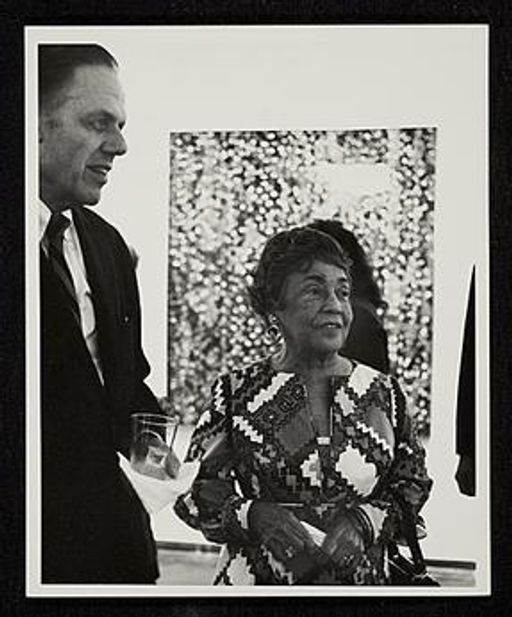
Alma Woodsey Thomas
American, 1891–1978 2 works onlineAlma Thomas’s career is as unlikely as any in [the] 20th-century [United States], and at the same time utterly reasonable.
Learn more →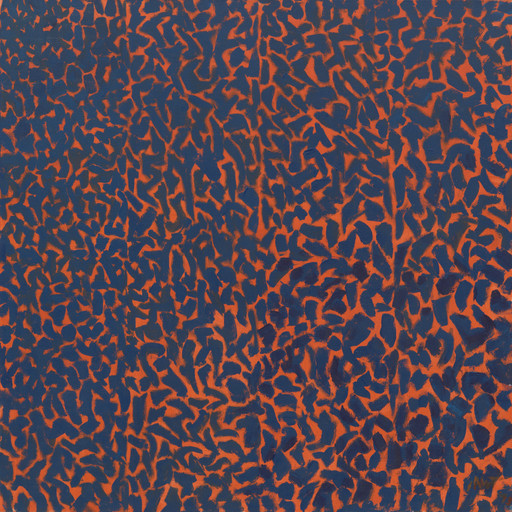

From MoMA Design Store


Installation views
We have identified this work in the following photos from our exhibition history.
Licensing
Artwork or archival images
If you would like to reproduce an image of a work of art in MoMA's collection, or an image of a MoMA publication or archival material (including installation views, checklists, and press releases), please contact Art Resource (publication in North America) or Scala Archives (publication in all other geographic locations).
Audio and film clips
MoMA licenses archival audio and select out of copyright film clips from our film collection. At this time, MoMA produced video cannot be licensed by MoMA/Scala. All requests to license archival audio or out of copyright film clips should be addressed to Scala Archives at [email protected]. Motion picture film stills cannot be licensed by MoMA/Scala. For access to motion picture film stills for research purposes, please contact the Film Study Center at [email protected]. For more information about film loans and our Circulating Film and Video Library, please visit Circulating Film and Video Library.
Text from a publication or the archives
If you would like to reproduce text from a MoMA publication, please email [email protected]. If you would like to publish text from MoMA's archival materials, please fill out this permission form and send to [email protected].
Feedback
This record is a work in progress. If you have additional information or spotted an error, please fill out this feedback form.