Untitled (Night Train) is one of a series of circular or semicircular sculptures that Hammons fashioned from liquor bottles collected from the streets and vacant lots of New York. The graceful arching ring of clear and green-tinted bottles is embedded in a circular pile of coal. Each element is emblematic: the bottles are those of the cheapest popular brands of alcohol in the late 1980s, Night Train and Thunderbird, and the coal reinforces the work’s allusion to trains, an image that figures prominently in African American culture and lore.
“Outrageously magical things happen when you mess around with a symbol,” Hammons has reflected. Since the 1960s, the artist’s many assemblages have engaged questions of African American identity, urban culture, and racial stereotypes through the use of evocative, frequently discarded materials such as hair clippings, paper bags, and basketballs. Often the works also represent pointed visual puns. Here, for example, the triangulation of materials and words—“Night Train” and coal—can be combined to form the name Coltrane, a salute to the renowned African American jazz saxophonist and composer, while the Thunderbird bottles allude to another great jazz saxophonist, Charlie “Bird” Parker.
MoMA Highlights: 375 Works from The Museum of Modern Art, New York (New York: The Museum of Modern Art, 2019)
Explore more
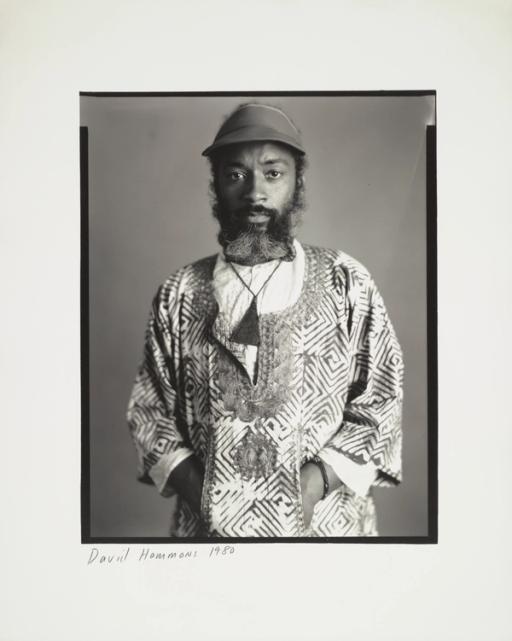
David Hammons
American, born 1943 21 works onlineDavid Hammons once commented that “outrageously magical things happen when you mess around with a symbol." For the past 50 years, Hammons has created a vocabulary of symbols from everyday life and messed around with them in the form of prints, drawings, performances, video, found-object sculptures, and paintings.
Learn more →

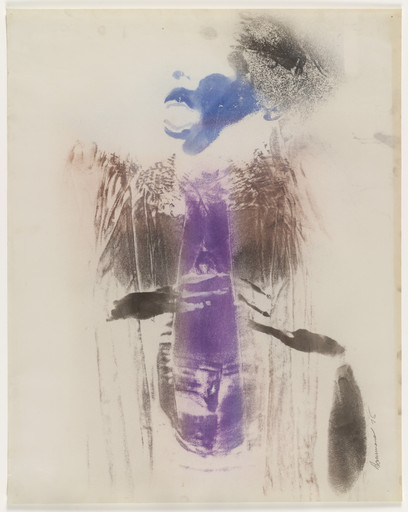
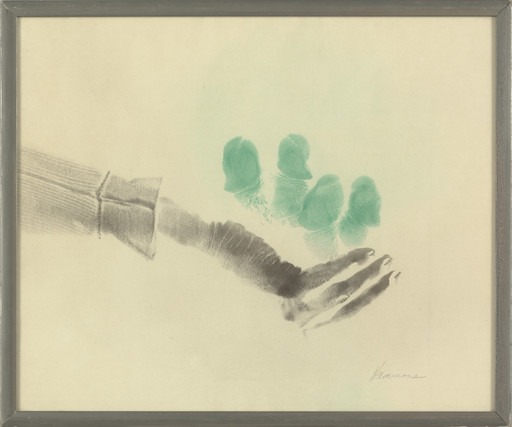
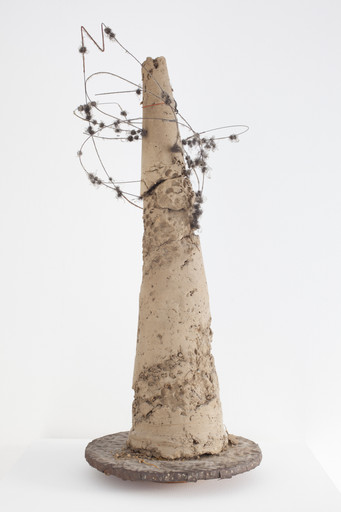
Found object
An object—often utilitarian, manufactured, or naturally occurring—that was not originally designed for an artistic purpose, but has been repurposed in an artistic context.
Learn more →
Sculpture
A three-dimensional work of art made by a variety of means, including carving wood, chiseling stone, casting or welding metal, molding clay or wax, or assembling materials.
Learn more →

From MoMA Design Store


Installation views
We have identified this work in the following photos from our exhibition history.
Licensing
Artwork or archival images
If you would like to reproduce an image of a work of art in MoMA's collection, or an image of a MoMA publication or archival material (including installation views, checklists, and press releases), please contact Art Resource (publication in North America) or Scala Archives (publication in all other geographic locations).
Audio and film clips
MoMA licenses archival audio and select out of copyright film clips from our film collection. At this time, MoMA produced video cannot be licensed by MoMA/Scala. All requests to license archival audio or out of copyright film clips should be addressed to Scala Archives at [email protected]. Motion picture film stills cannot be licensed by MoMA/Scala. For access to motion picture film stills for research purposes, please contact the Film Study Center at [email protected]. For more information about film loans and our Circulating Film and Video Library, please visit Circulating Film and Video Library.
Text from a publication or the archives
If you would like to reproduce text from a MoMA publication, please email [email protected]. If you would like to publish text from MoMA's archival materials, please fill out this permission form and send to [email protected].
Feedback
This record is a work in progress. If you have additional information or spotted an error, please fill out this feedback form.