Accumulation No. 1 is the first in an ongoing series of presciently feminist sculptures by Kusama. When the twenty-nine-year-old artist arrived in New York from Japan in 1958, she had already developed what she called an “infinity net” motif: a signature pattern of interlocking cellular forms that she painted on room-size canvases with the stated goal of covering “the entire world.” This ambitious fantasy spurred her to expand the infinity net and its variants—repeated dots and phallic protuberances—into three dimensions. In 1962 she began a group of sculptures composed of household furniture that she covered with stuffed and hand-sewn canvas phalluses and then painted. Though their sexual explicitness is hard to ignore, critics at the time prudishly avoided any mention of this aspect of the works.
Kusama made Accumulation No. 1 in her Manhattan loft, which was located in the same downtown building as the studio of her friend the artist Claes Oldenburg. An early example of soft sculpture, it resonates closely with Oldenburg’s stuffed canvas sculptures of supersized domestic objects made around the same time. It was shown at the Green Gallery in New York in late 1962, along with works by Oldenburg and others, in what was widely considered the first group exhibition to focus on Pop art.
MoMA Highlights: 375 Works from The Museum of Modern Art, New York (New York: The Museum of Modern Art, 2019)
Gallery label from 2019
To make Accumulation No. 1, her first sculpture, Kusama covered an armchair with scores of hand-sewn stuffed and painted protrusions, which she referred to as phalluses. “I make them and make them and then keep on making them, until I bury myself in the process. I call this obliteration.” When she first exhibited this work in New York, her home throughout the 1960s, critics were, perhaps not surprisingly, shocked by the sexualized transformation of an ordinary domestic object by a female artist.
2019
Explore more
Yayoi Kusama
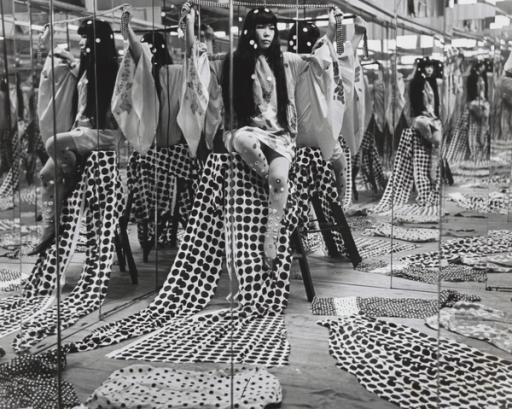
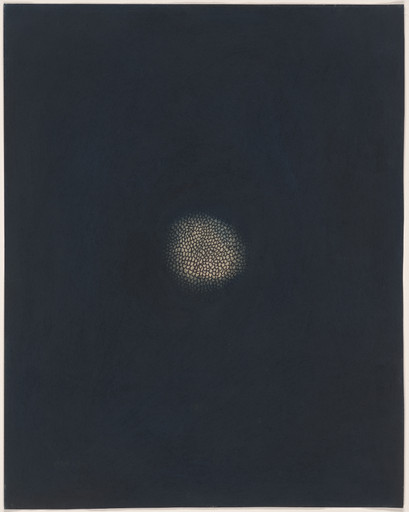
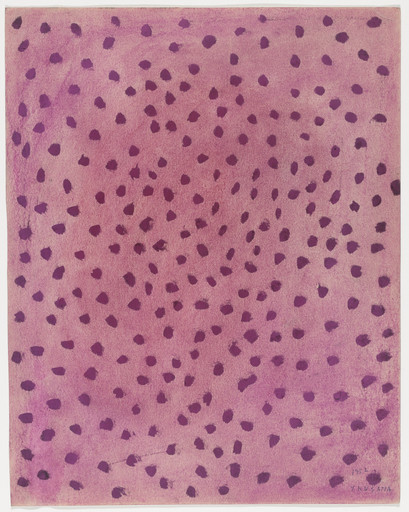
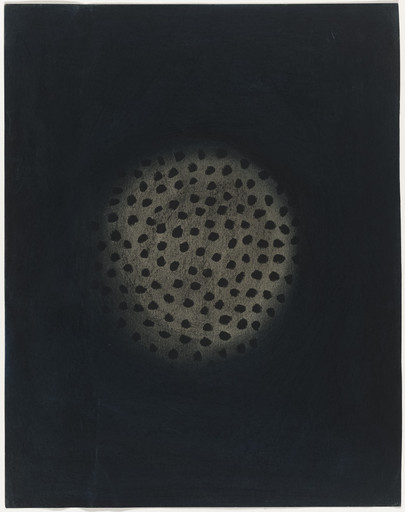
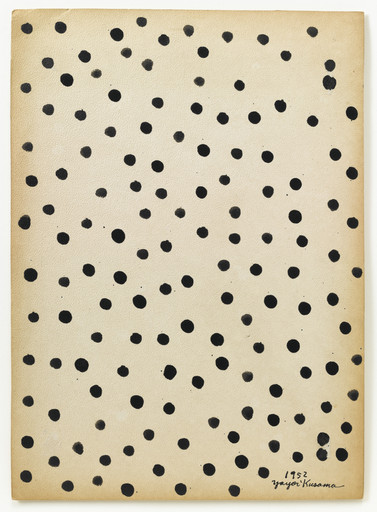
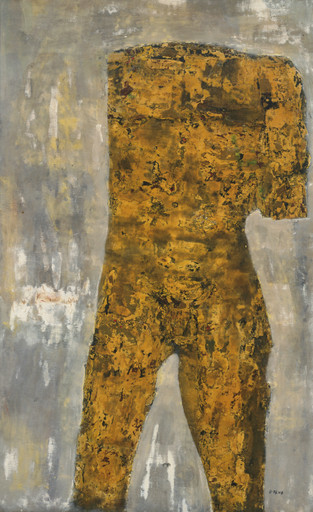
Japanese, 1929–2026 112 works onlineA vital part of New York’s avant-garde art scene from the late 1950s to the early 1970s, Yayoi Kusama developed a distinctive style utilizing approaches associated with Abstract Expressionism , Minimalism , Pop art , Feminist art , and institutional critique —but she always defined herself in her own terms.
Learn more →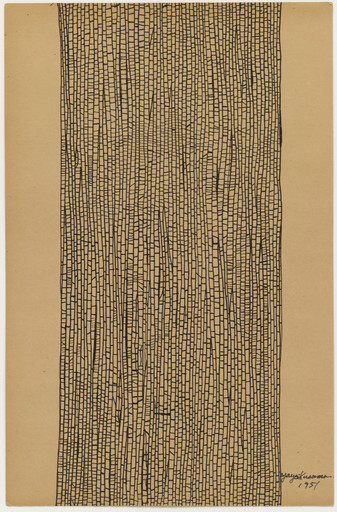
Audio
Audio from the playlist Audio Descriptions
Audio from the playlist 1950–1980: Works from the Collection
From MoMA Design Store


Installation views
We have identified this work in the following photos from our exhibition history.
Licensing
Artwork or archival images
If you would like to reproduce an image of a work of art in MoMA's collection, or an image of a MoMA publication or archival material (including installation views, checklists, and press releases), please contact Art Resource (publication in North America) or Scala Archives (publication in all other geographic locations).
Audio and film clips
MoMA licenses archival audio and select out of copyright film clips from our film collection. At this time, MoMA produced video cannot be licensed by MoMA/Scala. All requests to license archival audio or out of copyright film clips should be addressed to Scala Archives at [email protected]. Motion picture film stills cannot be licensed by MoMA/Scala. For access to motion picture film stills for research purposes, please contact the Film Study Center at [email protected]. For more information about film loans and our Circulating Film and Video Library, please visit Circulating Film and Video Library.
Text from a publication or the archives
If you would like to reproduce text from a MoMA publication, please email [email protected]. If you would like to publish text from MoMA's archival materials, please fill out this permission form and send to [email protected].
Feedback
This record is a work in progress. If you have additional information or spotted an error, please fill out this feedback form.