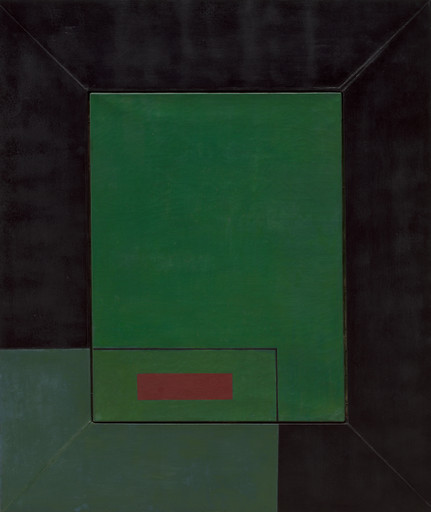
Clark began her career in the early 1950s as a painter, working in the abstract, geometric style that defined Concrete art, a prevalent tendency in modern art in Brazil in that period. By the end of the decade, however, she had come to regard the flatness of painting as a source of undesirable oppositions. “The plane arbitrarily marks off the limits of a space,” she wrote, and “from this are derived the opposing concepts of high and low, front and back—everything that contributes to the destruction in humankind of the feeling of wholeness.”
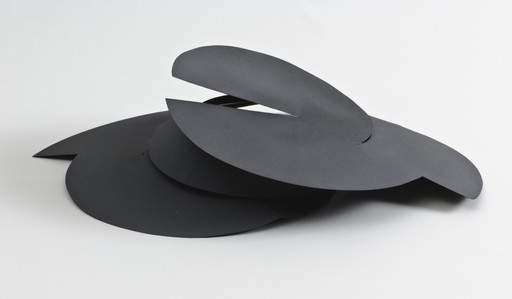
In The Inside Is the Outside, Clark defied these strictures by transforming a sheet of stainless steel into an open volume with no clear front or back, interior or exterior. By making linear cuts and exploiting the natural pliancy of the metal, she fashioned biomorphic curves, creating an object that brings together attributes that are often conceived as incompatible: subjective and objective, organic and inorganic, erotic and ascetic. Challenging the notion that works of art must be fixed and static objects, Clark envisioned this sculpture as participatory, inviting viewers to hold it and manipulate its shape.
MoMA Highlights: 375 Works from The Museum of Modern Art, New York (New York: The Museum of Modern Art, 2019)
Explore more
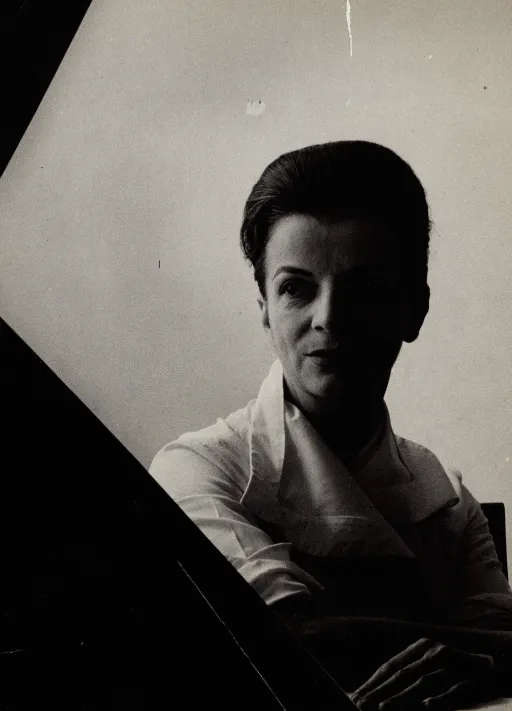
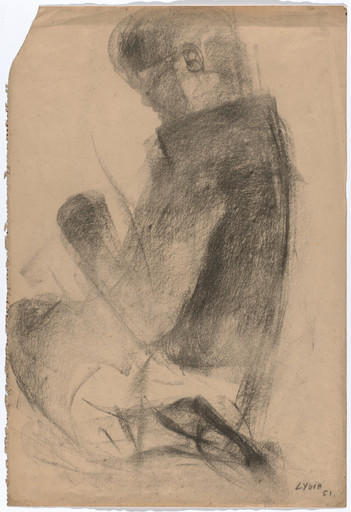
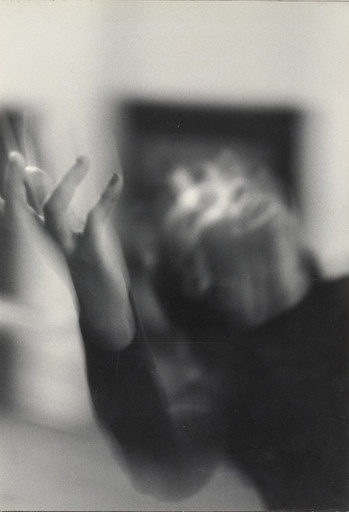
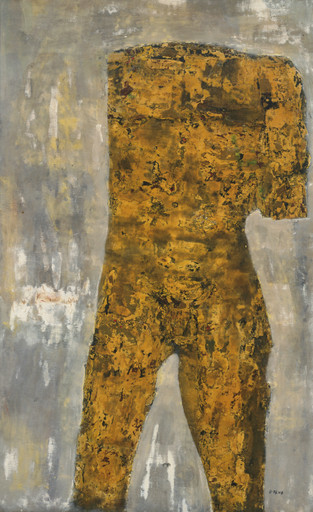
Lygia Clark
Brazilian, 1920–1988 21 works onlineThe notion that the work of art was more like a body than a discrete object was a radical idea that led many Brazilian artists to embrace the viewer’s subjective experience as the main criterion in art making.
Learn more →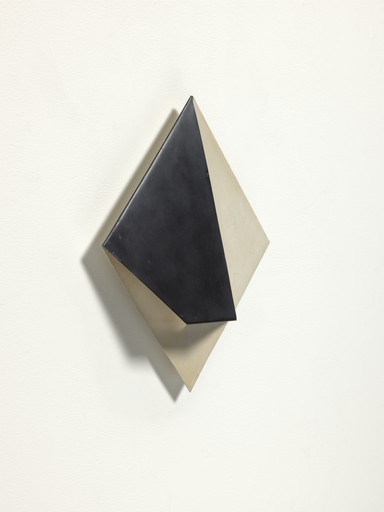
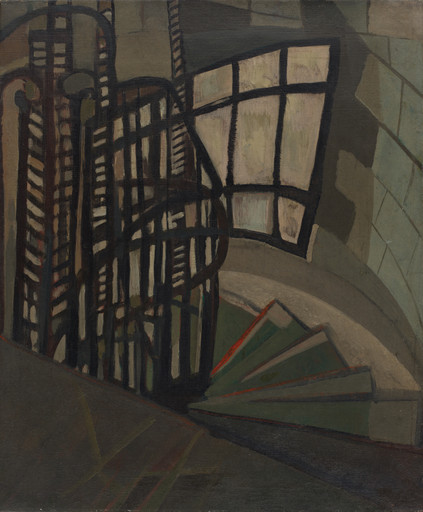
Audio
Audio from the playlist 1880–1950: Works from the Collection
From MoMA Design Store


Installation views
We have identified this work in the following photos from our exhibition history.
Provenance
1954, Lygia Clark (1920–1988)
1988 – 1997, Alvaro Clark, Brazil, inherited from the artist
1997 – 2011, Colección Patricia Phelps de Cisneros, New York and Caracas, purchased from/through Galeria César Aché
2011, The Museum of Modern Art, New York, acquired as a gift from Patricia Phelps de Cisneros
Exhibition history
Madrid, Museo Nacional Centro de Arte Reina Sofía, "Specters of Artaud, Language and the Arts circa 1952", September 18 - December 17, 2012
Madrid, Museo Nacional Centro de Arte Reina Sofía, "La invención concreta. Collección Patricia Phelps de Cisneros", January 22 - September 16, 2013
MoMA Exh. #2226: "Painting and Sculpture Changes 2013", 4th Floor, gallery 26, added December 20, 2013 - April 14, 2014
MoMA Exh. #2286: “Lygia Clark: The Abandonment of Art, 1948-1988”, 6th Floor, The Joan and Preston Robert Tisch Gallery, May 10 – August 24, 2014
MoMA Exh. #2335: "Transmissions: Art in Eastern Europe and Latin America, 1960–1980", 6th Floor, The Joan and Preston Robert Tisch Gallery, September 5, 2015 - January 3, 2016
MoMA Exh. #2376: "Making Space: Women Artists and Postwar Abstraction", 3rd Floor, The Edward Steichen Galleries, April 15 - August 13, 2017
New York, Met Breuer, "Delirious: Art and the Irrational, 1950-1980", September 13, 2017 - January 14, 2018
MoMA Exh. #2424: "Sur moderno: Journeys of Abstraction—The Patricia Phelps de Cisneros Gift", 3rd Floor, 3 East, October 21, 2019 - September 12, 2020
St. Louis, Pulitzer Arts Foundation, "Assembly Required", March 4 - July 31, 2022
Berlin, Neue Nationalgalerie, "Lygia Clark: Retrospective", May 23 - October 12, 2025 and tour:
Zürich, Kunsthaus Zürich, November 14, 2025 - March 8, 2026
Licensing
Artwork or archival images
If you would like to reproduce an image of a work of art in MoMA's collection, or an image of a MoMA publication or archival material (including installation views, checklists, and press releases), please contact Art Resource (publication in North America) or Scala Archives (publication in all other geographic locations).
Audio and film clips
MoMA licenses archival audio and select out of copyright film clips from our film collection. At this time, MoMA produced video cannot be licensed by MoMA/Scala. All requests to license archival audio or out of copyright film clips should be addressed to Scala Archives at [email protected]. Motion picture film stills cannot be licensed by MoMA/Scala. For access to motion picture film stills for research purposes, please contact the Film Study Center at [email protected]. For more information about film loans and our Circulating Film and Video Library, please visit Circulating Film and Video Library.
Text from a publication or the archives
If you would like to reproduce text from a MoMA publication, please email [email protected]. If you would like to publish text from MoMA's archival materials, please fill out this permission form and send to [email protected].
Feedback
This record is a work in progress. If you have additional information or spotted an error, please fill out this feedback form.