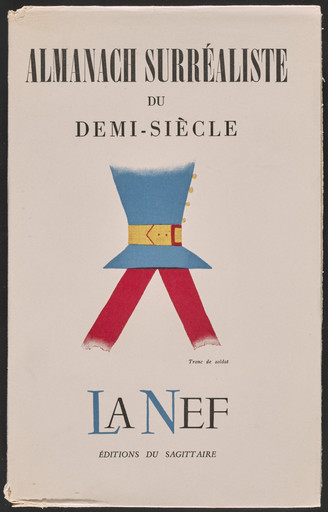
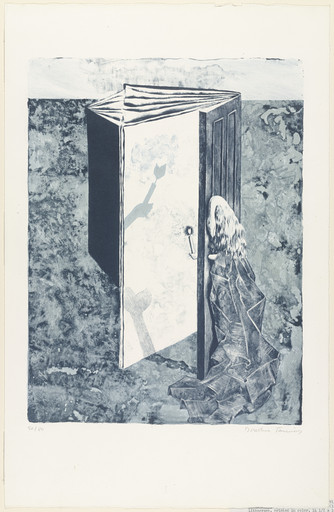
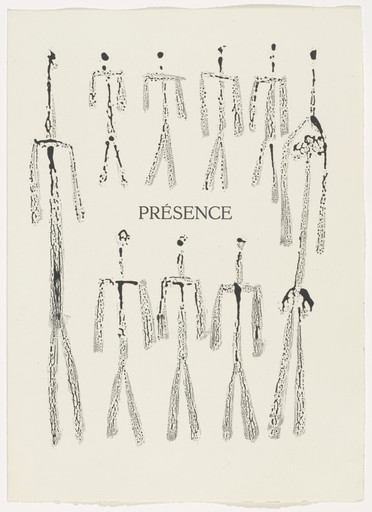
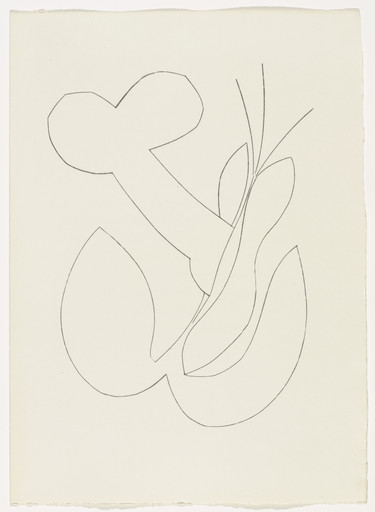
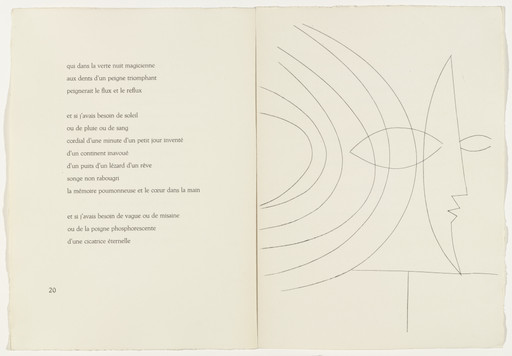
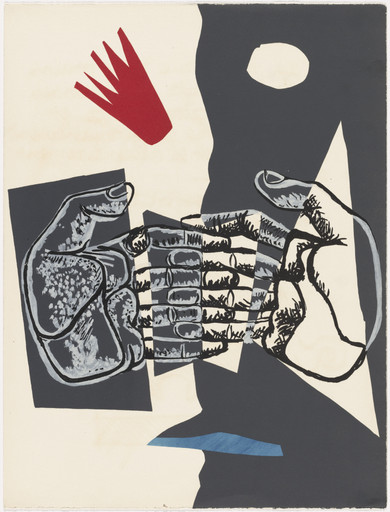
Book with nine etchings, eight cut horizontally into thirds (as issued), two with aquatint; letterpress text; publisher's original binding and covers of red cloth over boards
Not on view
The Surrealists of the 1920s and '30s played a game they called "exquisite corpse," a collaborative activity in which each individual would add to a drawing or text without seeing the contributions of the other participants. The surprising results were thought to reveal the subconscious. A long–time member of the Surrealist group, Tanning continued to use the technique in work she did alone, here by cutting etchings into strips to allow for the mixing of parts.
Wunderkammer: A Century of Curiosities, July 30–November 10, 2008.
Explore more
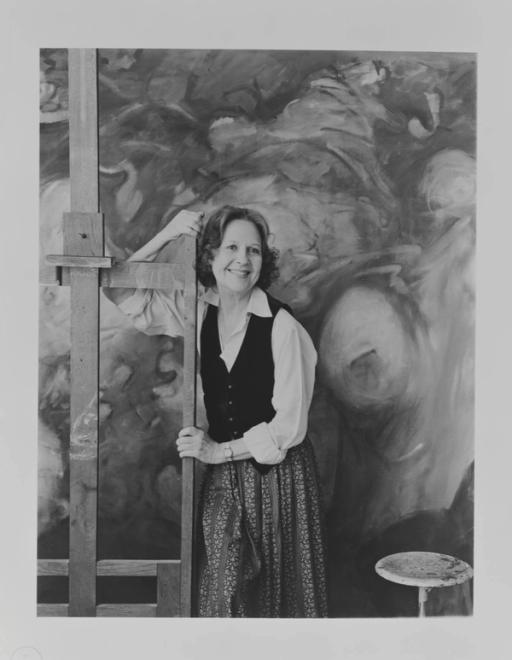
Dorothea Tanning
American, 1910–2012 18 works onlineIn 1936 Dorothea Tanning visited The Museum of Modern Art on the occasion of Fantastic Art, Dada, Surrealism , an exhibition of nearly 700 paintings, sculptures, drawings, prints, photographs, and films that each presented a radical departure from day-to-day reality.
Learn more →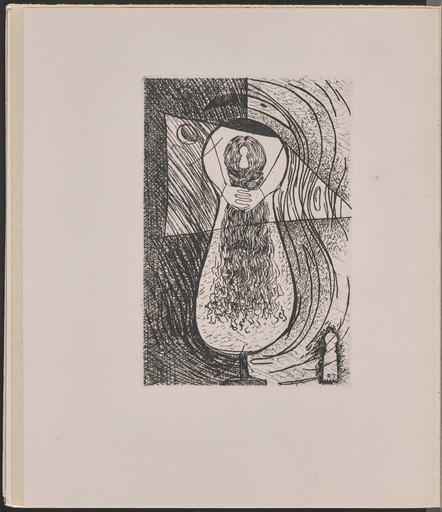
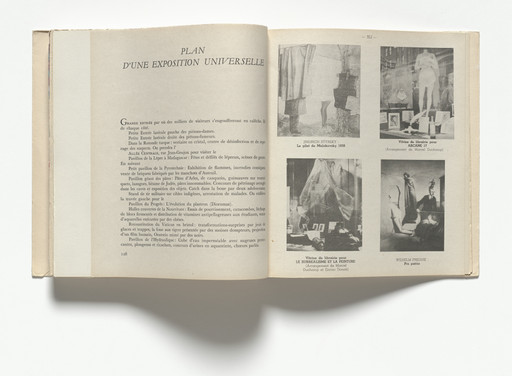
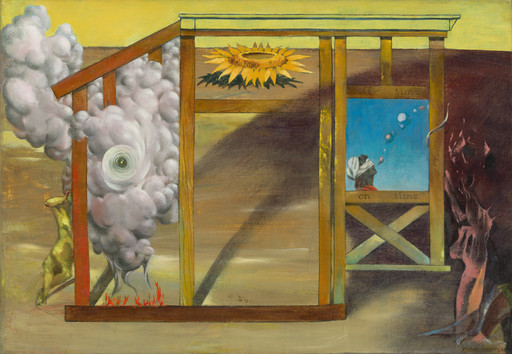
From MoMA Design Store


Installation views
We have identified this work in the following photos from our exhibition history.
Licensing
Artwork or archival images
If you would like to reproduce an image of a work of art in MoMA's collection, or an image of a MoMA publication or archival material (including installation views, checklists, and press releases), please contact Art Resource (publication in North America) or Scala Archives (publication in all other geographic locations).
Audio and film clips
MoMA licenses archival audio and select out of copyright film clips from our film collection. At this time, MoMA produced video cannot be licensed by MoMA/Scala. All requests to license archival audio or out of copyright film clips should be addressed to Scala Archives at [email protected]. Motion picture film stills cannot be licensed by MoMA/Scala. For access to motion picture film stills for research purposes, please contact the Film Study Center at [email protected]. For more information about film loans and our Circulating Film and Video Library, please visit Circulating Film and Video Library.
Text from a publication or the archives
If you would like to reproduce text from a MoMA publication, please email [email protected]. If you would like to publish text from MoMA's archival materials, please fill out this permission form and send to [email protected].
Feedback
This record is a work in progress. If you have additional information or spotted an error, please fill out this feedback form.