Front / Recto
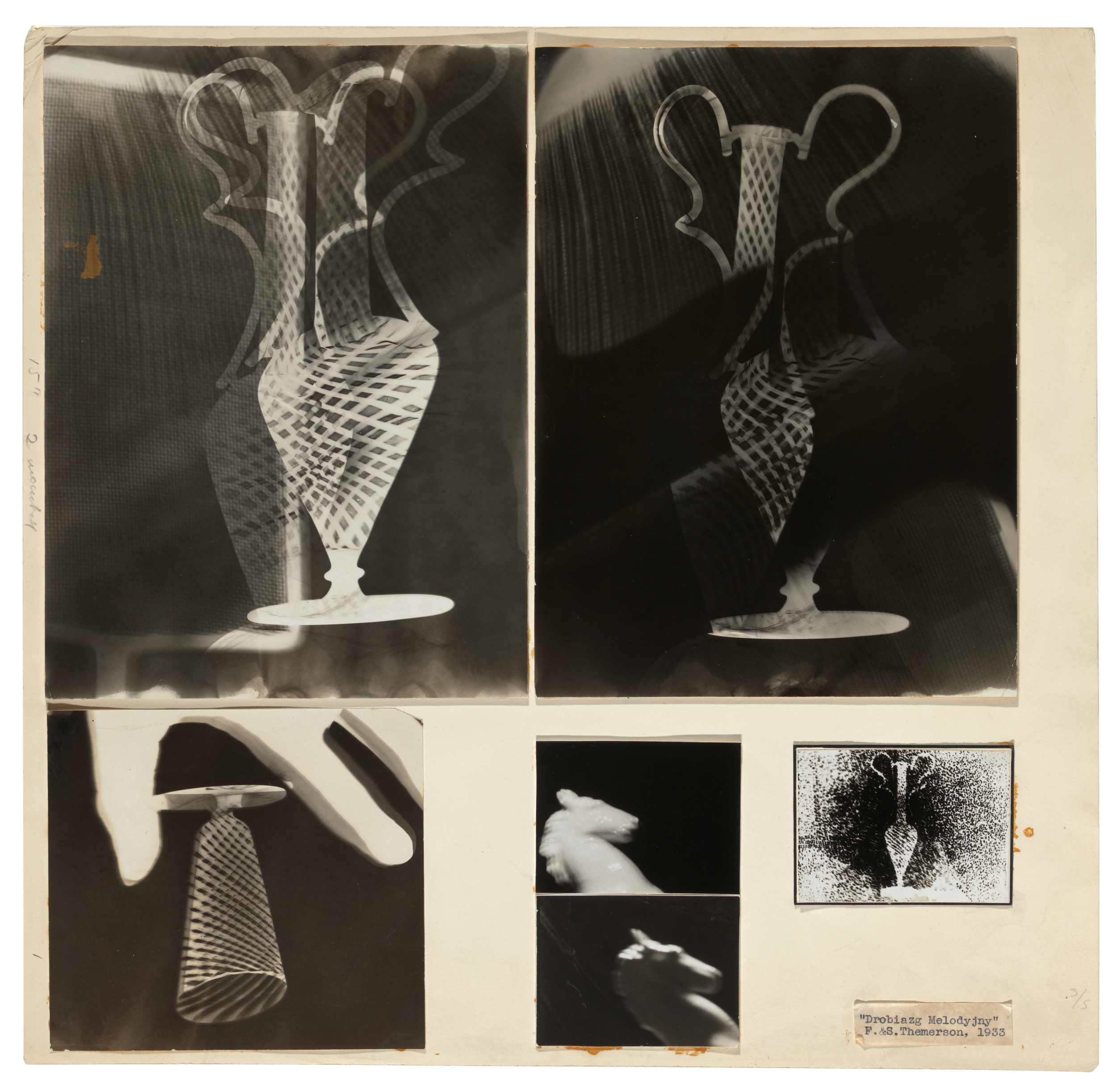
- Title Untitled, from Moment Musical (Drobiazg Melodyjny) (1933)
- Negative Date 1933
- Print Date 1933–35
- Medium Gelatin silver prints on white cardboard
- Dimensions Mount 14 7/8 × 15 3/8" (37.8 × 39 cm)
- Place Taken Warsaw
- Credit Line Thomas Walther Collection. Abbott-Levy Collection funds, by exchange
- MoMA Accession Number 1883.2001
- Copyright © 2015 Themerson Estate
-
Description
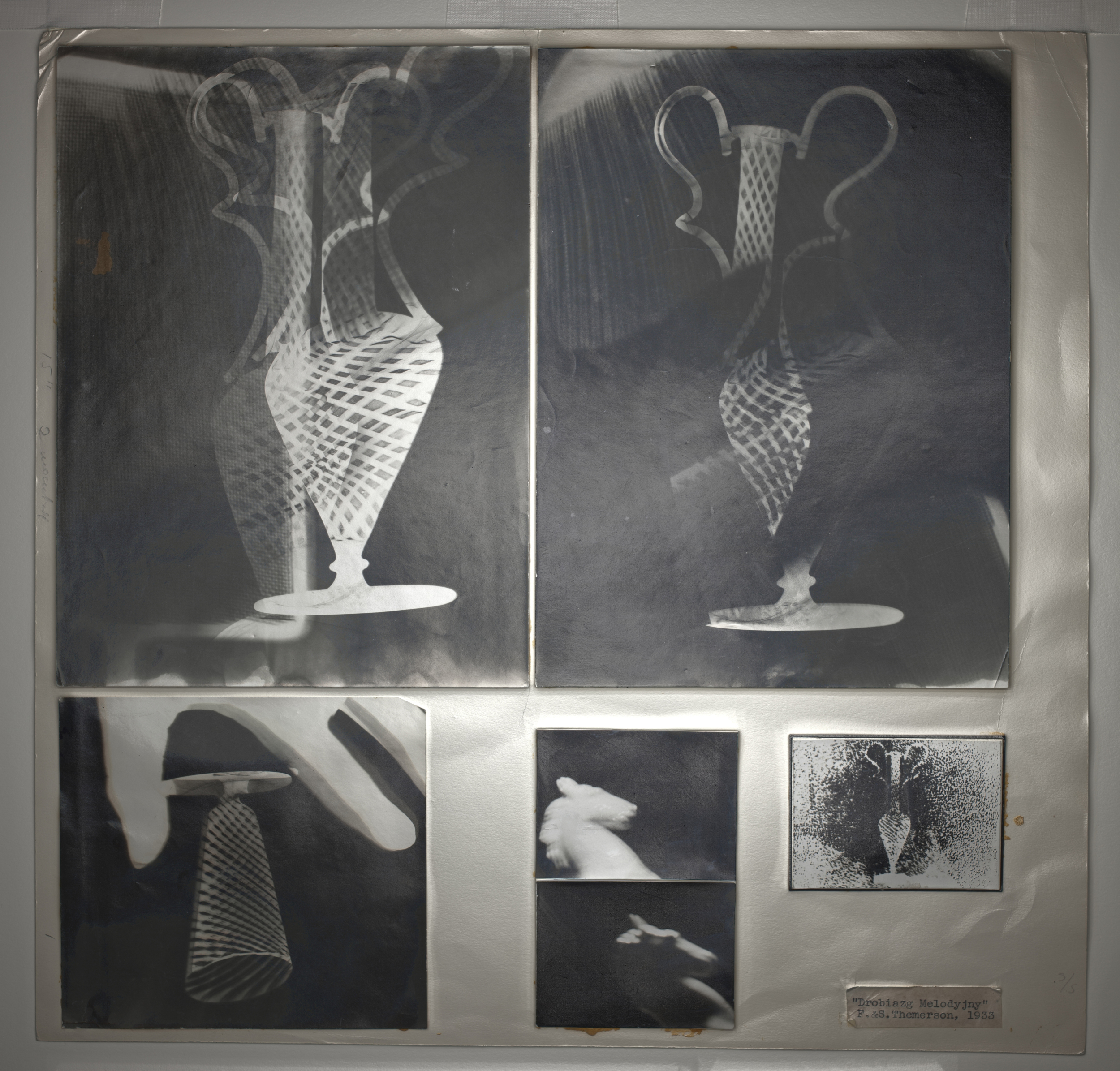
The six photographs in this work were mounted individually and then arranged and attached to a single support. At bottom right, an adhered label reading “‘Drobiazg Melodyjny’ / F. & S. Themerson, 1933” ties the images to Franciszka and Stefan Themerson’s film Drobiazg Melodyjny (Moment Musical), of 1933. Three of the images are photograms: the top two pictures, which show slightly uneven processing along their bottom edges, and the photograph at bottom left. It is likely that the artists made these photograms using a special table that Stefan had constructed for the production of moving-picture captures of objects illuminated at different angles. The cameraman lay on the floor directly below the still life scene, which was viewed and filmed through sheets of glass. The artists could have adapted this setup to capture photograms simply by placing a sheet of unexposed photographic paper below the objects. The two small horse-head images may have been printed from enlarged film frames.
Drobiazg Melodyjny was reconstructed in 2006 as a 16mm black-and-white film. 2006 Moment Musical, by Bruce Checefsky, is based on surviving notes by the artists, film stills from the original project, and reviews published in the Polish press in 1933–34. These six images—perhaps created as an afterthought—are all that remain of the original film.
—Hanako Murata
Back / Verso
- Mount Type Mount (original)
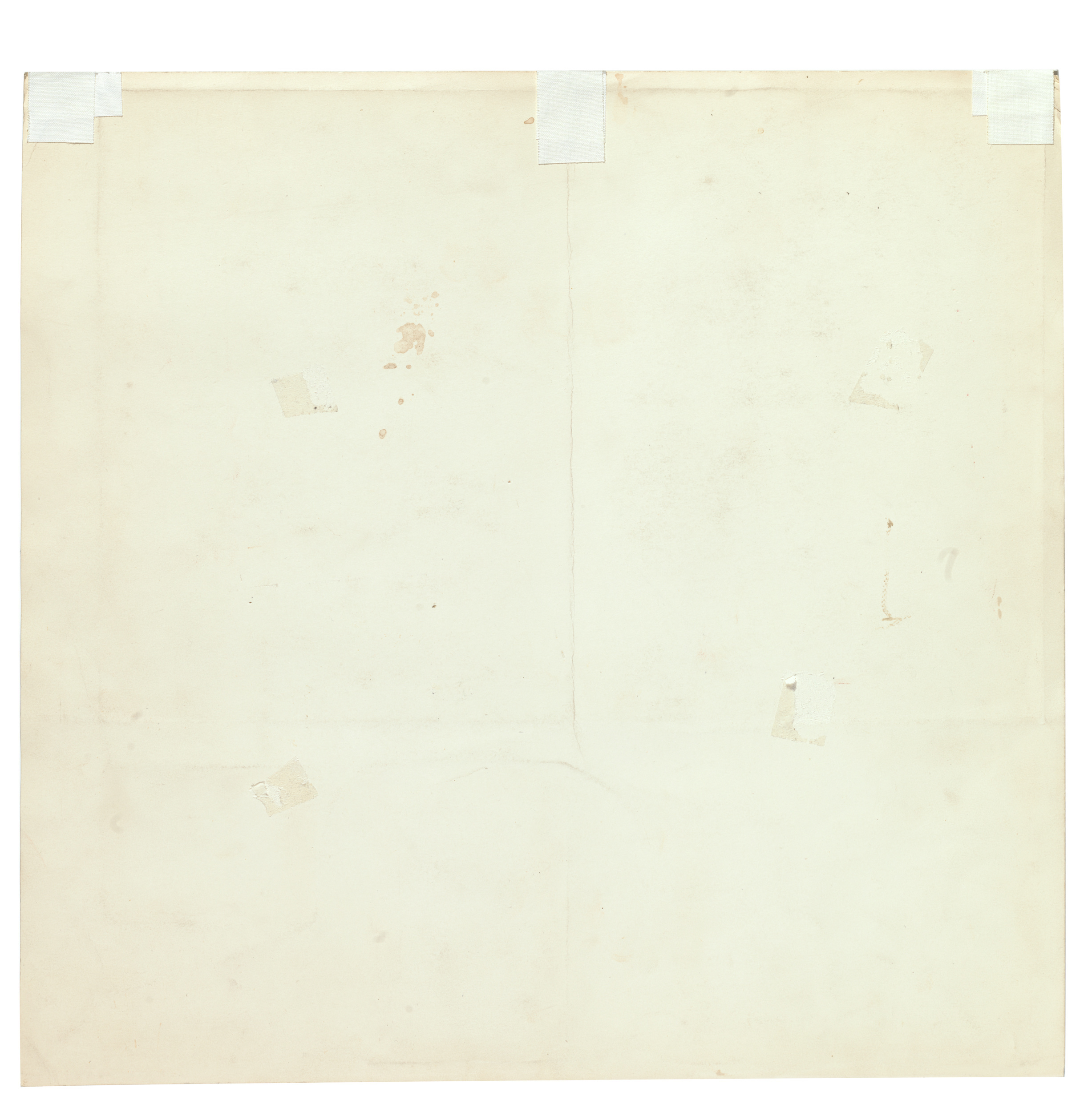
- Marks and Inscriptions Inscribed in black marker on bottom-left image recto, top-left corner: T Th Th. Inscribed in pencil on mount recto, left edge, center: 15" 2 montage. Label affixed to mount recto, bottom-right corner, with text printed in black ink: Drobiazg Melodyjny/F. & S. Themerson, 1933. Inscribed in pencil on mount recto, bottom-right corner: 5/5.
-
Provenance
The artists; to the artists' estate (Jasia Reichardt), London [1]; to Ubu Gallery (Adam J. Boxer), New York, 1995 [2]; to Alan Koppel Gallery, Chicago, 1996 [3]; purchased by Thomas Walther, June 26, 1996 [4]; purchased by The Museum of Modern Art, New York, 2001.
[1] Caryn Capotosto (Alan Koppel Gallery), e-mail to Simon Bieling, November 8, 2005; and Adam J. Boxer, e-mail to Maria Morris Hambourg, November 25, 2013.
[2] Capotosto, e-mail to Bieling; and Boxer, e-mail to Hambourg.
[3] MacGill/Walther 2000, p. 38; and Boxer, e-mail to Hambourg.
[4] MacGill/Walther 2000(2), p. 40; and Alan Koppel Gallery invoice, June 26, 1996.
Surface
- Surface Sheen Glossy
- Techniques Mount Enlargement Photogram Film frame
- PTM
-
Micro-raking
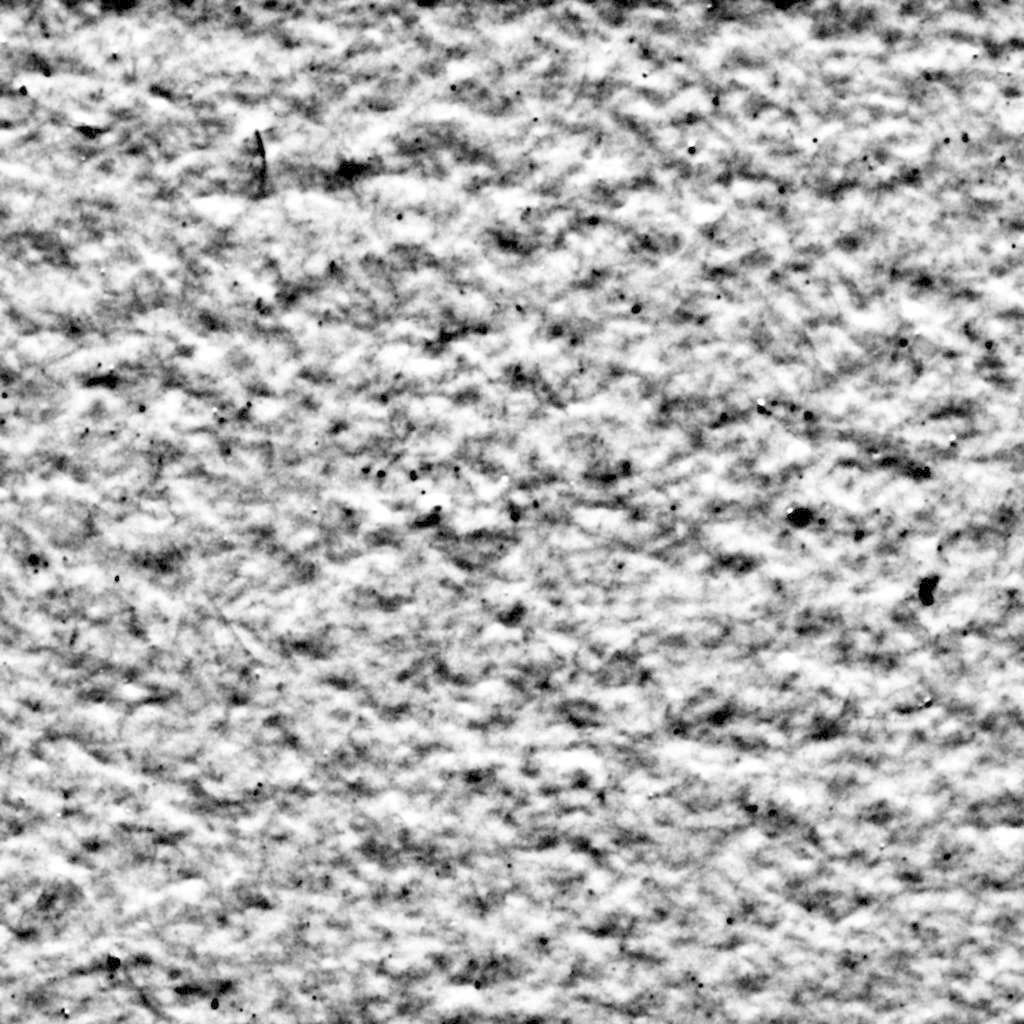
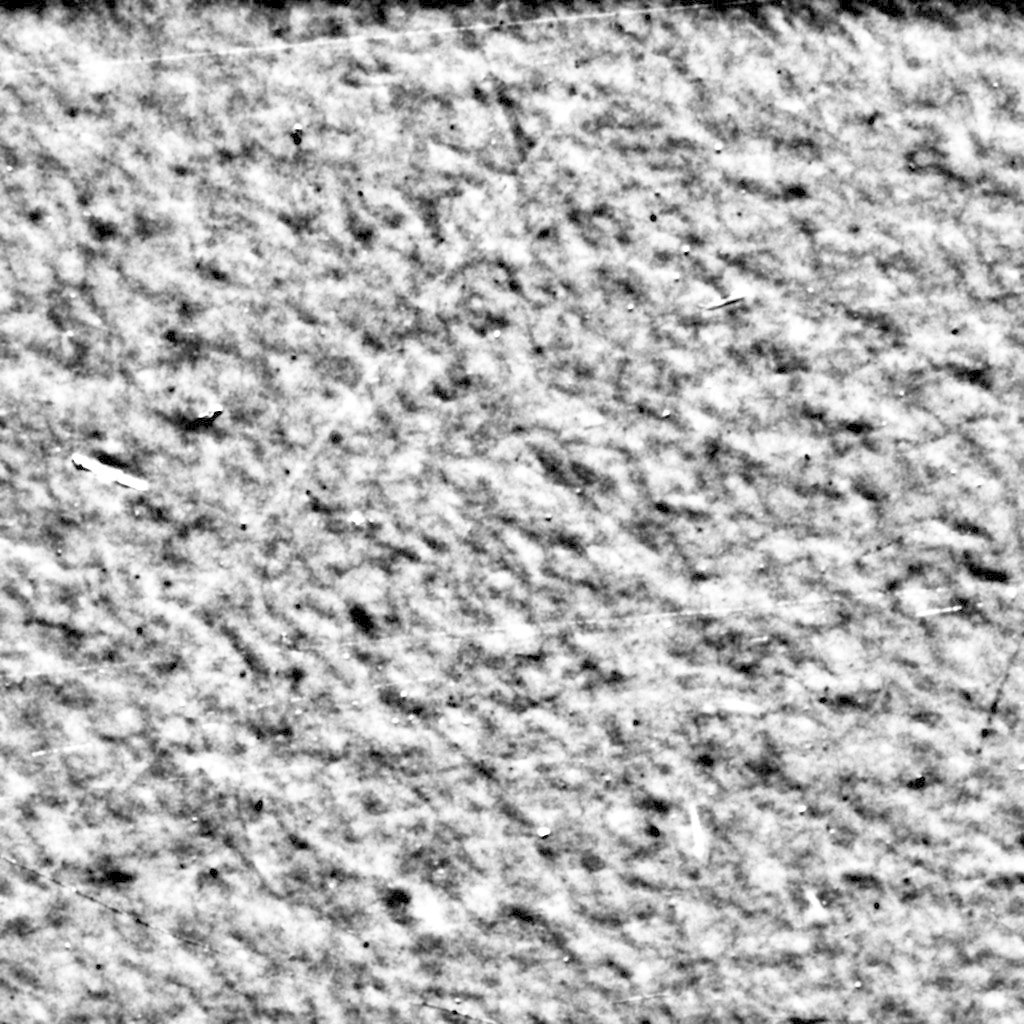
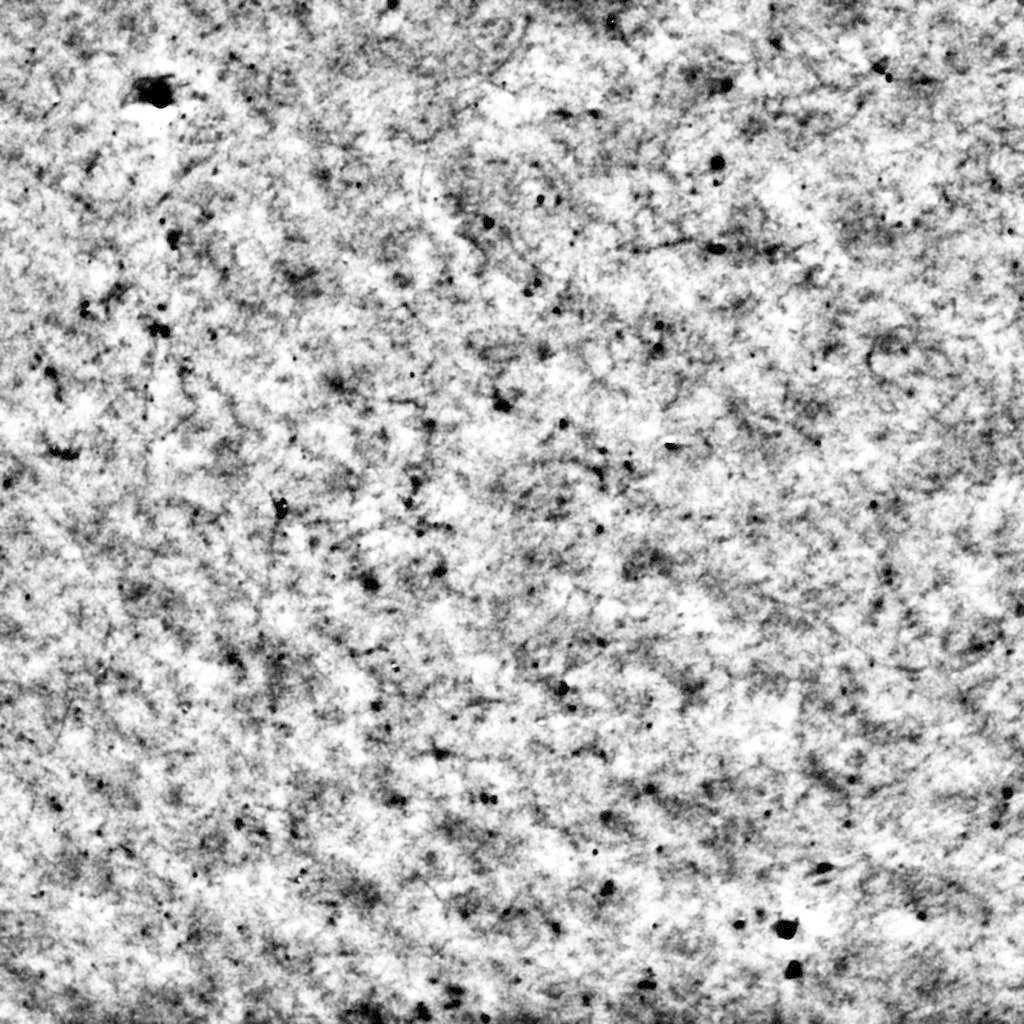
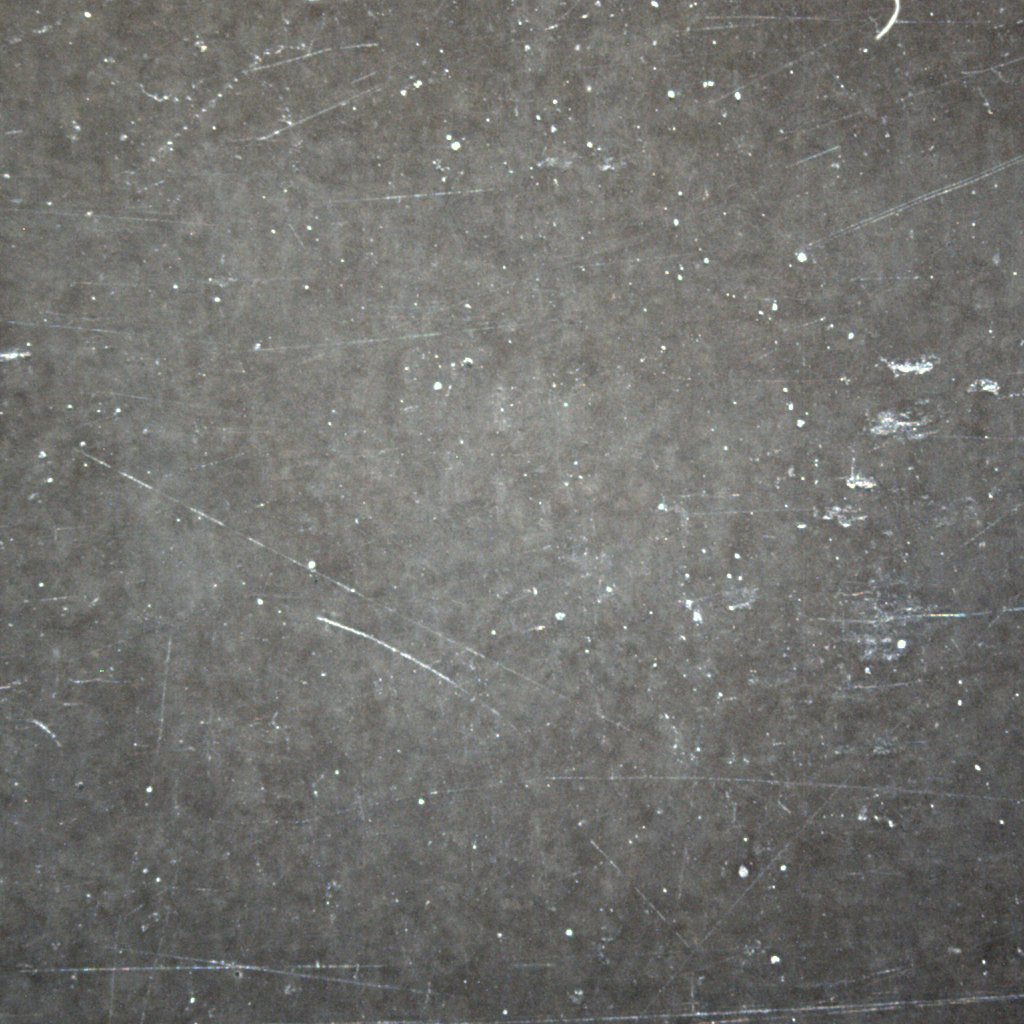
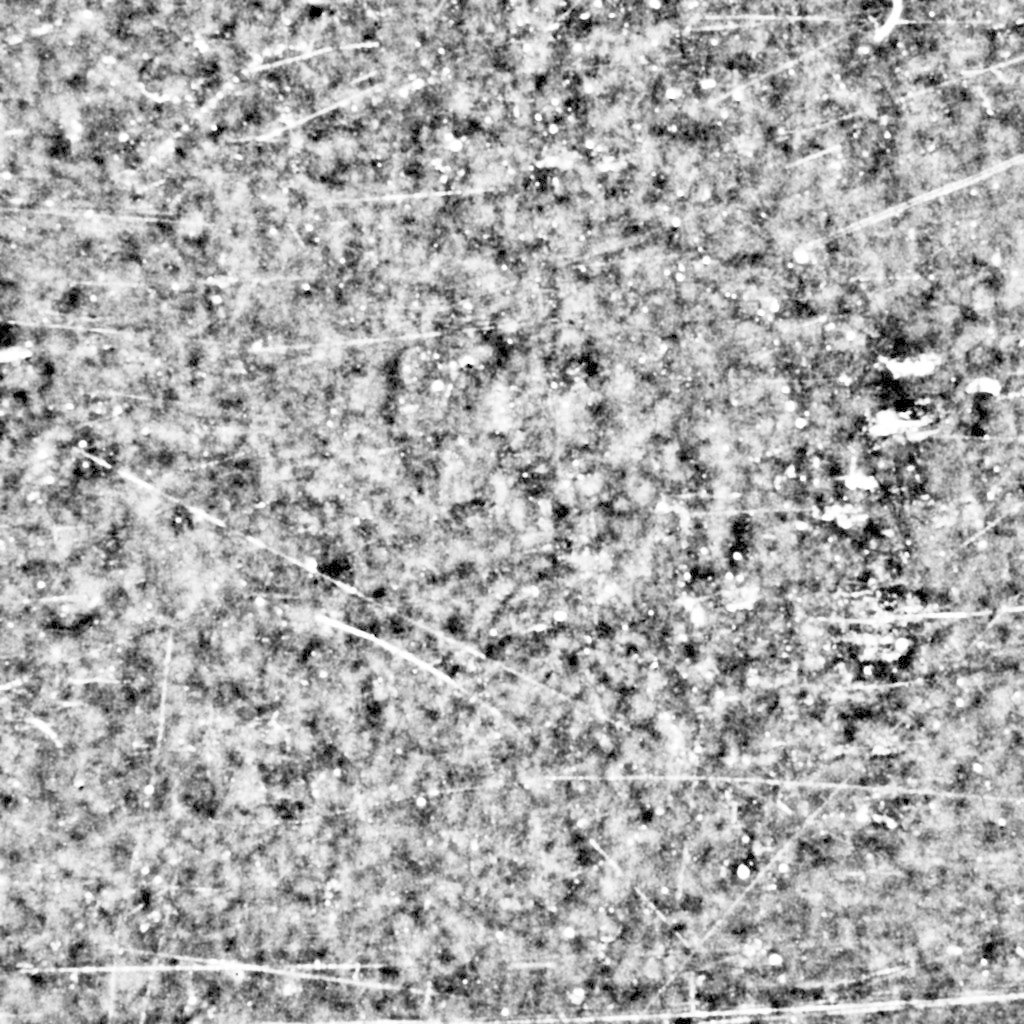
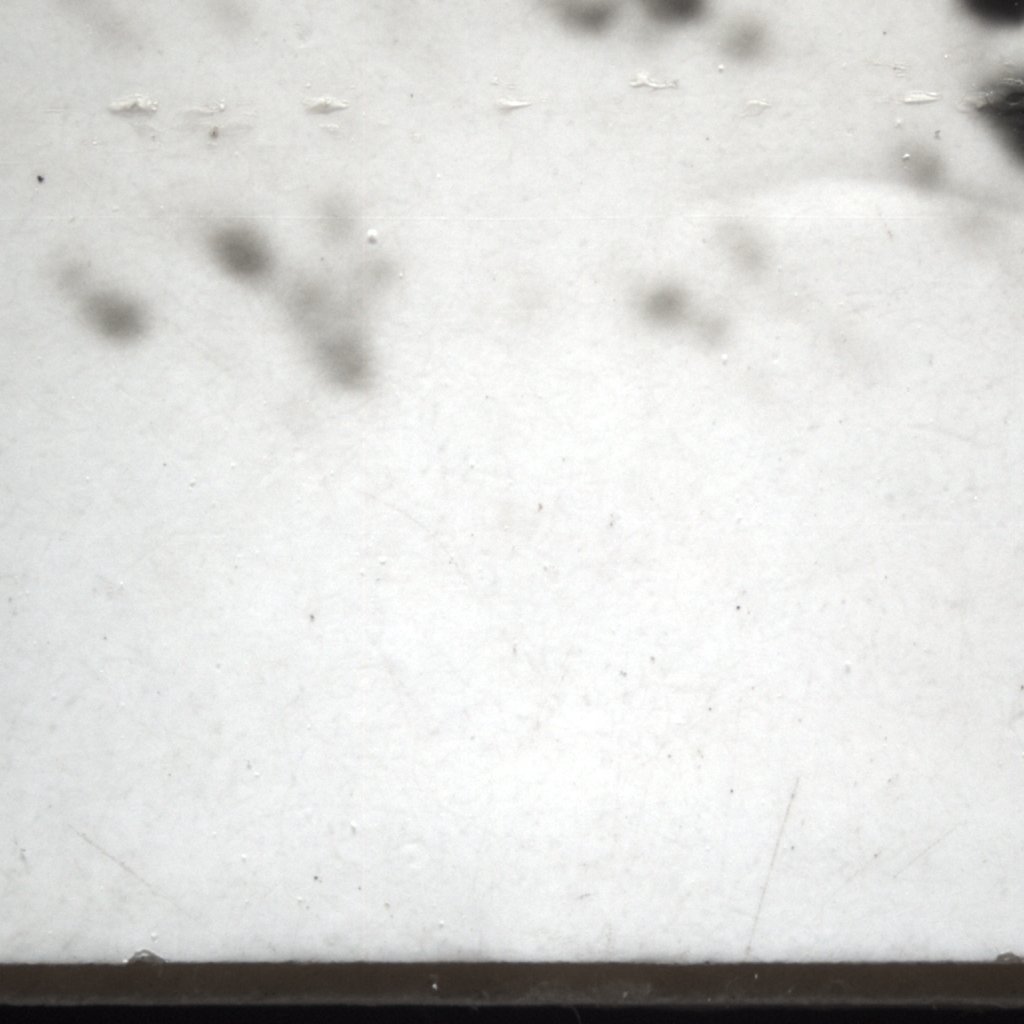
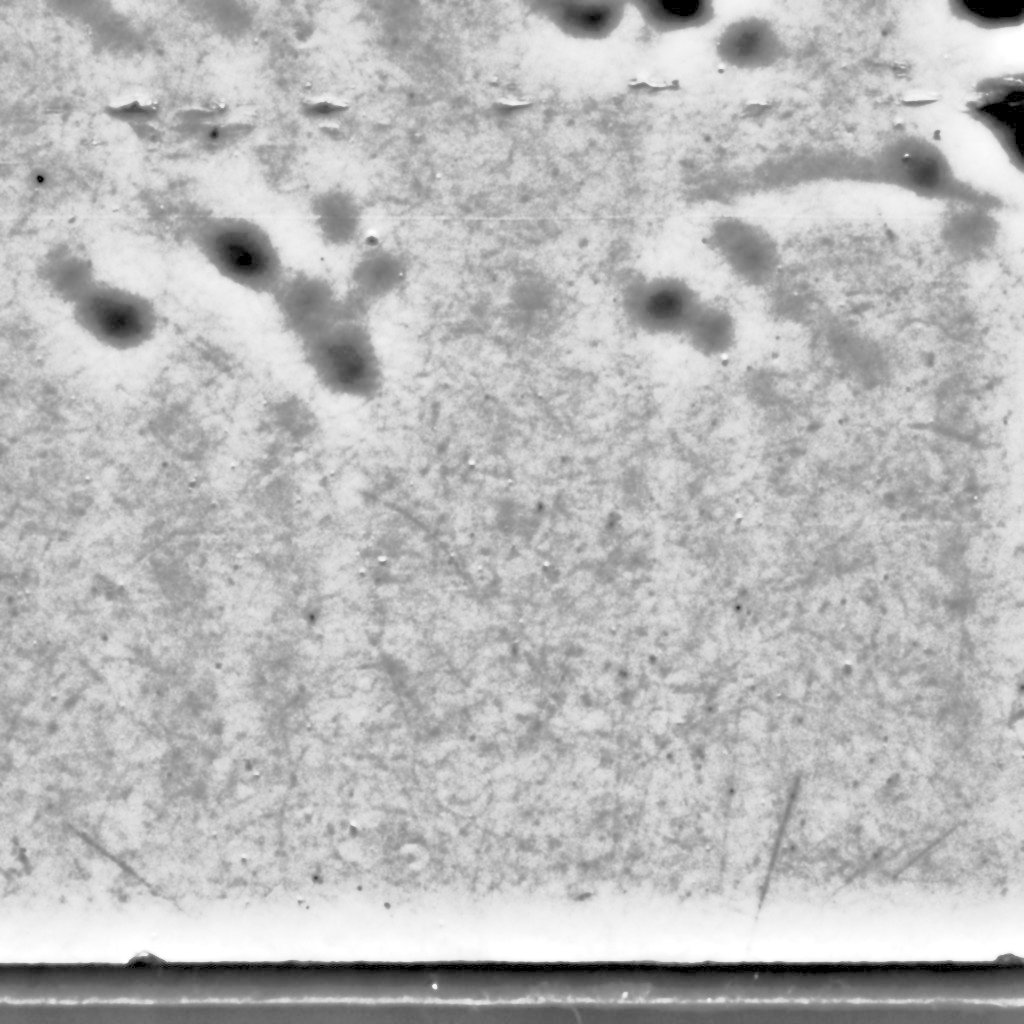
Print A (at top left in assemblage): Raking-light close-up image, as shot. Area of detail is 6.7 x 6.7 mm. Department of Conservation, MoMAPrint A (at top left in assemblage): Raking-light close-up image, processed. Processing included removal of color, equalization of the histogram, and sharpening, all designed to enhance visual comparison. Department of Conservation, MoMAPrint B (at top right in assemblage): Raking-light close-up image, as shot. The surface area of the sample measures 1 x 1.35 cm.Print B (at top right in assemblage): Raking-light close-up image, processed. Processing included removal of color, equalization of the histogram, and sharpening, all designed to enhance visual comparison. The image is cropped to 1024 x 1024 pixels and depicts a surface area of 6.7 x 6.7 mm.Print C (at lower left in assemblage): Raking-light close-up image, as shot. The surface area of the sample measures 1 x 1.35 cm.Print C (at lower left in assemblage): Raking-light close-up image, processed. Processing included removal of color, equalization of the histogram, and sharpening, all designed to enhance visual comparison. The image is cropped to 1024 x 1024 pixels and depicts a surface area of 6.7 x 6.7 mm.Print D (at center in assemblage, below two largest prints): Raking-light close-up image, as shot. The surface area of the sample measures 1 x 1.35 cm.Print D (at center in assemblage, below two largest prints): Raking-light close-up image, processed. Processing included removal of color, equalization of the histogram, and sharpening, all designed to enhance visual comparison. The image is cropped to 1024 x 1024 pixels and depicts a surface area of 6.7 x 6.7 mm.Print E (at center in assemblage, directly below Print D): Raking-light close-up image, as shot. The surface area of the sample measures 1 x 1.35 cm.Print E (at center in assemblage, directly below Print D): Raking-light close-up image, processed. Processing included removal of color, equalization of the histogram, and sharpening, all designed to enhance visual comparison. The image is cropped to 1024 x 1024 pixels and depicts a surface area of 6.7 x 6.7 mm.Print F (below, far right in assemblage): Raking-light close-up image, as shot. The surface area of the sample measures 1 x 1.35 cm.Print F (below, far right in assemblage): Raking-light close-up image, processed. Processing included removal of color, equalization of the histogram, and sharpening, all designed to enhance visual comparison. The image is cropped to 1024 x 1024 pixels and depicts a surface area of 6.7 x 6.7 mm.
Paper Material
- Format Unknown
- UV Fluorescence Recto negative Verso no data
- Fiber Analysis No fiber data available
- Material Techniques Developing-out paper
-
XRF
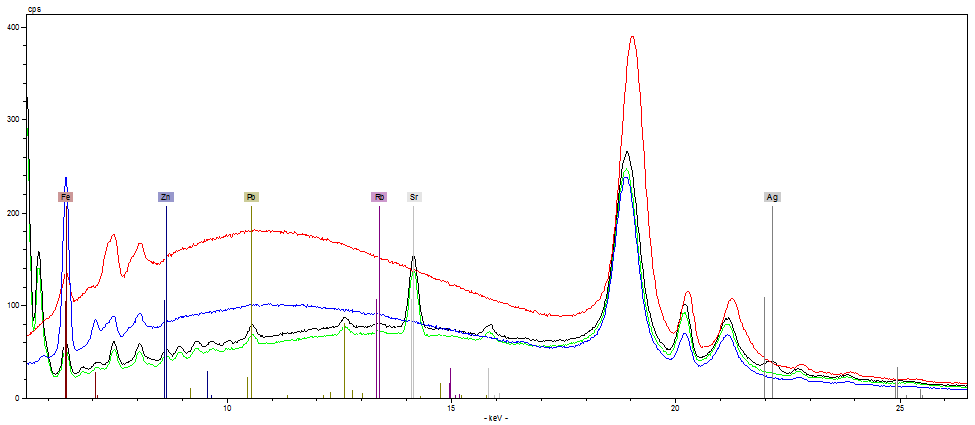
This work was determined to be a gelatin silver print via X-ray fluorescence (XRF) spectrometry.
The following elements have been positively identified in the work, through XRF readings taken from its recto and verso (or from the mount, where the verso was not accessible):
- Recto: P, S, Cl, Ca, Cr, Fe, Zn, Rb, Sr, Ag, Ba, Pb
- Mount: Al, Si, P, S, K, Ca, Ti, Fe, Zn, Rb
The graphs below show XRF spectra for three areas on the print: two of the recto—from areas of maximum and minimum image density (Dmax and Dmin)—and one of the verso or mount. The background spectrum represents the contribution of the XRF instrument itself. The first graph shows elements identified through the presence of their characteristic peaks in the lower energy range (0 to 8 keV). The second graph shows elements identified through the presence of their characteristic peaks in the higher energy range (8 to 40 keV).
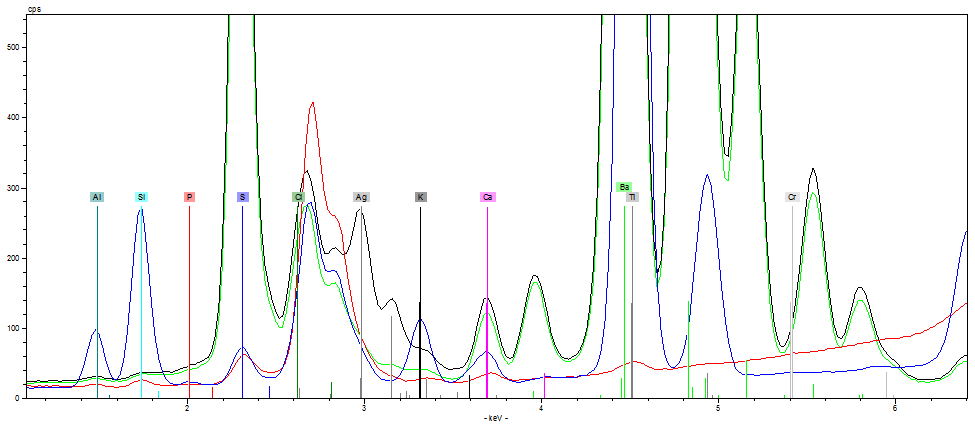
Areas examined: Recto (Dmax: black; Dmin: green), Verso or Mount (blue), Background (red)
Elements identified: Al, Si, P, S, Cl, K, Ca, Ti, Cr, Ag, Ba
In Context
Historic Videos
Related People
-
Artist