
Front / Recto
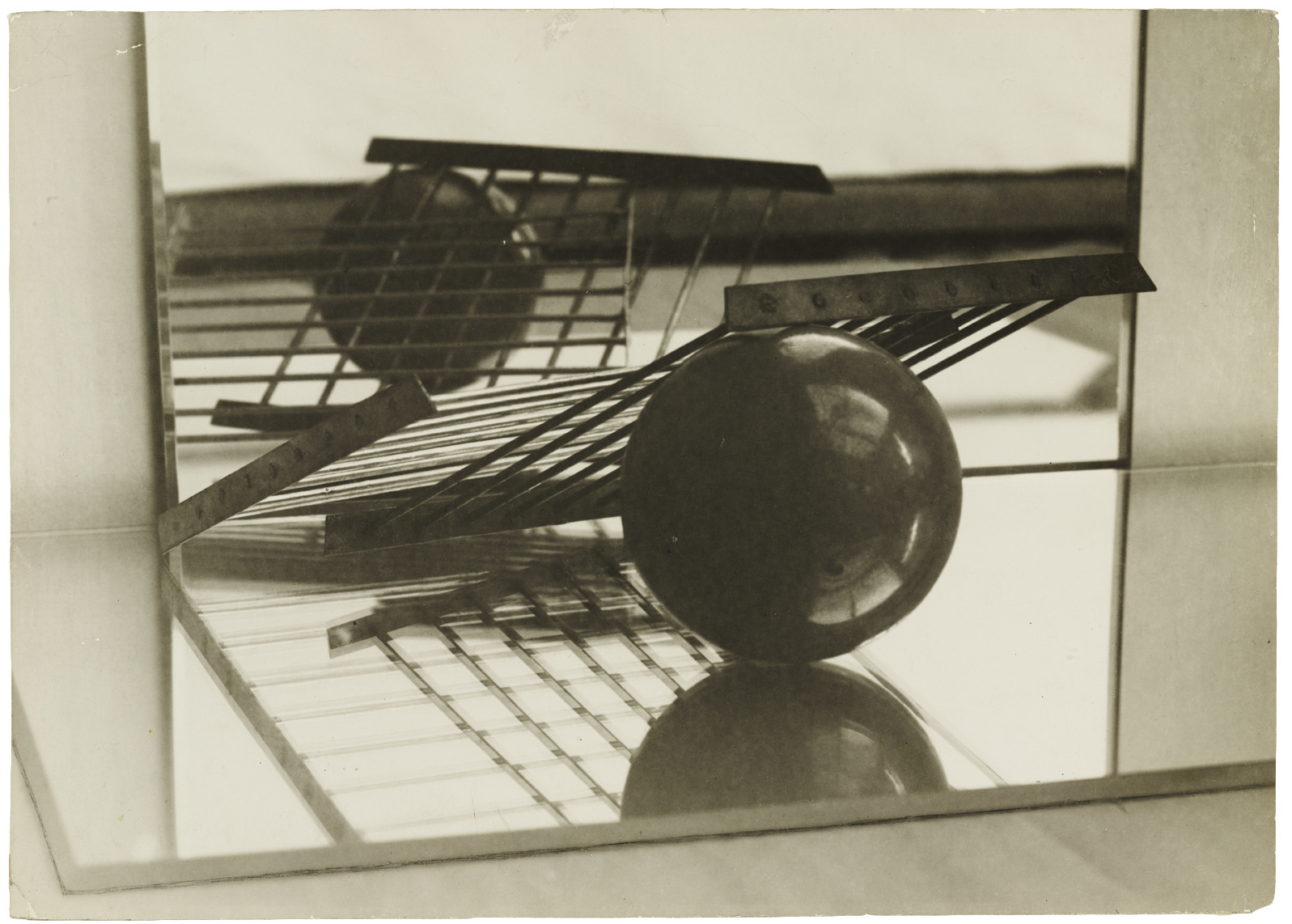
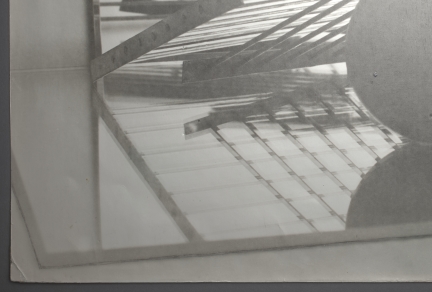
- Title Composition No. 19
- Negative Date 1928–30
- Print Date 1928–35
- Medium Gelatin silver print
- Dimensions Image 10 5/16 × 14 3/8" (26.2 × 36.5 cm)
- Place Taken Paris
- Credit Line Thomas Walther Collection. Gift of Shirley C. Burden, by exchange
- MoMA Accession Number 1695.2001
- Copyright © 2015 Florence Henri, Galleria Martini e Ronchetti, Genova, Italy
-
Description
Florence Henri arrived at the Dessau Bauhaus in 1927 as a painter and left a few short months later as a photographer. Earlier, she had absorbed the latest tendencies in painting while studying with Paul Klee and Vasily Kandinsky at the Weimar Bauhaus and with Hans Hoffman in Munich; she had worked in Aleksandr Archipenko’s Berlin studio and attended the Erste russische Kunstausstellung (First Russian art exhibition) in that city in 1922; and after moving to Paris in 1924, she had studied with André Lhote and Fernand Léger and associated with the van Doesburgs, the Delaunays, Amédée Ozenfant, László Moholy-Nagy, and Piet Mondrian. Her paintings judiciously welded planes of color with indications of architecture and still life into tightly constructed compositions.
By the time she began her studies with Josef Albers and Moholy-Nagy in 1927, she was ready for a new phase, which she developed by applying Moholy’s teachings about photography to her painting, namely his idea that there were many ways to overcome photography’s usual perspective—one could photograph from above or below, make photograms and photomontages, or use mirrors to confuse or distort space. When Henri returned to Paris in 1928, she brought with her furniture she had purchased at the Bauhaus and a professional 4 by 5 inch (10.2 by 12.7 centimeter) camera. Together with some mirrors, an occasional pear or billiard ball, and some darkroom equipment, she had assembled the paraphernalia of her new calling.
In a studio with a large skylight that amplified reflections, Henri laid one mirror on the floor, placed others against the wall, and covered the opposite wall with cut paper. Within this setup she created still lifes that seem simple but confound the eye, some of them containing, for example, objects that clearly have mass and weight, that are as familiar as a lemon in the palm of your hand, but that seem to float unsupported in space. Henri often cropped out or retouched any clues to where the mirrors were in the room, and she would invert an image altogether to enhance the disorientation. Every adjustment of mirrors and objects yielded fascinating new perceptions in this elastic environment.
The mirror photographs, like Henri’s work in general, had an immediate appeal and were included in most major photography exhibitions and many avant-garde magazines of the day. Two of them appeared in the catalogue for the 1929 exhibition Film und Foto (of the more than seven hundred pictures in the exhibition, only twenty-three were reproduced). From the French contingent of “dated imitations” at the exhibition Fotografie der Gegenwart (Photography of the present) the same year, a critic in the Rheinisch-Westfälische Zeitung singled her out as the “one modern photographer.”
Henri’s success was attributable not only to the intelligence of her images but also to the beauty of her large-scale prints, like this one, made on double-weight paper. Ferrotyping provided an extra-glossy surface that further enhances the reflective quality of the print, which is, after all, an image of mirrors. Her years as a painter gave her a deft hand and free manner with retouching (in this case, to define the lower edge of the mirror), so that the final results are eye-catching, intriguing prints. Their superb construction and simple content belie their unresolved, existential quiddity.
—Lee Ann Daffner, Maria Morris Hambourg
Back / Verso
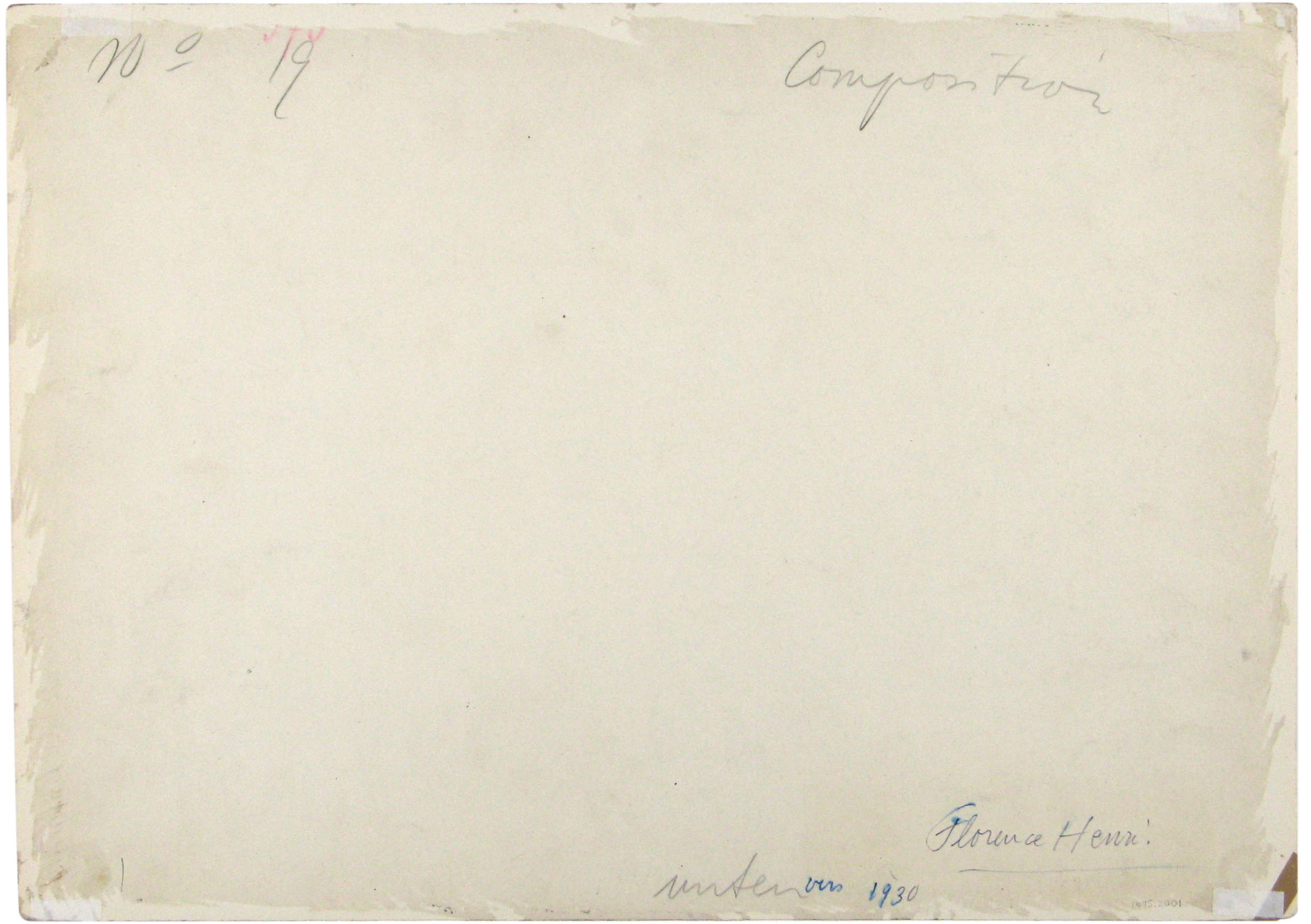
- Mount Type No mount - evidence previous mount
- Marks and Inscriptions Inscribed in pencil on sheet verso, top left: No. 19. Inscribed in pencil on sheet verso, top right: Composition. Signed in blue ink on sheet verso, bottom right: Florence Henri [underlined]. Inscribed in pencil on sheet verso, bottom center: unten. Inscribed in blue ink on sheet verso, bottom right: vers 1930.
-
Provenance
The artist, Paris; to Romeo Martinez, Paris [1]; sold through Sotheby's New York ("Photographs Including the Collection of Romeo Martinez and J. Kasmin") to Thomas Walther, May 10–11, 1983 [2]; purchased by The Museum of Modern Art, New York, 2001.
[1] Jürgen Wilde, letter to Simon Bieling, May 12, 2005; and Thomas Walther, e-mail to Maria Morris Hambourg, November 21, 2013.
[2] Walther, e-mail to Hambourg.
Surface
-
Retouch Detail
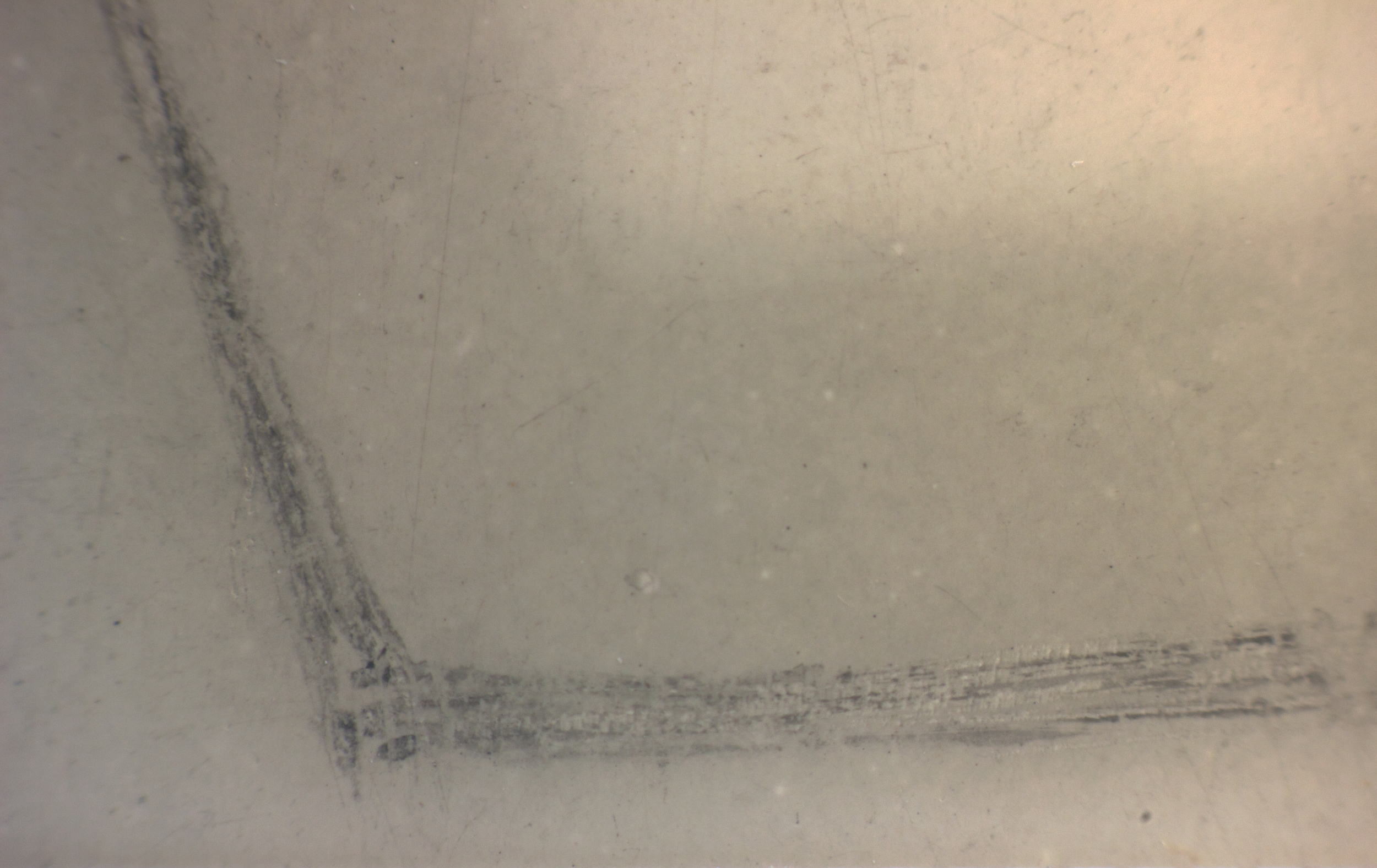
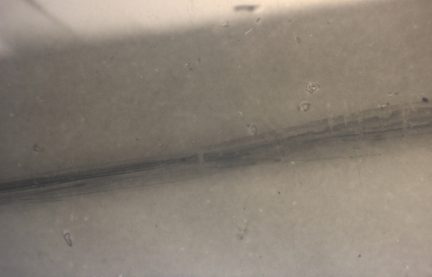 Detail showing aqueous retouching applied with a brush. The area of detail is 14 x 22 mm. Department of Conservation, MoMA
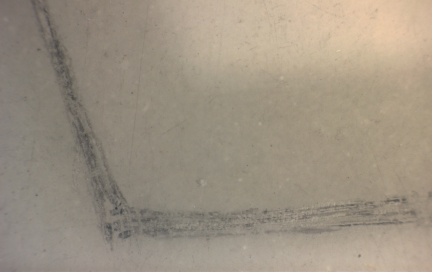 Detail showing etching over aqueous retouching applied with a brush. The area of detail is 14 x 22 mm. Department of Conservation, MoMA
 - Surface Sheen Glossy
- Techniques Retouching (additive) Enlargement Retouching in negative
-
PTM
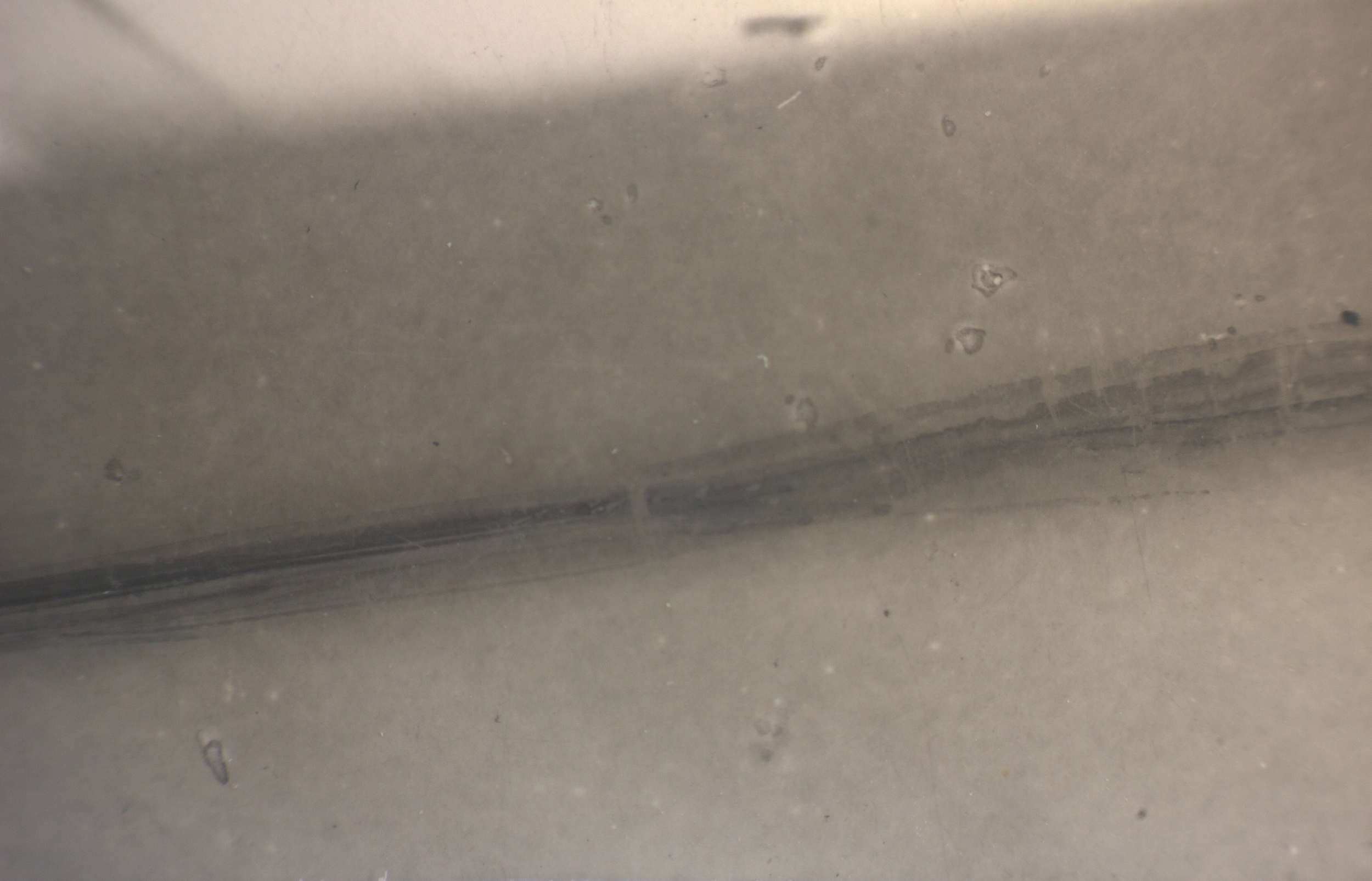
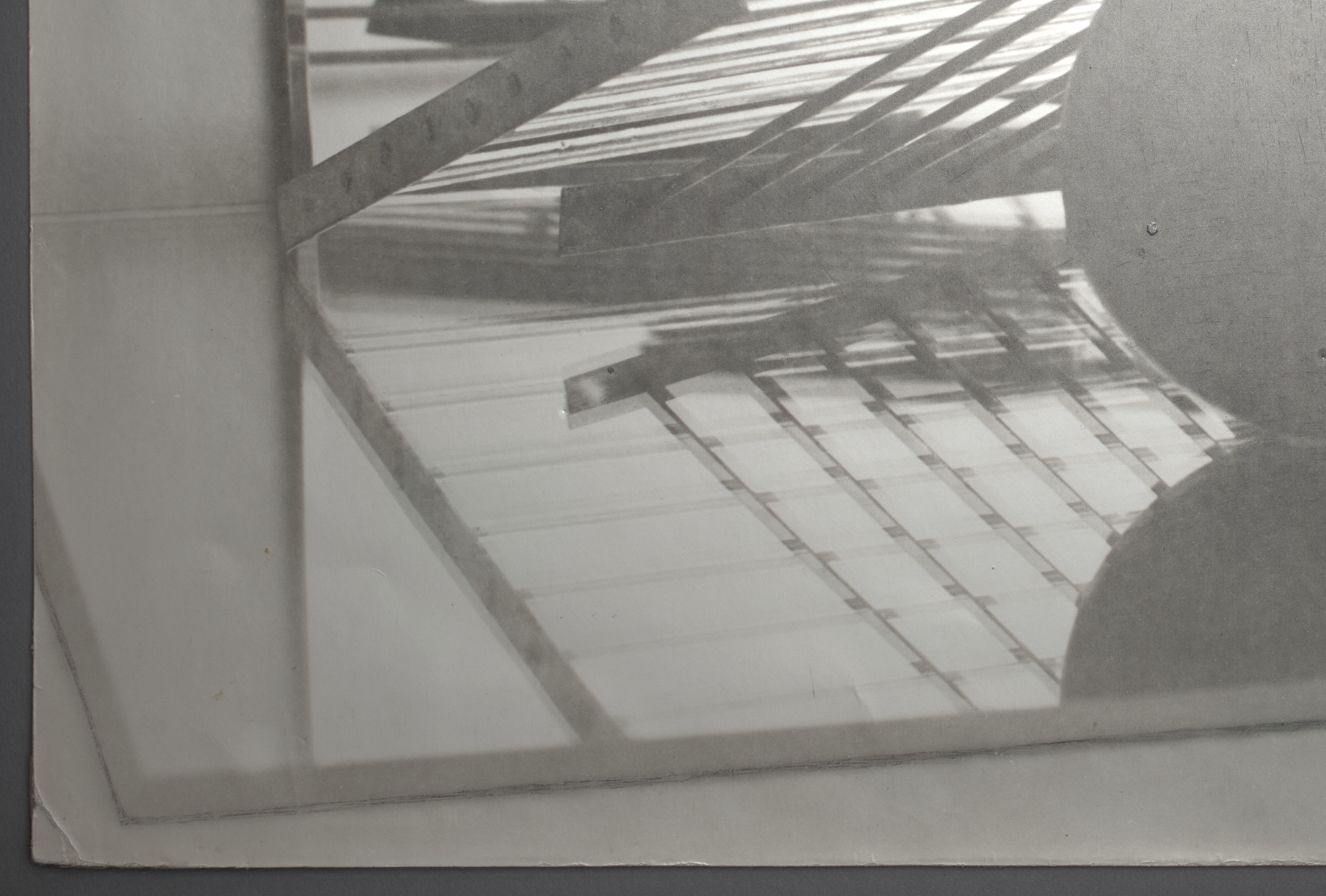
 Detail view of the recto of the artwork made using reflectance transformation imaging (RTI) software, which exaggerates subtle surface details and renders the features of the artwork plainly visible. Department of Conservation, MoMA
 -
Micro-raking
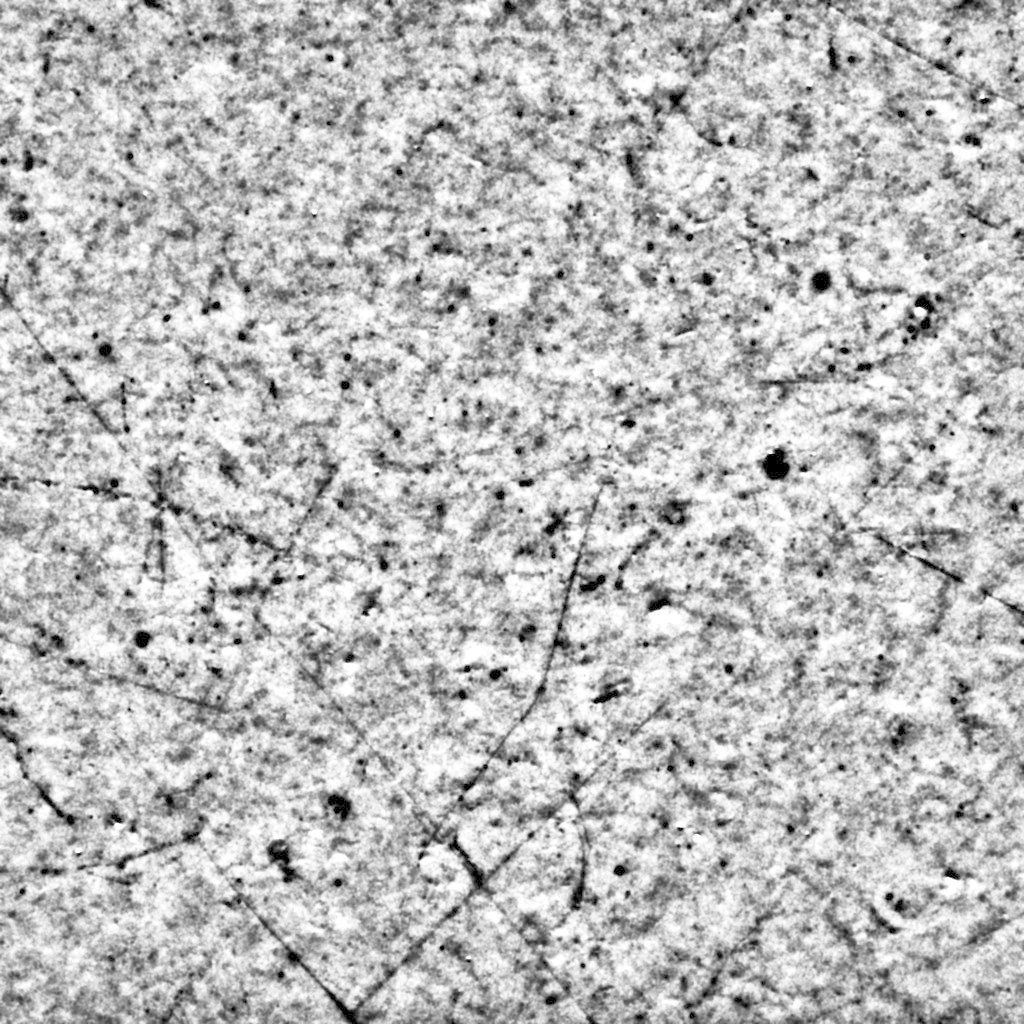
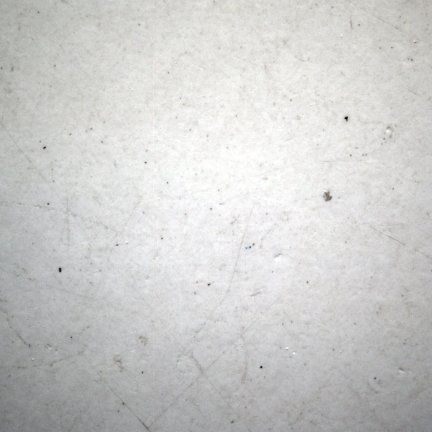 Raking-light close-up image, as shot. Area of detail is 6.7 x 6.7 mm. Department of Conservation, MoMA
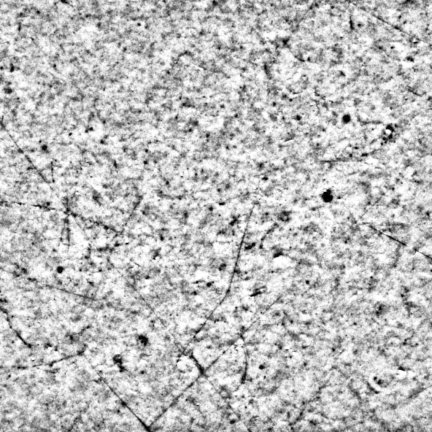 Raking-light close-up image, processed. Processing included removal of color, equalization of the histogram, and sharpening, all designed to enhance visual comparison. Department of Conservation, MoMA

Paper Material
- Format Metric
- UV Fluorescence Recto negative Verso negative
- Fiber Analysis Softwood bleached sulfite 95% Hardwood bleached sulfite .5% Rag Rag 4%
- Material Techniques Developing-out paper
-
XRF
This work was determined to be a gelatin silver print via X-ray fluorescence (XRF) spectrometry.
The following elements have been positively identified in the work, through XRF readings taken from its recto and verso (or from the mount, where the verso was not accessible):
- Recto: P, S, Ca, Zn, Sr, Ag, Ba
- Verso or mount: not available
The graphs below show XRF spectra for three areas on the print: two of the recto—from areas of maximum and minimum image density (Dmax and Dmin)—and one of the verso or mount. The background spectrum represents the contribution of the XRF instrument itself. The first graph shows elements identified through the presence of their characteristic peaks in the lower energy range (0 to 8 keV). The second graph shows elements identified through the presence of their characteristic peaks in the higher energy range (8 to 40 keV).
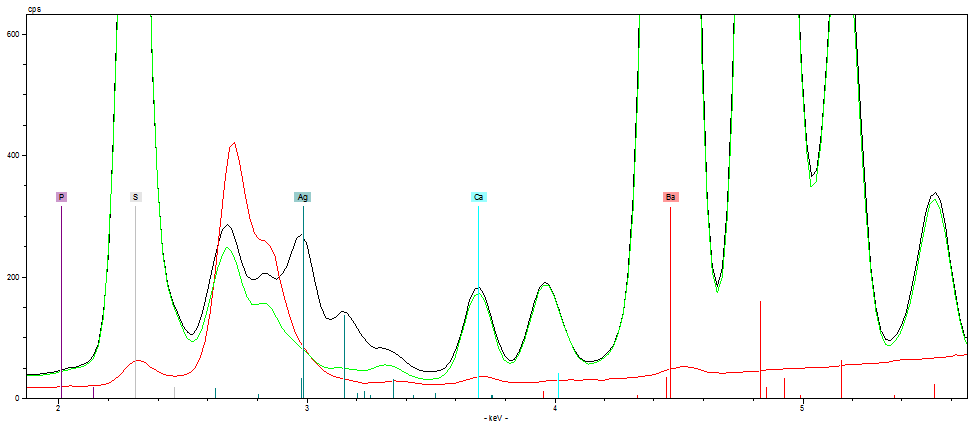 Areas examined: Recto (Dmax: black; Dmin: green), Background (red)
Elements identified: P, S, Ca, Ag, Ba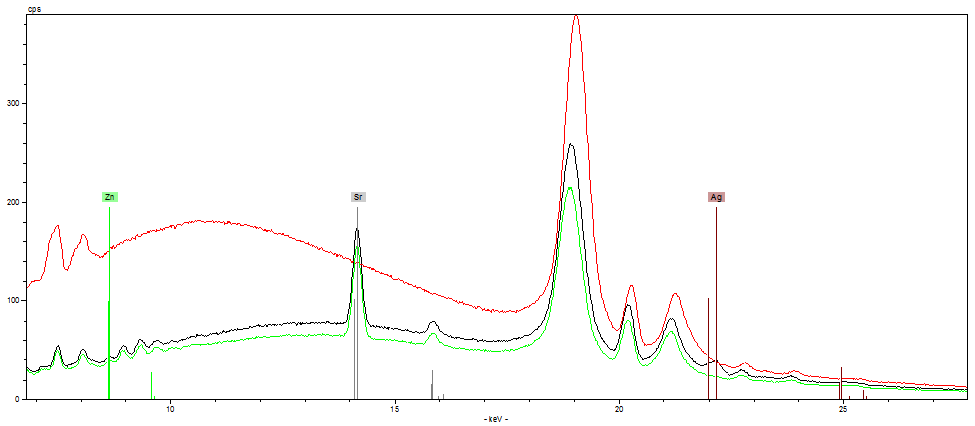 Areas examined: Recto (Dmax: black; Dmin: green), Background (red)
Elements identified: Zn, Sr, Ag
In Context
Related People
-
Artist
Related Links
- Cultural Hubs Paris
