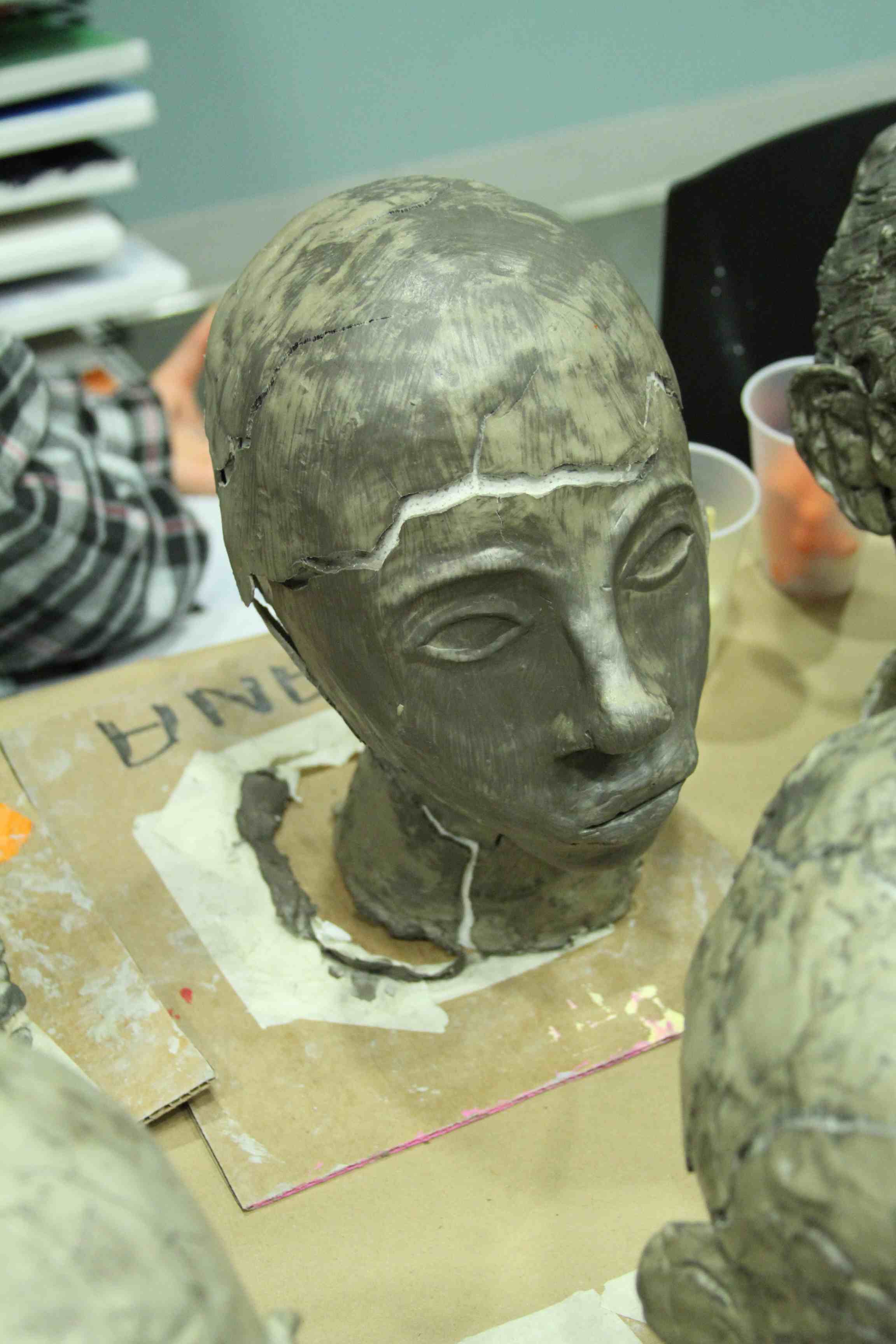
One of the cracked busts awaiting repair
99% of the projects that we create with our In the Making teens go off without a hitch, but every so often we find ourselves scrambling to figure out a last-minute solution when something goes wrong.


One of the cracked busts awaiting repair
99% of the projects that we create with our In the Making teens go off without a hitch, but every so often we find ourselves scrambling to figure out a last-minute solution when something goes wrong.
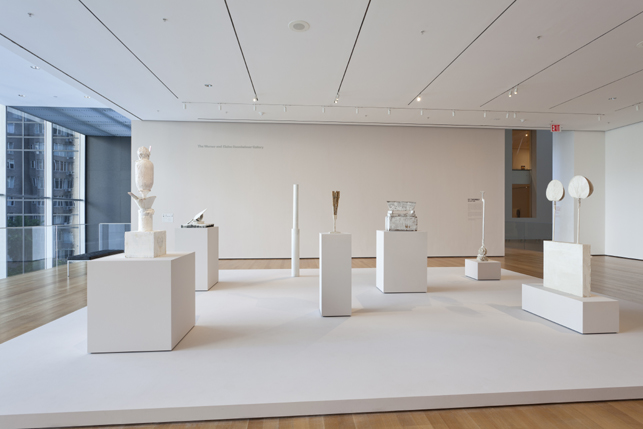
Installation view of Cy Twombly: Sculpture at MoMA (May 20–October 3, 2011). Photo: Jonathan Muzikar.
On July 5, the art world lost one of its key figures when Cy Twombly passed away. A remarkably innovative and deeply influential artist, Twombly left an important legacy that resonates in a broad range of contemporary work.
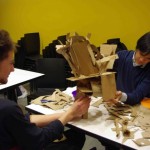
In the Making is a free, ten-week program for NYC teens that offers studio art making as led by various artist-educators in the field. For the past 6 weeks, MoMA educator Mark Dzula has been leading the teens in his Music for the Eyes class through the strange and wonderful world of sound-art and sound-based installations.
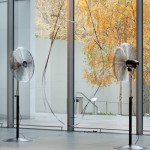
Zilvinas Kempinas’s sculptures are magic. Somehow, the air currents created by two industrial-strength fans turn the two loops of videotape in Double O into a living, dancing sculpture, performing tirelessly for hours in MoMA’s Agnes Gund Garden Lobby.
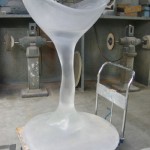

Egg Pedestal 3-D Screen
Getting my initial epiphany of forms for Nocturne of the Limax maximus, which will be installed in MoMA’s lobby on November 17, into its physical manifestation was a multilayered process, with each step leading to the next—and in strange ways going backward at times to maximize the potential of the previous step’s efficiency and interconnectedness with the subsequent steps of production.

In last week’s post, we discussed how Claes Oldenburg made his oversized soft sculpture Floor Cake, and we considered some of its current condition issues. This week we are conducting a more in-depth examination of the materials Oldenburg used to create the work. Material analysis will assist us in the development of a plan to treat the sculpture. Our treatment decisions may change as our understanding of Floor Cake increases through continued examination of both the object and its place in art history.
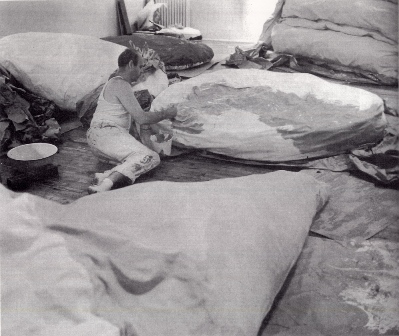
Oldenburg painting his first soft sculptures on the floor of the Green Gallery. Floor Cake can be seen in the background. Image courtesy of MoMA
When developing a treatment plan for a work of art, it is essential to understand as much as possible about the materials the artist used. At MoMA, we keep extensive files on the artists and objects in our collection—from curatorial files containing past articles, acquisition information, and correspondence, to Conservation Department records documenting previous treatments, condition history, and technical analysis, among other materials—so that’s where we usually start. After reviewing all those sources, we undertook a thorough examination of the object. We began by photographing Floor Cake using a variety of lighting techniques to attempt to tease out as much information as possible. Under normal light conditions we observed that the chocolate drop appeared significantly more saturated than the rest of the cake. The drop has that gloss and sheen we associate with an oil-based paint. We suspected that Oldenburg was using acrylic paint as well as an oil-based paint he may have had left over from The Store. (For The Store, as we discussed in our first post, he used an alkyd resin paint or an ester modified with drying oils.)
If you are interested in reproducing images from The Museum of Modern Art web site, please visit the Image Permissions page (www.moma.org/permissions). For additional information about using content from MoMA.org, please visit About this Site (www.moma.org/site).
© Copyright 2016 The Museum of Modern Art