Posted by
Hannah Kim, Marketing and Book Development Coordinator, Department of Publications
Tauni Malmgren, Freelance Social Media Coordinator
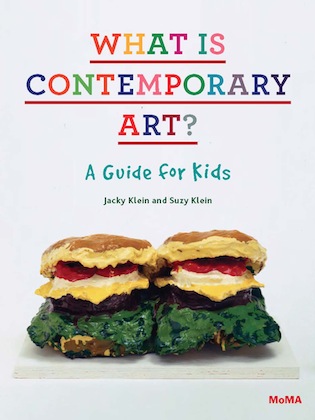
Cover of What is Contemporary Art? A Guide for Kids by Jacky Klein and Suzy Klein, published by The Museum of Modern Art
MoMA’s current exhibition, Claes Oldenburg: The Street and The Store, celebrates the early years of artist Claes Oldenburg’s extraordinary career, when he experimented with painting and sculpture by reworking the stuff of every day into larger than life objects made with unexpected materials.
Posted by
Hannah Kim, Marketing and Book Development Coordinator, Department of Publications
Tauni Malmgren, Freelance Social Media Coordinator
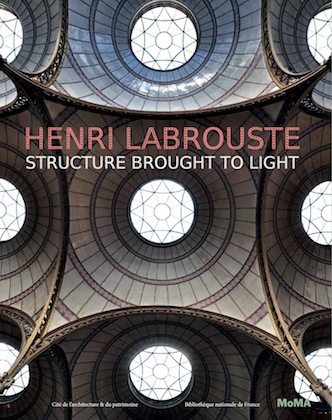
Cover of the exhibition catalogue Henri Labrouste: Structure Brought to Light, published by The Museum of Modern Art
French architect Henri Labrouste (1801–1875) may not be an instantly recognizable name, yet he is one of the most influential precursors of modern architecture. Most well known for two luminous library reading rooms built in Paris in the 1800s, the Bibliothèque nationale de France (1838–50) and the Bibliothèque Sainte-Geneviève (1859–75), Labrouste has been long admired by both modernists and postmodernists for his innovative embrace of then-new technologies, like cast iron and gas lighting.
Posted by
Hannah Kim, Marketing and Book Development Coordinator, Department of Publications
Tauni Malmgren, Freelance Social Media Coordinator
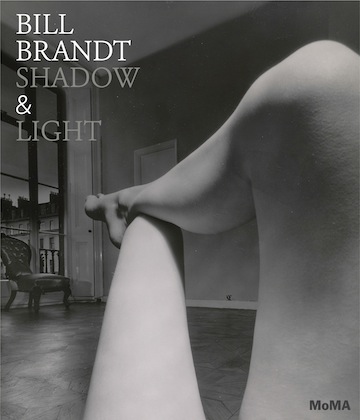
Cover of the exhibition catalogue Bill Brandt: Shadow & Light, published by The Museum of Modern Art
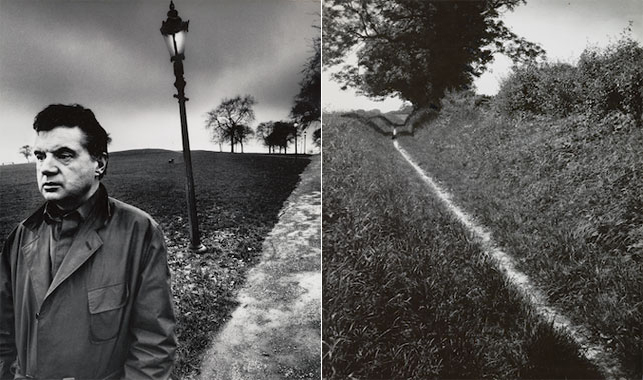
MoMA’s new book Bill Brandt: Shadow and Light by Sarah Hermanson Meister, curator in the Department of Photography at MoMA, is a fresh look at the work of an iconic British photographer. The exhibition currently on view isn’t the first time MoMA has presented Bill Brandt’s work to the public—the last Brandt retrospective was in 1969. Since then, the Museum’s perspective of Brandt’s work has evolved into a more complete consideration of the nuances and variations in Brandt’s own photo-historical approach.
Brandt’s photography is traditionally presented in thematic groupings at the artist’s own request, but this view alone simplifies a body of work that is multifaceted and far-reaching in style, influence, and subject matter. Bill Brandt: Shadow and Light is the most comprehensive overview of Brandt’s work to date, and it attempts to create a coherent trajectory across five decades of his career.
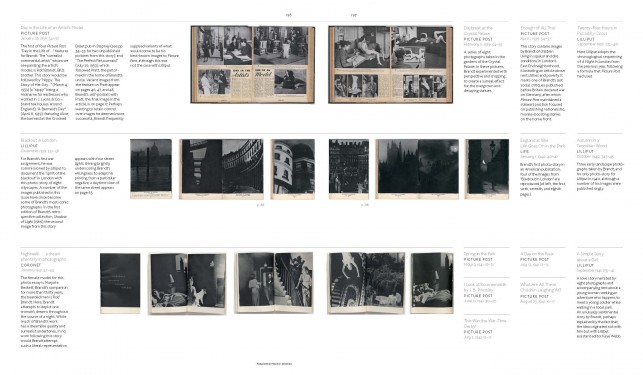
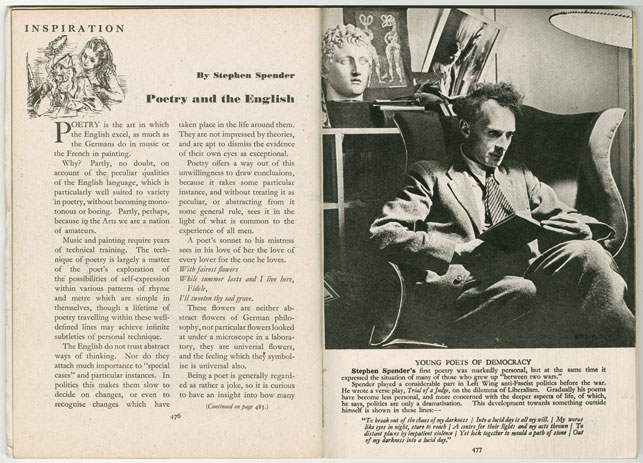
Beyond the 160 tri-tone reproductions of his photographs, the book features a rich appendix that illuminates different aspects of Brandt’s oeuvre. A section on Brandt’s photo-stories from 1939 to 1945 reproduces spreads from the publications in which they originally appeared, and a detailed survey of his methods for retouching his photos is especially fascinating in today’s world of digital cameras, smart phones, and instant photo filters. Brandt often spoke about how important the retouching process was in his work, and by looking at the various tools and techniques he used to edit and perfect his final images, photo conservator Lee Ann Daffner’s illustrated glossary dives deep into Brandt’s working process. As discussed in a prior INSIDE/OUT post, Dating Brandt, the same negative can look completely different depending on when Brandt retouched it.
Sample of Bill Brandt’s published photo-stories in the exhibition catalogue, Bill Brandt: Shadow & Light. The photo-stories are organized chronologically to suggest the breadth of Brandt’s artwork
Though his influences, subject matter, and technical approach shifted over his long career, Brandt never lost what Meister describes as “his obvious delight in the uncanny aspects of the everyday.” Her introductory essay opens with a quote from Brandt on the role of a photographer:
I believe this power of seeing the world as fresh and strange lies hidden in every human being. In most of us it is dormant. Yet it is there, even if it is no more than a vague desire, an unsatisfied appetite that cannot discover its own nourishment….This should be the photographer’s aim, for this is the purpose that pictures fulfill in the world as it is to-day. To meet a need that people cannot or will not meet for themselves. We are most of us too busy, too worried, too intent on proving ourselves right, too obsessed with ideas, to stand and stare.
Bill Brandt took the time to “stand and stare” in many different ways. Whether through juxtapositions of class structure, wondrous nudes, inventive portraiture, or unearthly landscapes, Brandt’s far-reaching inspirations and approaches generated arresting imagery that still holds magic and wonder today.
Posted by
Hannah Kim, Marketing and Book Development Coordinator, Department of Publications
Tauni Malmgren, Freelance Social Media Coordinator
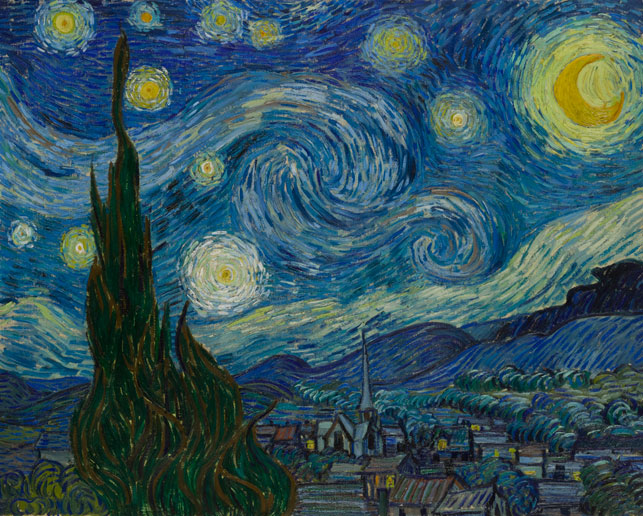
Vincent van Gogh. The Starry Night. 1889. Oil on canvas, 29 x 36 1/4″ (73.7 x 92.1 cm). The Museum of Modern Art, New York. Acquired through the Lillie P. Bliss Bequest
There is hardly an introduction that does Vincent van Gogh’s The Starry Night (1889) justice. It is one of the most recognizable and beloved artworks in the world, and for many MoMA visitors, it is the artwork to see—a celebrity perhaps signifying modern art itself. Yet despite its fame, few viewers are likely familiar with the story behind this unlikely masterpiece, one of the many nighttime paintings Van Gogh produced during his stay at a mental hospital in Saint-Rémy, in the south of France.
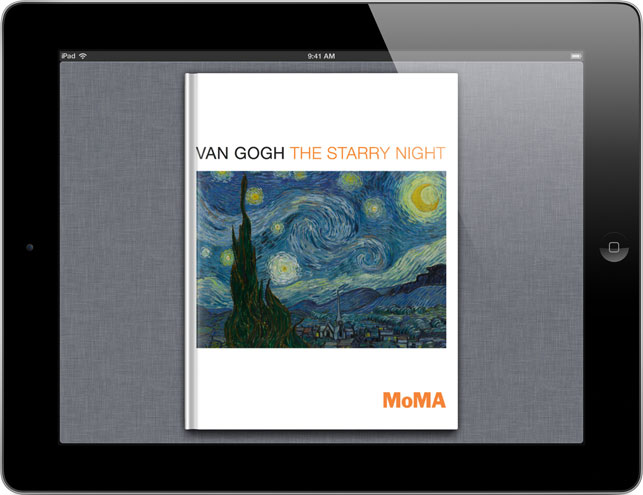
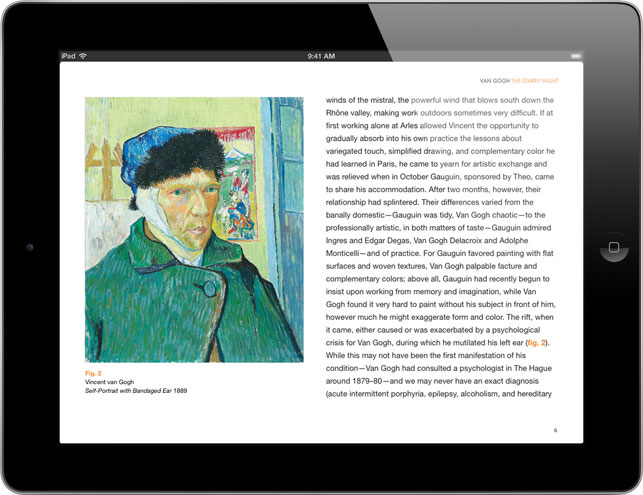
Now available for the iPad, MoMA’s One on One series offers a sustained meditation on The Starry Night by art historian Richard Thomson that sheds light on the painting and transports readers to the environment in which it was created. In Thomson’s engaging essay filled with vivid visual references and snippets of Van Gogh’s personal correspondences, readers can catch a glimpse of the artist’s complex inner workings and the thought processes that went into creating the nighttime scene.
Screenshots from Van Gogh: The Starry Night
What’s more, Thomson examines the physical circumstances behind The Starry Night, taking readers to the actual place where Van Gogh focused his attentions to the night sky, and highlighting the artist’s technique and style. Thomson also considers other artwork that Van Gogh may have seen at the time, placing The Starry Night in a broader historical context.
For more on The Starry Night, visit the iBookstore to download a free sample, and check out the other One on One series book available for the iPad, Rousseau: The Dream, in which MoMA curator Ann Temkin illuminates Henri Rousseau’s last major painting.
Posted by
Frances Vigna, Intern, Department of Publications
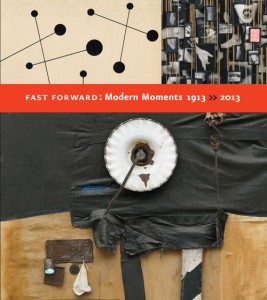
Cover of Fast Forward: Modern Moments 1913>>2013
Fast Forward: Modern Moments 1913 >> 2013, published to accompany the latest exhibition in The Museum of Modern Art’s ongoing collaboration with the High Museum of Art in Atlanta, details six significant moments in art history since the beginning of the 20th century.
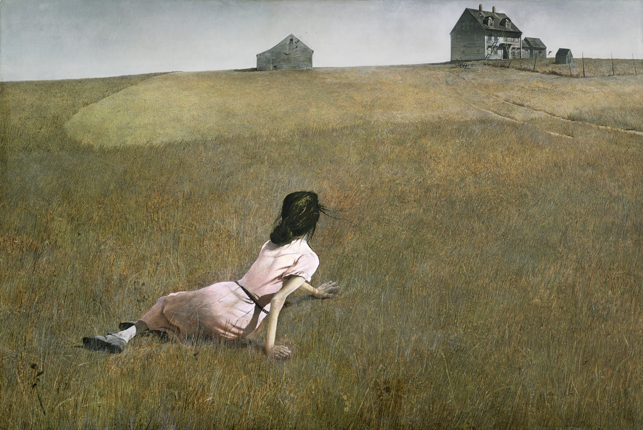
In 1949 The Museum of Modern Art acquired a modest-sized landscape painting from the Macbeth Gallery on 57th Street in New York City for $1,800—then considered a hefty sum for an artwork. The painting would go on to become one of the most recognized images in American art,
Posted by
Hannah Kim, Marketing and Book Development Coordinator, Department of Publications
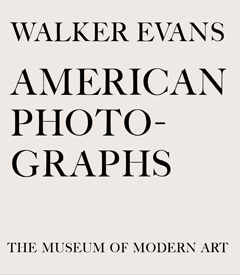
American Photographs cover image
Walker Evans’s <a href="http://www.momastore.org/museum/moma/ProductDisplay_Walker%20Evans:%20American%20Photographs,%20Seventy-Fifth%20Anniversary%20Edition_10451_10001_139043_-1_26683_11486_139049" target=_blank>American Photographs</a> is a touchstone for modern photography—a remarkable collection of photographs that shows a “poetics of editing and sequencing,” according to MoMA’s former Chief Curator of Photography Peter Galassi, that “helped to establish the photographer’s book as an indivisible unit of artistic expression.”
The Off the Shelf series explores unique MoMA publications from the Museum Archives.
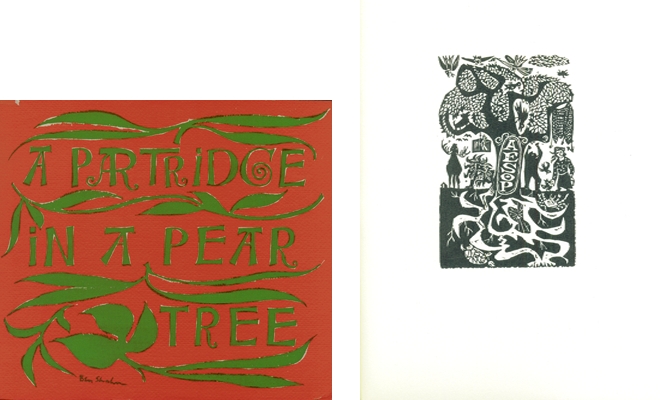
Right: Cover of A Partridge in a Pear Tree, illustrated by Ben Shahn. Second ed. New York: The Museum of Modern Art, 1951. Left: Frontispiece from 12 Fables of Aesop, illustrated by Antonio Frasconi; narrated by Glenway Wescott. New York: The Museum of Modern Art, 1954.
April is National Poetry Month! To celebrate the final days we thought we’d look at MoMA poetry books. MoMA has published a number of books of poetry, from the lyrically illustrated and hand-lettered A Partridge in a Pear Tree (1951), by Ben Shahn, to 12 Fables of Aesop (1954), illustrated by Antonio Frasconi and narrated by Glenway Wescott. One of my favorites is Three Young Rats and Other Rhymes, the delightfully illustrated book of 83 nursery rhymes selected by former MoMA curator James Johnson Sweeney and illustrated by Alexander Calder.
If you are interested in reproducing images from The Museum of Modern Art web site, please visit the Image Permissions page (www.moma.org/permissions). For additional information about using content from MoMA.org, please visit About this Site (www.moma.org/site).
Welcome to MoMA.org. To take full advantage of all the site’s features, including the option to save works in the collection, please upgrade your browser to Firefox,
Google Chrome, Safari, or Internet Explorer 9.
See our help page for more information.