MoMA
Posts tagged ‘printmaking’
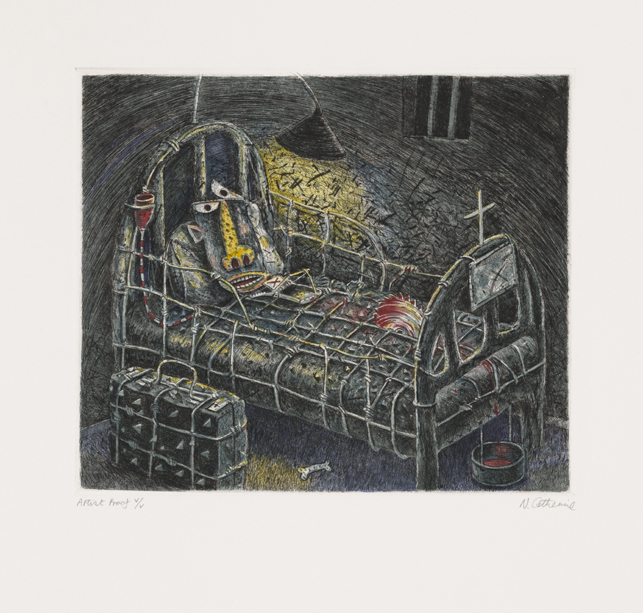
Spotlight: Norman Catherine in Impressions from South Africa, 1965 to Now

I was born in 1949 in the small coastal town of East London in South Africa. Other than two years of formal art training at high school, I am for the most part self-taught. I live at the Hartbeespoort Dam, which is about one hour’s drive northwest of Johannesburg. During the 1980s I spent time in Los Angeles and New York, and I held an exhibition at Area-X gallery in the East Village in 1986. Besides printmaking I also work in various other media, including painting, sculpture, mixed media, and bronze.

Outlet

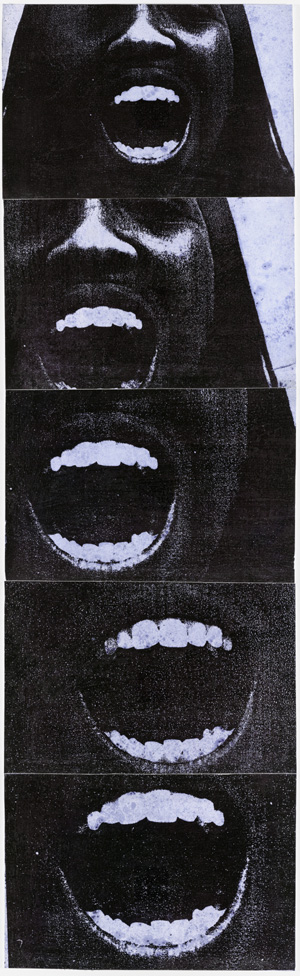
Ernestine White. Outlet. 2010. Photocopy with lithographic ink on five sheets. Publisher: unpublished. Printer: the artist at Michaelis School of Fine Art, University of Cape Town. Edition: 2 unique variants (in 2005 and 2010). General Print Fund, 2010. © 2011 Ernestine White

Within my practical body of work I attempt to present the viewer with a glimpse into my personal memories and experiences living in South Africa at various stages of my life.

The Power of Happiness: Cameron Platter’s Impressions from South Africa

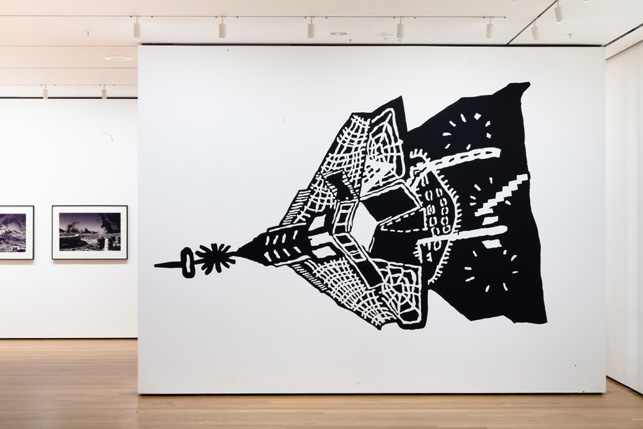
Installation view at MoMA of Kwakuhlekisa. 2007. Stencil, dimensions variable. Publisher: the artist, Shaka’s Rock, South Africa. Edition: 3. The Museum of Modern Art. General Print Fund. © 2011 Cameron Platter. Photo by Thomas Greisel

I’m delighted to have my work included in the exhibition Impressions from South Africa, 1965 to Now at The Museum of Modern Art, and in MoMA’s collection. And I’m a real fan of what’s been done, and highlighted, in this show.

I went to MoMA Cuba and…

Old Havana, Cuba

Admittedly, I was extremely anxious about traveling to Cuba. But now, having returned from a trip to Havana made possible through MoMA’s 12-month internship program, I feel enlivened. Although complicated politics  still surround Cuban-American relations, Cuba has much to offer. The beaches are as beautiful as the vistas in Old Havana. Music and dance can be heard and seen in the city as well as in its surrounding regions, making for a lively experience despite the visibility of poverty. Havana’s charmingly dilapidated urban landscape is speckled with a mix of Lada automobiles from the 1970s and modern Peugeots. And while Cuba’s backdrop may sometimes seem a little dated, its arts culture, and more specifically its contemporary printmaking scene, is far beyond its time.

Fandom for Phantom

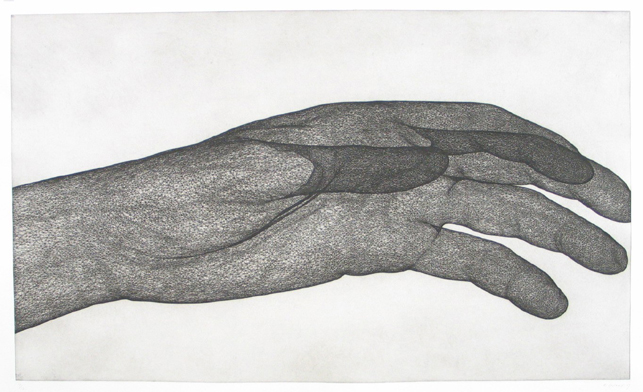
Richard Dupont. Phantom. 2007. Etching and aquatint. Publisher: Carolina Nitsch Contemporary Art, New York. Printer: Gregory Burnet, New York. Edition: 12. The Museum of Modern Art

Sometimes I just wish I were a printmaker. While I’ve embraced being able to familiarize myself with our department’s collection, mostly through preparation for study center visitors, it’s hard to avoid envying the person who gets to work in the studio and master the technical elements of printmaking. A work recently acquired by MoMA, Richard Dupont’s etching Phantom (2007)—which was among the artist’s earliest print projects—reveals the kind of artistic processes I am especially drawn to.

April 2, 2010  |  Tech
Prints and the Web—Introducing Picasso: Themes and Variations
Picasso Prints

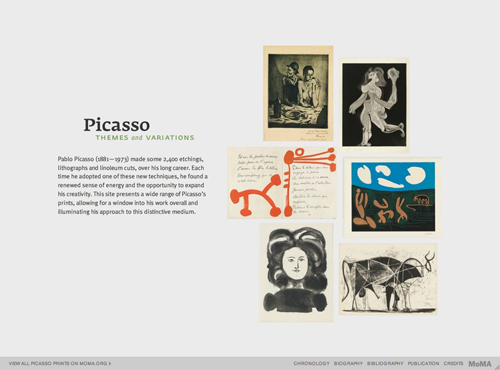
Screenshot of the Picasso: Themes and Variations website

When you think about printmaking, the Web may not be the first thing that comes to mind. You may envision instead old etching presses, or heavy lithographic stones, or stacks of paper waiting to hit the press. But in fact, MoMA’s Prints Department has long been interested in using the Web as a way of sharing information: using animated, interactive multimedia components as a way to make the material come alive. Our online projects are all available on MoMA.org, from our earliest experiments all the way back in 1998 with Miró’s Black and Red Series

March 25, 2010  |  Artists, Collection & Exhibitions
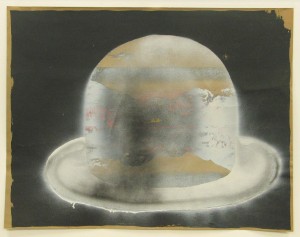
Dieter Roth’s Hat

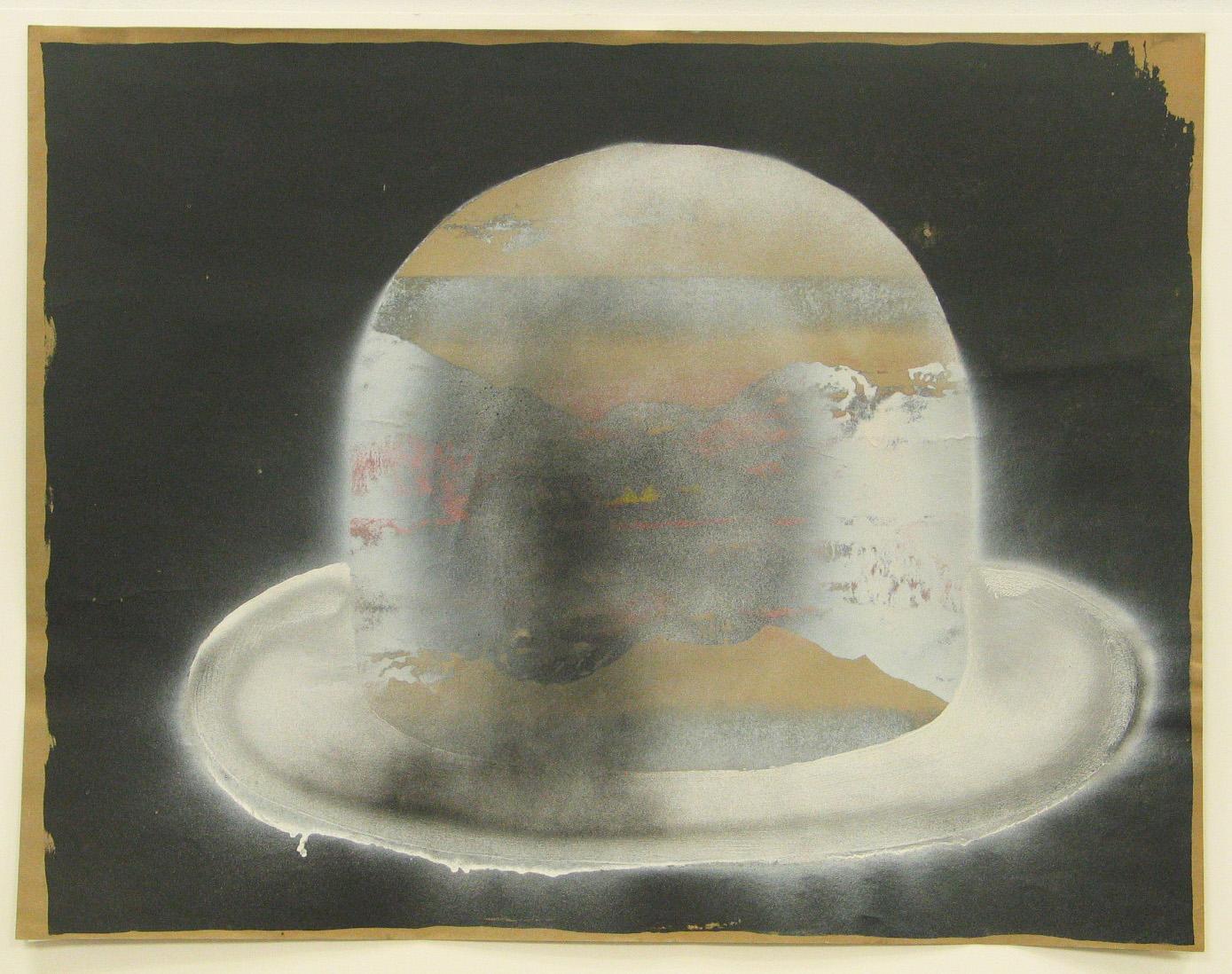
Dieter Roth. Hat. 1965. Screenprint over offset. Publisher and printer: the artist, New Haven. Edition: approx. 20 unique variants. The Museum of Modern Art. The Print Associates Fund, 2009. © 2010 Estate of Dieter Roth

Dieter Roth was a singularly important figure in postwar European art—an iconoclast, really—whose wide-ranging practice, including artist’s books, prints, drawings, sculpture, assemblages, sound recordings, film, music, and poetry, reverberated for decades to come. He was associated with kinetic art, Fluxus, Conceptual art, and concrete poetry, often blurring the boundaries between mediums and movements of the 1960s and 1970s.

As a printmaker, he totally pushed the envelope. He sent slices of greasy sausage and cheese through the printing press, stuck strips of licorice onto etchings, glued croissants onto the covers of the books he designed. He also worked with more traditional techniques like screenprint and etching, sometimes combining them to play with different experimental effects.


December 10, 2009  |  Artists
Picasso on Rembrandt

Pablo Picasso. After Rembrandt: Ecce Homo. 1970, published 1978.

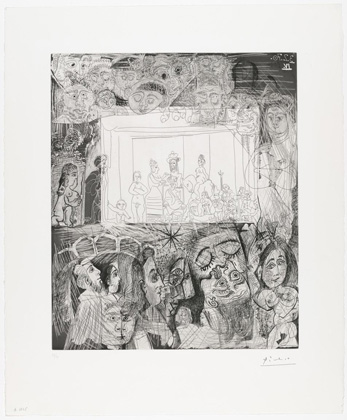
Pablo Picasso. After Rembrandt: Ecce Homo. 1970, published 1978. Etching and aquatint. The Museum of Modern Art. The Edgar Wachenheim III Fund, 2009. © 2009 Estate of Pablo Picasso/Artists Rights Society (ARS), New York

There are lots of reasons why a work might be acquired for MoMA’s collection. Sometimes, the intense preparations for an upcoming exhibition provide a great opportunity to step back, take a careful look at what we already have, and see if there are gaps that need to be filled in our holdings of an artist’s work. This was recently the case as we researched an upcoming exhibition that, along with an accompanying catalogue and website, will explore Pablo Picasso’s creative process through the lens of printmaking. We took a close look at MoMA’s Picasso prints by theme, by technique, and by chronology, and discovered that we didn’t have a strong enough representation of Picasso’s late period (from about 1965 to his death in 1973), which has often been overlooked and underappreciated.