MoMA
Posts in ‘Conservation’
February 1, 2012  |  Artists, Collection & Exhibitions, Conservation
Diego Rivera: How to Make a Portable Mural

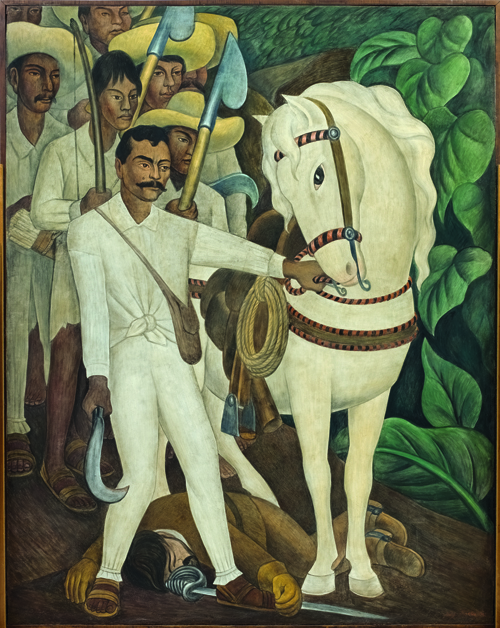
Diego Rivera. Agrarian Leader Zapata. 1931. Fresco on reinforced cement in a galvanized-steel framework, 93 3/4 x 74

The focus of the exhibition Diego Rivera: Murals for The Museum of Modern Art, currently on view on the second floor, is a set of “portable murals” Rivera made for his retrospective exhibition at MoMA in 1931.

April 20, 2011  |  Artists, Conservation
Conservation and a Different Kind of Guitar God

No matter one’s specialization, there are certain questions that all art conservators are asked, including:

Aren’t you scared to do what you do? The answer to this question is sort of a bluff: Our training and experience greatly inform our decision-making about conservation interventions, which are preceded by extensive testing. Nonetheless, some treatments are still a little scary.

March 16, 2011  |  Conservation, Film
Film Preservation in the Digital Age

With Turner Classic Movies (TCM) celebrating MoMA’s film-preservation work with a special 24-hour festival (all day today!) featuring 14 preserved films, I thought it made good sense to write about our efforts to preserve films, the background and importance of film preservation, and about the Celeste Bartos Film Preservation Center, where this valuable works take place and where the Museum stores all of its films in climate-controlled conditions to prevent any further deterioration.

March 15, 2011  |  Conservation, Film
Turner Classic Movies Presents 24 Hours of Films Preserved by MoMA

On Wednesday, March 16, Turner Classic Movies (TCM) will celebrate the film preservation work of The Museum of Modern Art with 24-hour program of 14 films drawn from MoMA’s collection. Chief curator of film Rajendra Roy and I flew to Los Angeles in late February to tape cohosting spots with the well-known TCM host Robert Osborne. We were eager to be a part of TCM’s ongoing commitment to spotlighting efforts to protect the world’s cinema heritage. And we also got to sit in the red leather chairs during the interview with Mr. Osborne!

December 8, 2010  |  Artists, Conservation
Conservation of Floor Cake (Part 8)

This is the final blog post for the conservation of Claes Oldenburg’s Floor Cake.

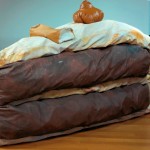
Below you can see the individual layers after cleaning.

October 28, 2010  |  Conservation, Film
Rescuing Mangue-Bangue
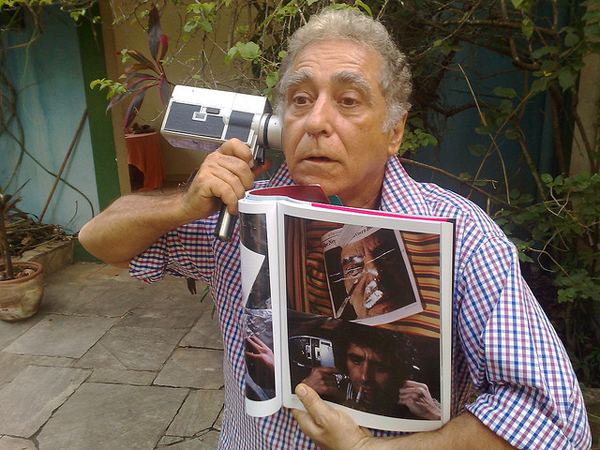
Mangue Bangue director Neville D’Ameida photographed during a comic moment, Rio de Janeiro, Brazil, 2008

Mangue-Bangue director Neville D’Ameida photographed during a comic moment, Rio de Janeiro, Brazil, 2008

I take my work as a curator very seriously. I consider myself fortunate to put into practice on a daily basis the knowledge I gained as an undergraduate and graduate film and art history student. But honestly, we’re not saving lives here at MoMA or finding the means for alternate energy sources that will sustain our planet for millennia. My mother is proud of my professional achievements too, but she’ll never have the chance to say to her friends “my daughter, the Nobel Prize winner.” Even so, the work of a film curator is significant, enduring, and critical to the history of cinema.


September 9, 2010  |  Artists, Conservation
Conservation of Floor Cake (Part 7)

Over the course of the past few months the conservation of Floor Cake has been completed.  We would like to use the next posts to describe our treatment and the results.

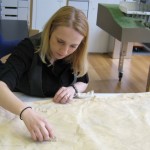
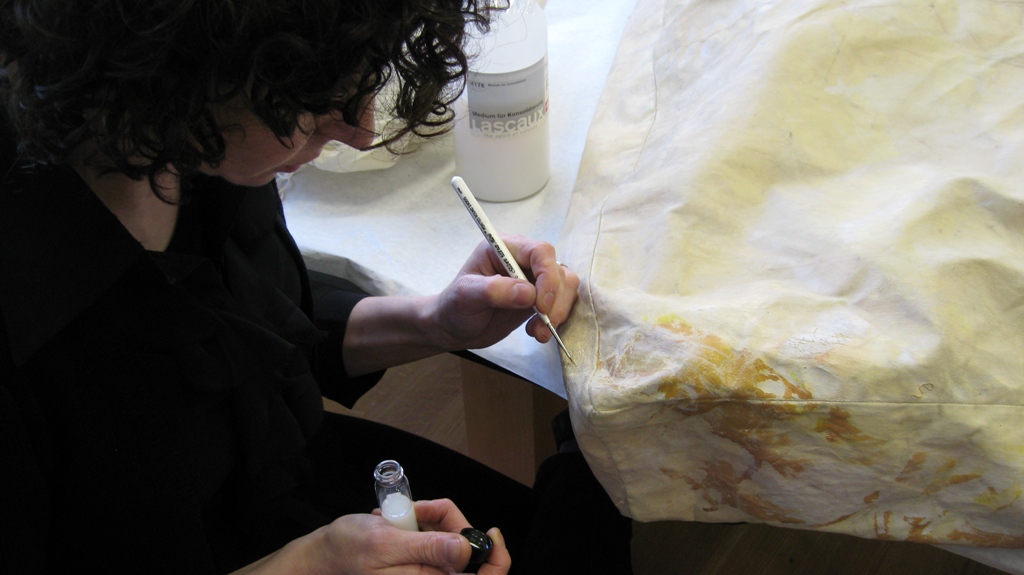
Before cleaning we consolidated any areas of flaking paint with Lascaux Acrylic Adhesive.

Lascaux was chosen for its low viscosity or ability to wick under paint and mattness upon drying.

We then found that a combination of cleaning techniques yielded the safest and best results. We first vacuumed the entire surface of the cake with a variable-suction vacuum set to very low suction. Then we began with dry cleaning to see just how much dirt and grime we could remove without moisture. Of all of our methods, we found rubber soot sponges to be very gentle and highly effective. We cut the sponges into small, manageable wedges and then lightly rubbed and patted the entire surface overall, including the drop and sprinkle, to remove an initial layer of grime.

May 21, 2010  |  Artists, Conservation
Conservation of Floor Cake (Part 6)

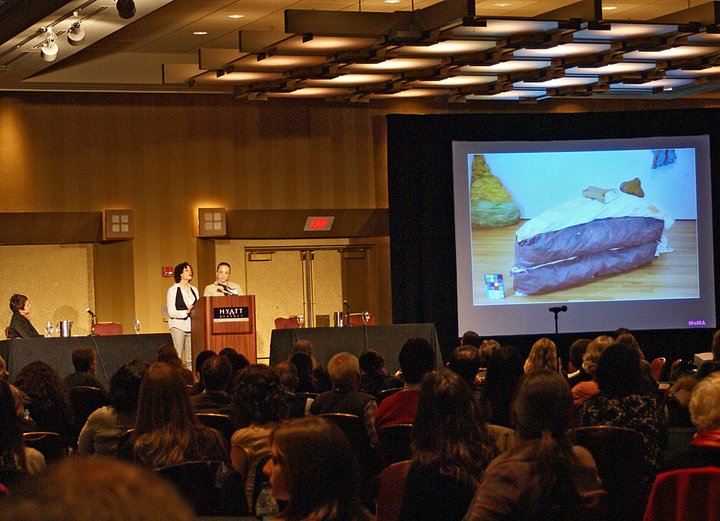
At AIC, Cindy Albertson and Margo Delidow discuss the history and treatment of Floor Cake

We’ve taken a short break from writing about Claes Oldenburg’s iconic Floor Cake sculpture—currently undergoing conservation treatment here at MoMA—to prepare a lecture for last week’s annual meeting of the American Institute for Conservation of Historic and Artistic Works (AIC), in Milwaukee, Wisconsin. Conservators, educators, and scientists gather each year to discuss new types of treatments for works of art and to examine the effects of past treatment. Our presentation focused on the history of Floor Cake and its condition (please see our previous posts), as we have been working to conserve this unique and popular work for the past several months.

March 8, 2010  |  Artists, Conservation
Claes Oldenburg: Conservation of Floor Cake (Week 5)

In our previous posts we discussed the materials and methods used by Claes Oldenburg to create Floor Cake, the artist’s unique and popular piece of painted cake currently undergoing conservation treatment here at MoMA. This week, we investigate the properties of Floor Cake’s surface dirt, to help us prepare an optimal cleaning solution to remove dirt and grime from the sculpture’s painted surface.

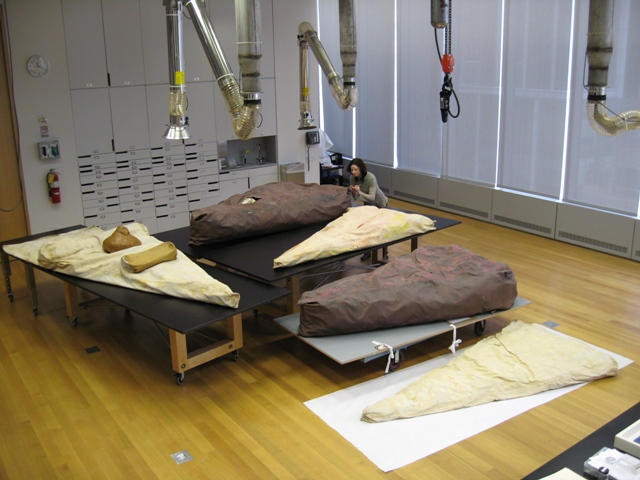
Floor Cake disassembled during treatment

November 23, 2009  |  Artists, Conservation
Claes Oldenburg: Conservation of Floor Cake (Week 4)
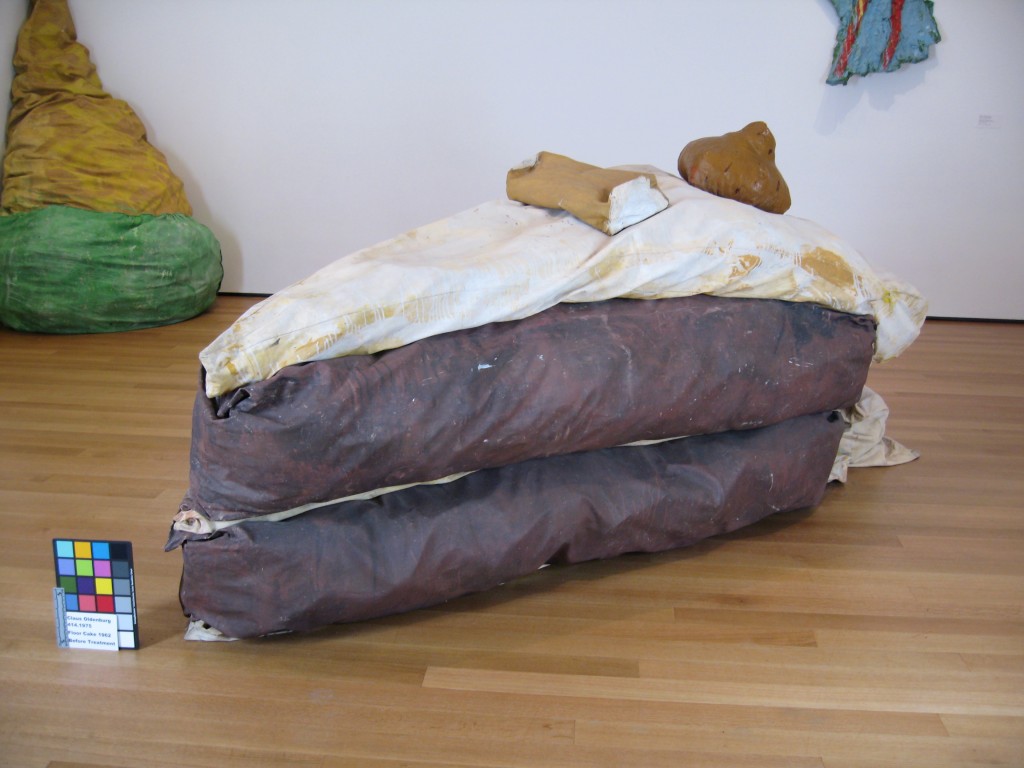
Floor Cake, MoMA gallery

Floor Cake, installed in a MoMA gallery

Looking forward, our preservation of Claes Oldenburg’s Floor Cake aims to bring the object to a state that more closely resembles the artist’s original intent. It will also stabilize the condition of the sculpture so that it can both endure a rigorous exhibition schedule and be safe in long-term storage. To develop a successful treatment plan, we considered the sculpture in distinct sections based on its materials: