Over the past nine months, Inside/Out readers have been following MoMA’s Jackson Pollock Conservation Project, the study and restoration of three iconic Pollock paintings in the Museum’s collection.


Posts in ‘Conservation’
May 1, 2013
|
Collection & Exhibitions,
Conservation,
Jackson Pollock Project,
Videos
MoMA’s Pollock Conservation Project: Video Update on One: Number 31, 1950

April 17, 2013
|
Behind the Scenes,
Conservation,
Jackson Pollock Project
MoMA’s Jackson Pollock Conservation Project: Insight into the Artist’s Process
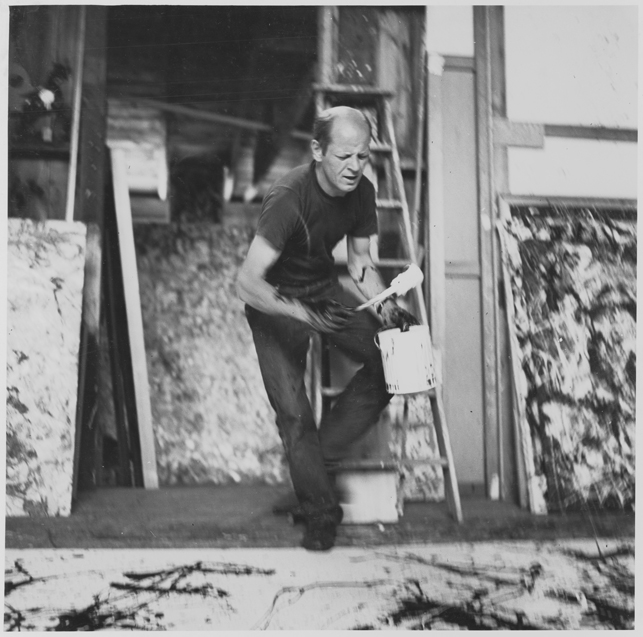
Jackson Pollock at work in his studio, 1950. Photo: Hans Namuth
In the May 1951 issue of ARTnews a selection of photographs by Hans Namuth appeared as illustrations for Robert Goodnough’s article, “Pollock Paints a Picture.” The images depict a focused Pollock energetically applying paint to a large canvas spread across his studio floor.
April 15, 2013
|
Behind the Scenes,
Conservation
Conserving a Nam June Paik Altered Piano
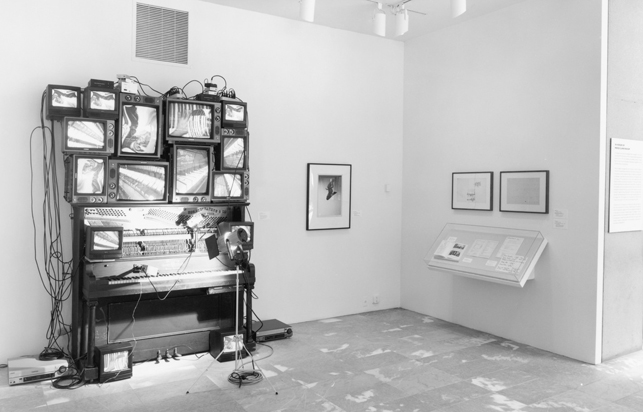
Nam June Paik. Untitled. 1993. Player piano, 15 televisions, two cameras, two laser disc players, one electric light and light bulb, and wires, overall approx. 8′ 4″ x 8′ 9″ x 48″ (254 x 266.7 x 121.9 cm), including laser disc player and lamp. Bernhill Fund, Gerald S. Elliot Fund, gift of Margot Paul Ernst, and purchase. © 2013 Estate of Nam June Paik
In 1993 MoMA acquired a piano modified with a floppy-disc drive player unit. In the gallery it plays jazz show tunes really loud. The piano also has 15 cathode ray tube (CRT) monitors stacked on it.
April 3, 2013
|
Collection & Exhibitions,
Conservation,
Le Corbusier Kitchen Conservation
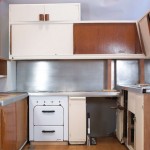
Le Corbusier Kitchen Conservation: Examining the Cross Sections
As soon as the Le Corbusier’s Unité d’Habitation kitchen arrived in MoMA’s sculpture conservation lab, we began assembling the various components to assess and document their condition.
March 13, 2013
|
Behind the Scenes,
Collection & Exhibitions,
Conservation,
Le Corbusier Kitchen Conservation
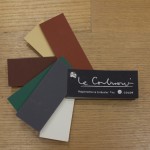
Le Corbusier Kitchen Conservation: Focus on Design
The Unité d’Habitation was a landmark in modern architecture and design, and one of the first attempts to create highly designed spaces for low-income families. Along with apartments, the building included a half floor reserved for merchants, a pre-school, and a rooftop playground with wading pool and gymnasium. Le Corbusier was extremely efficient in the use of space, modeling his design on that of cruise ships,
February 22, 2013
|
Artists,
Conservation,
Jackson Pollock Project
MoMA’s Jackson Pollock Conservation Project: One: Number 31, 1950—Characterizing the Paint Surface Part 1

MoMA Assistant Conservator Jennifer Hickey inspects the paint surface of One: Number 31, 1950 under magnification
In our last post, we took a closer look at the variety of visual effects Pollock was able to achieve with his painting technique. We also observed some passages of paint that don’t appear to fit the typical characteristics of poured house paint. So we set out to investigate this seeming inconsistency.
February 7, 2013
|
Behind the Scenes,
Collection & Exhibitions,
Conservation,
Le Corbusier Kitchen Conservation
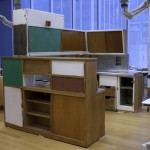
Le Corbusier Kitchen Conservation: Getting Resourceful
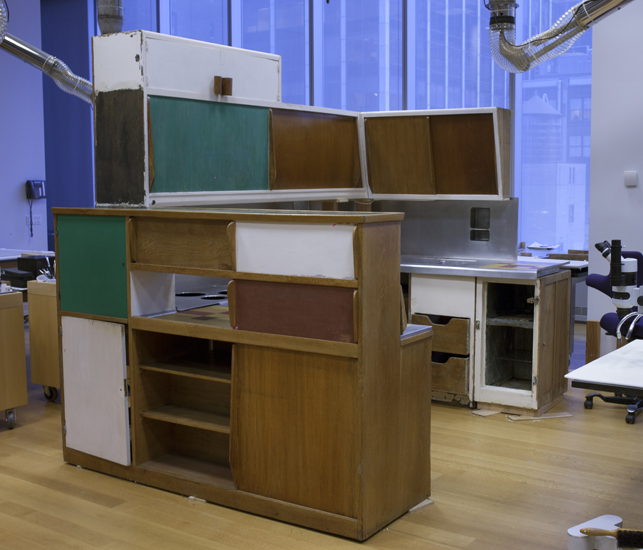
Charlotte Perriand and Le Corbusier. Kitchen from the Unité d’Habitation, Boulevard Michelet, Marseilles, France
One of the initial challenges in conserving a design piece that has been in use for over 60 years is assessing where the work has been modified over the years by the owners, and if it is truly complete. Like in our own homes, parts of this Le Corbusier kitchen have been replaced, painted over, lost, and damaged.

January 8, 2013
|
Artists,
Conservation,
Jackson Pollock Project
MoMA’s Jackson Pollock Conservation Project: Looking Closely at One: Number 31, 1950
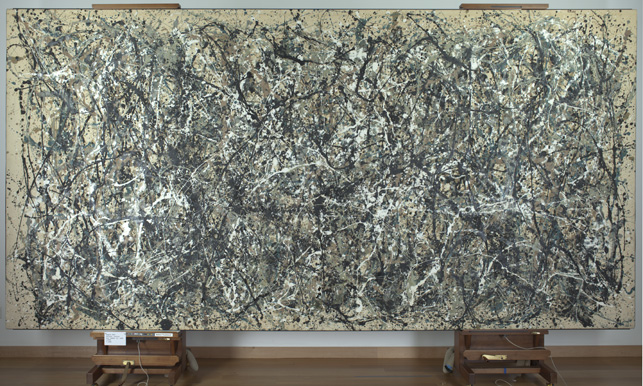
One: Number 31, 1950 before treatment
It’s a good time to be studying and working on Jackson Pollock’s paintings. With projects also underway at the Seattle Art Museum and The J. Paul Getty Museum
January 7, 2013
|
Artists,
Collection & Exhibitions,
Conservation,
Le Corbusier Kitchen Conservation
Le Corbusier Kitchen Conservation: Dismantle, Reconstruct, and Conserve
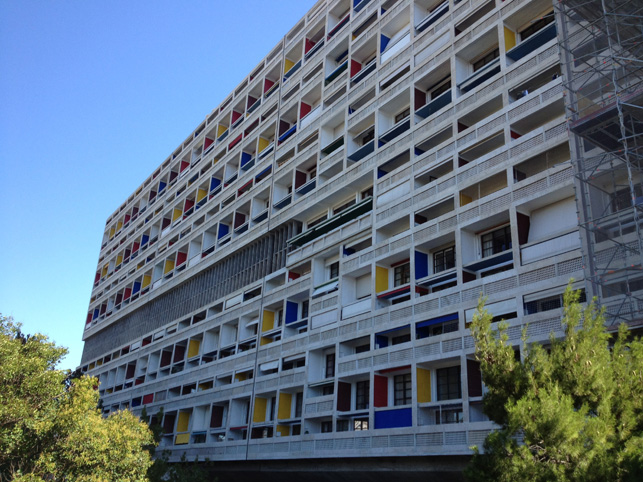
Unité d’Habitation, Boulevard Michelet, Marseilles, France
In the fall of 2011, we traveled to a leafy suburb of Munich, Germany, to examine a kitchen that the Department of Architecture and Design hoped to purchase. When we arrived, there in the garage of a collector we found an assembled kitchen from Unité d’Habitation, Le Corbusier’s famous apartment building in Marseille.
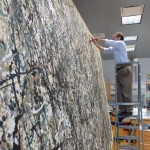
December 10, 2012
|
Artists,
Behind the Scenes,
Collection & Exhibitions,
Conservation,
Jackson Pollock Project
MoMA’s Jackson Pollock Conservation Project—An Ounce of Prevention…
We covered a lot of territory in our last post, documenting Echo’s condition and treating the discolored canvas. Our efforts have produced satisfying results.
If you are interested in reproducing images from The Museum of Modern Art web site, please visit the Image Permissions page (www.moma.org/permissions). For additional information about using content from MoMA.org, please visit About this Site (www.moma.org/site).
© Copyright 2016 The Museum of Modern Art
Welcome to MoMA.org. To take full advantage of all the site’s features, including the option to save works in the collection, please upgrade your browser to Firefox,
Google Chrome, Safari, or Internet Explorer 9.
See our help page for more information.
To take full advantage of all of the features on MoMA.org, please upgrade your browser to Firefox, Google Chrome,
Safari, or Internet Explorer 9.