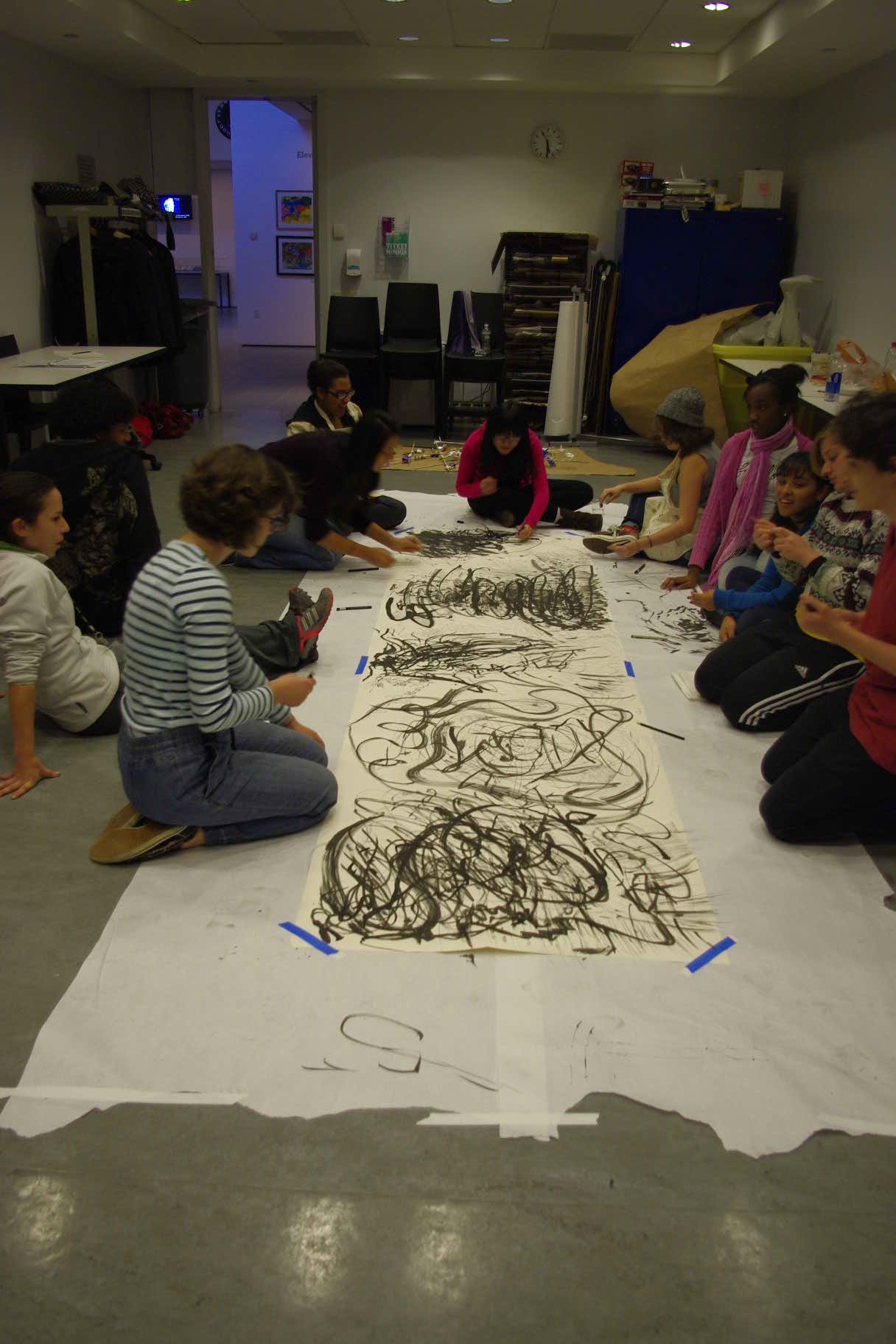
Teaching artist Mark Epstein has been running our In the Making—On the Line workshops this fall. Through studio activities and in-gallery discussions, he and the teens have been exploring the different definitions of what a line can be, while looking at the various ways in which the artists in the Abstract Expressionist New York and On Line shows have tried to express themselves through this most basic of forms. For this journal, Mark gets in-depth about a very unconventional drawing activity that he created with his students.
Posts by Calder Zwicky
Educator Journal: In the Making—Text & Image
Teaching artist Kiran Chandra has been taking the teens in her Text & Image workshops on a trip through the strange and sometimes confusing arena in which the written word and the visual arts collide. Whether viewing the work of Raymond Pettibon, Christopher Wool, and Paul Chan, or traveling down to Chelsea to meet with the staff of Printed Matter, Inc., these activities have definitely expanded the participants’ ideas of what it means to “write” an artwork or “read” a painting. Here, she discusses one of the group’s earliest art-making experiments.
Educator Journal: In the Making—Food & Art

A small portion of student artwork from the Food & Art class
For this Educator Journal, I asked teaching artist Alan Calpe to reflect upon the last seven weeks of his Food & Art class. Working with a diverse group of NYC teens, Alan has been investigating the Counter Space: Design and the Modern Kitchen exhibition and exploring the various cultural and social connotations that artists bring to the table (so to speak) when addressing the idea of food in their work. The class has been up to their elbows in paper maché, and we’re all eagerly awaiting their final food-based projects.
-Calder Zwicky, Associate Educator, Teen and Community Programs
Educator Journal: In the Making—Social Architecture
For this series of posts, I’ve asked the teaching artists from this season’s In the Making Art Classes to reflect on what they’ve been doing over the past couple of weeks with their teenaged students. Each In the Making class meets once a week—Tuesday or Thursday nights—and focuses on introducing the participants to the materials, techniques, artistic theories, and exhibitions currently on view in MoMA’s galleries. It’s a great way for teens to find a community of positive, creative peers outside of a high school setting, and all classes are offered completely free of charge to the participating students. For this entry, teaching artist Grace Hwang explores her process of introducing students to the themes and philosophies behind our Small Scale, Big Change: New Architectures of Social Engagement exhibition.
YWCA Community Mural Project: The Video
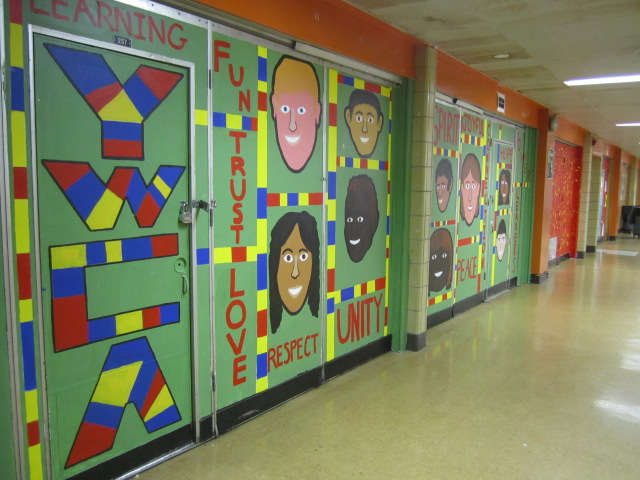
This short video piece was created around the mural project I’ve been doing with YWCA’s Fresh Start program at Murry Bergtraum High School in lower Manhattan. (You can read more about the project in a previous blog post.) The program targets freshman students who are in academic trouble and finds new and interesting ways to get them involved in their school and excited about their educational career.
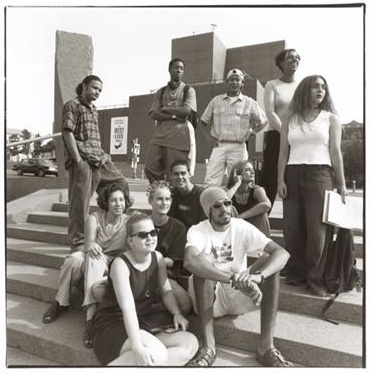
MoMA’s Community Murals: Connecting Students through the Arts
For teens, feeling disconnected from one’s peers, parents, and school is par for the course. In some ways, this disconnect can be a good thing: as teens move away from these childhood bonds, they begin a process of self-discovery and self-realization, figuring out who they are and who they want to be in the process.
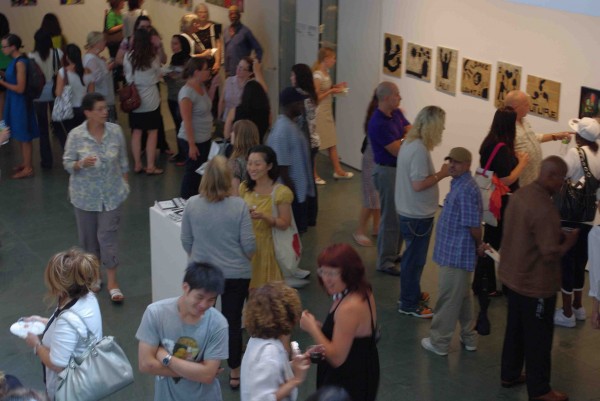
2010 Community Partners Art Show Opening
On Tuesday evening, MoMA held an opening party for our first-ever Community Partners Art Show. On view through July 30 in the lower gallery of the Cullman Education Building, the exhibition showcases artwork created in collaboration with the various populations served through the Museum’s twenty-nine different community partnership organizations. These organizations serve a wide variety of social, economic, and educational needs across a wide section of New York City, and the issues that our Community Partner Organizations address (issues that include but are not limited to homelessness, HIV/AIDS, juvenile incarceration, adult basic education, immigration services, prostitution, drug addiction, family literacy, and job training) are not issues that are immediately associated with traditional museum education.
My Life in Museums: The Importance of Community Outreach and Teen Programs
Yesterday afternoon I was teaching printmaking to students at a nonsecure educational facility run by the Juvenile Justice Department, when one of the teens showed me what he was working on and said, “My work looks good, man. You should put it up in your museum.”
He meant it jokingly, the sort of statement teens make when they’re proud of themselves and overcome with a bit of adolescent bravado. But behind all of that was a clear yearning to be seen, for his hard work to be recognized. Today, his group visited the Museum for a guided tour, and I was able to hand them information on MoMA’s teen programs. I told them that if they wanted their art to hang here, a first step to take is signing up for one of our free classes. These students are being educated at their facility because, for whatever reason, mainstream education isn’t working for them. But I have utter faith that, high school dropout or honor roll student, rich or poor, attending teen programs at a museum will irrevocably alter their lives for the better. That isn’t hyperbole. It’s personal history.

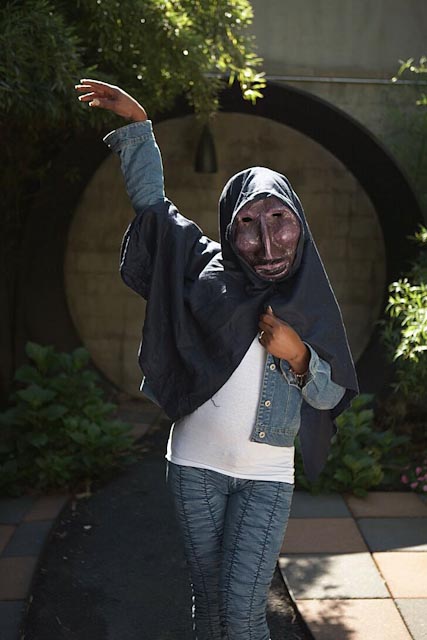
The Masks We Wear: Identity, Art, and AIDS
When I took over the Community Outreach Coordinator position three years ago, Housing Works was the first organization that I reached out to and brought in as a new Community Partner. The largest community-based AIDS organization in the United States, for the past 20 years they have tackled the twin crises of HIV/AIDS and homelessness, offering housing, medical and mental health care, meals, job training, drug treatment, HIV prevention education, and social support to over 20,000 New York City residents.
Art in School in Prison: Isabel Rosado, Passages Academy & the Juvenile Justice Department

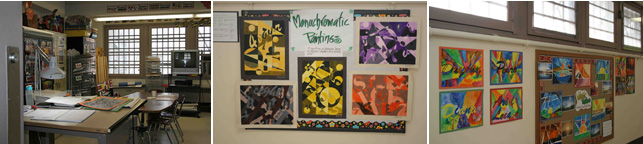
From left: Art room at Bridges Juvenile Detention Center; student work displayed in the hallway of the Detention Center
Bridges Juvenile Detention Center is a secure facility located in the Hunts Point section of the Bronx, surrounded by a strip of used auto-parts stores and wholesale supply outlets. It houses both boys and girls, although the two groups are kept at a far remove from one another, and it has all of the familiar trappings of your standard-issue television or film depiction of prison: guards, jumpsuits, concrete, barbed wire, and barred windows. But it also has an art room. And a library. And hallways full of drawings and paintings and poetry.
If you are interested in reproducing images from The Museum of Modern Art web site, please visit the Image Permissions page (www.moma.org/permissions). For additional information about using content from MoMA.org, please visit About this Site (www.moma.org/site).
© Copyright 2016 The Museum of Modern Art