Portfolio of sixty with photogravure, aquatint, screenprint, lithograph, etching, and drypoint; some with modelling clay, laser-cut, collage, oil, gouache, pomade, metallic foil, graphite, varnish, acrylic medium, toy eyeballs, chine collé, acrylic, tattoo engraving, embossing, velvet, glitter, crystals, gold leaf, toy ice cube, and plastic sheet additions
Not on view
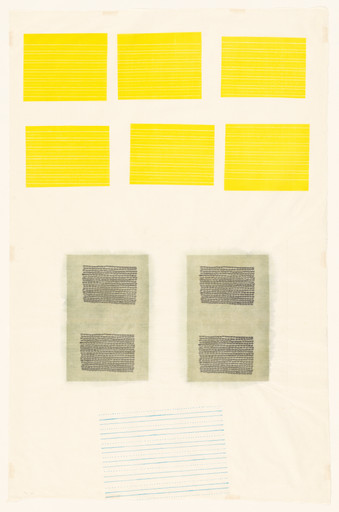
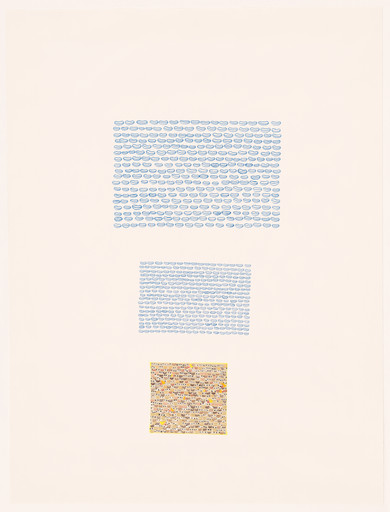
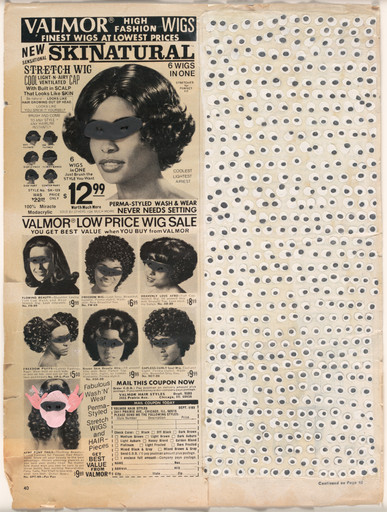
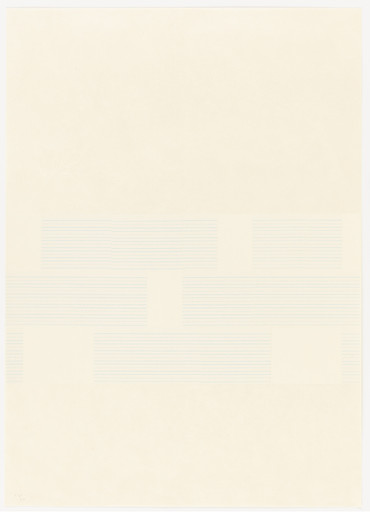
DeLuxe consists of sixty prints involving a riot of materials, including velvet, toy ice cubes, and googly eyeballs, and techniques ranging from old-fashioned photogravure to recent developments in digital technology. Each print began with a magazine page selected from the artist’s collection of titles geared toward African American audiences, such as Sepia, Our World, and Ebony, dating from the 1930s to the ’70s. While some of the prints are drawn from celebrity features or news stories, the majority are based on advertisements. Many of these suggest means for personal improvement and play on readers’ desire for transformation via products such as wigs, hair pomades, acne treatments, and skin-bleaching creams. To create these works, Gallagher drew and redrew, masked out and added text, cut and pasted images, and collaged on three-dimensional elements. The resulting images are intensely personalized, transformed in both form and content.
In a deft commentary on race, racism, and cultural identity, DeLuxe addresses the complex role hair plays in African and African American culture: it is a means of ornament, adornment, and personal expression; a signifier of cultural identity and difference; and a talisman for both strength and protection.
MoMA Highlights: 375 Works from The Museum of Modern Art, New York (New York: The Museum of Modern Art, 2019)
Gallery label from 2019
Gallagher collected these images sifting through photo journals and magazines marketed to black audiences, such as Our World, Sepia, and Ebony. She reflected, “As I began looking through them, the wig ads themselves had such a language to them . . . this sort of lost past.” Each of the sixty prints here began with a page from one of these publications. Using advertisements for hair and skin products, Gallagher drew and redrew, masked out and added text, and collaged three-dimensional elements, such as a modeling clay called Plasticine. She remarked, “The Plasticine is meant to allude to that idea of mutability and shifting, because Plasticine is used in animations.”
2019
Explore more
Chine collé
A technique, used in conjunction with printmaking processes such as etching or lithography, that results in a two-layered paper support: a tissue-thin paper, cut to the size of the printing plate, and a larger, thicker support paper below.
Learn more →

Audio
Audio from the playlist 1980–Today: Works from the Collection
From MoMA Design Store


Installation views
We have identified this work in the following photos from our exhibition history.
Licensing
Artwork or archival images
If you would like to reproduce an image of a work of art in MoMA's collection, or an image of a MoMA publication or archival material (including installation views, checklists, and press releases), please contact Art Resource (publication in North America) or Scala Archives (publication in all other geographic locations).
Audio and film clips
MoMA licenses archival audio and select out of copyright film clips from our film collection. At this time, MoMA produced video cannot be licensed by MoMA/Scala. All requests to license archival audio or out of copyright film clips should be addressed to Scala Archives at [email protected]. Motion picture film stills cannot be licensed by MoMA/Scala. For access to motion picture film stills for research purposes, please contact the Film Study Center at [email protected]. For more information about film loans and our Circulating Film and Video Library, please visit Circulating Film and Video Library.
Text from a publication or the archives
If you would like to reproduce text from a MoMA publication, please email [email protected]. If you would like to publish text from MoMA's archival materials, please fill out this permission form and send to [email protected].
Feedback
This record is a work in progress. If you have additional information or spotted an error, please fill out this feedback form.