Not on view
In the early 1940s, inspired by the materials in the leather shop he owned with his brother, Kosice began to make artworks that are very different from the static monuments of traditional modernist sculpture and question conventional approaches to material. This transformable object, made from the metal bands used to reinforce leather handbags, was intended to be touched and moved. (To preserve the sculpture, viewers are no longer allowed to handle it.) Kosice was a founder of the Argentine artist group MADI, one of the earliest in the Americas that was entirely devoted to abstraction. Escultura movil articulada exemplifies the primacy for MADI artists of unconventional artistic structures such as irregular, broken frames and linear forms.
On Line: Drawing Through the Twentieth Century, November 21, 2010-February 7, 2011
Gallery label from Sur moderno: Journeys of Abstraction—The Patricia Phelps de Cisneros Gift , October 21, 2019–March 14, 2020
Composed of metal bands linked by pins, this lightweight work was originally intended to be handled and molded into different shapes by the viewer. Kosice believed that a fleeting physical interaction with an object superseded the notion of art as untouchable and self-contained. Sculptures like this one “require the viewer’s participation,” he noted, “because if there is no viewer to lend them movement, they are pointless.” Although shiny and sleek, even futuristic looking, the sculpture’s brass strips were among the humble everyday tools used by Kosice’s father to reinforce leather bags handmade in their family’s workshop.
Sur moderno: Journeys of Abstraction—The Patricia Phelps de Cisneros Gift, October 21, 2019–March 14, 2020
Gallery label from New Perspectives in Latin American Art, 1930–2006: Selections from a Decade of Acquisitions , November 21, 2007–February 25, 2008
In 1946, Kosice, along with other Argentine artists, founded the MADI movement, one of the earliest artistic groups entirely devoted to nonobjective abstraction in the Americas. He began his landmark production of unconventional sculptural forms in the early 1940s. Inspired by the raw, nontraditional materials in the leather shop he owned with his brother, Kosice developed artworks that are in a permanent state of change. This transformable sculpture is made from metal bands used to reinforce leather handbags. Intended to be touched and moved by the viewer, it defies the idea of sculpture as a static monument and exemplifies the primacy for MADI artists of peripheral, unconventional artistic structures, such as irregular, broken frames and forms without default positions. For conservation reasons, viewers are no longer allowed to manipulate the sculpture.
New Perspectives in Latin American Art, 1930–2006: Selections from a Decade of Acquisitions, November 21, 2007–February 25, 2008
Explore more
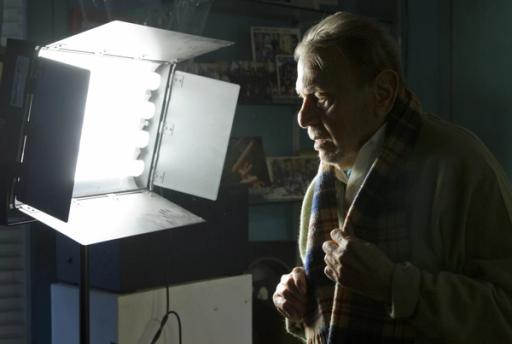
Gyula Kosice (Fernando Fallik)
Argentine, born Czechoslovakia (now Slovakia) 1924–2016 2 works onlineA key episode in Latin American art history took place in 1944, in the corner of a quaint leather accessories workshop in Buenos Aires.
Learn more →
Mobile
A type of sculpture consisting of balanced, separate parts that move, especially in response to air currents.
Learn more →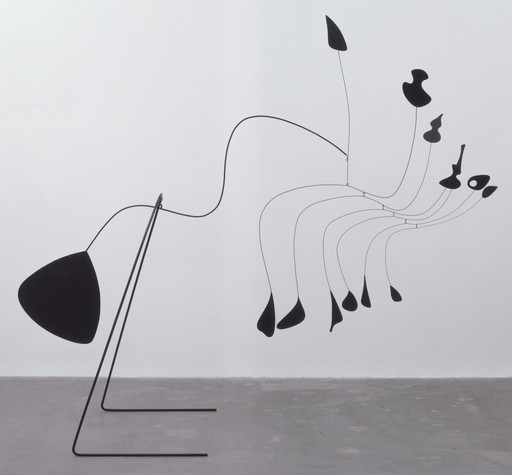

From MoMA Design Store


Installation views
We have identified this work in the following photos from our exhibition history.
Provenance
The artist.
1998 - 2004, Colección Patricia Phelps de Cisneros, New York, and Caracas, purchased through Galería César Aché, Rio de Janeiro.
2004, The Museum of Modern Art, New York, acquired as gift from Patricia Phelps de Cisneros.
Exhibition history
Mexico City, Museo del Palacio de Bellas Artes, "Cruce de Miradas Tradiciones Plásticas de América Latina en la colección CPPC", August 2 through October 22, 2006
Austin, Blanton Museum of Art, "The Geometry of Hope: Latin American Geometrical Abstraction from the Patricia Phelps de Cisneros Collection", February 17, 2007 - April 5, 2007
MoMA Exh. #2022: "New Perspectives in Latin American Art, 1930-2006: Selections from a Decade of Acquisitions", 3rd Floor, November 21, 2007 - February 25, 2008
MoMA Exh. #2135: "On Line: Drawing Through the Twentieth Century", 6th Floor, The Joan and Preston Robert Tisch Gallery, November 21, 2010 - February 7, 2011
Madrid, Museo Nacional Centro de Arte Reina Sofía, "La invención concreta. Collección Patricia Phelps de Cisneros", January 22 - September 16, 2013
Basel, Museum Tinguely, "Speilogjekte: Die Kunst der Möglichkeiten", February 18 - May 18, 2014
London, Royal Academy of Arts, "Radical Geometry: Modern Art of South America from the Patricia Phelps de Cisneros Collection", July 5 - September 28, 2014
MoMA Exh. #2424: "Sur moderno: Journeys of Abstraction—The Patricia Phelps de Cisneros Gift", 3rd Floor, 3 East, October 21, 2019 - September 12, 2020
Licensing
Artwork or archival images
If you would like to reproduce an image of a work of art in MoMA's collection, or an image of a MoMA publication or archival material (including installation views, checklists, and press releases), please contact Art Resource (publication in North America) or Scala Archives (publication in all other geographic locations).
Audio and film clips
MoMA licenses archival audio and select out of copyright film clips from our film collection. At this time, MoMA produced video cannot be licensed by MoMA/Scala. All requests to license archival audio or out of copyright film clips should be addressed to Scala Archives at [email protected]. Motion picture film stills cannot be licensed by MoMA/Scala. For access to motion picture film stills for research purposes, please contact the Film Study Center at [email protected]. For more information about film loans and our Circulating Film and Video Library, please visit Circulating Film and Video Library.
Text from a publication or the archives
If you would like to reproduce text from a MoMA publication, please email [email protected]. If you would like to publish text from MoMA's archival materials, please fill out this permission form and send to [email protected].
Feedback
This record is a work in progress. If you have additional information or spotted an error, please fill out this feedback form.