One from a portfolio of ten screenprints
Not on view
Albers began making his Homage to the Square painting series around 1951. The works here mark one of the first occasions he explored this imagery in print. The viewer is meant to perceive shifting depth and changes of tone at the outer and inner perimeters of these nesting squares, even though the areas are printed in solid, unmodulated color.
Geo/Metric: Prints and Drawings from the Collection, June 11–August 18, 2008.
Publication excerpt from an essay by Sarah Suzuki, in Deborah Wye, Artists and Prints: Masterworks from The Museum of Modern Art , New York: The Museum of Modern Art, 2004, p. 190.
Elementary–school teacher Josef Albers began his study of art in 1908 and first experimented with printmaking in 1915. By the time of his death, he had made more than two hundred prints in a wide variety of mediums, and had influenced generations of students in both Europe and the United States through his teachings. Beginning in 1920, Albers spent thirteen years at the Bauhaus, the famed German design school, rising through the ranks from student to assistant director. The school instilled in Albers a deep appreciation for, and concern with, technical achievement and sophistication, as well as a lifelong interest in exploring abstraction.
Under mounting pressure from the Nazis, the Bauhaus closed in 1933, and Albers accepted an offer to teach in Asheville, North Carolina, at Black Mountain College, a newly founded experimental institution. There he returned to printmaking, an activity he had neglected at the Bauhaus, with a series of woodcuts including Tlaloc, named for a Mexican rain god and inspired by one of Albers's many trips to Latin America.
The year 1950 marked a new phase in Albers's career: he began teaching at Yale University and also started his best-known work, the series Homage to the Square, a seemingly endless exploration of the effects of color through nested squares in various tonal themes and combinations. Translating the Homage paintings to prints presented a new set of technical challenges in terms of color mixing, execution, and registration that piqued Albers's interest. The portfolio Homage to the Square: Ten Works by Josef Alber_s was the first of many printed manifestations of this theme, which Albers worked on at Tamarind Lithography Workshop, Gemini G.E.L., and Tyler Graphics until the end of his life.
an essay by Sarah Suzuki, in Deborah Wye, Artists and Prints: Masterworks from The Museum of Modern Art, New York: The Museum of Modern Art, 2004, p. 190.
Explore more
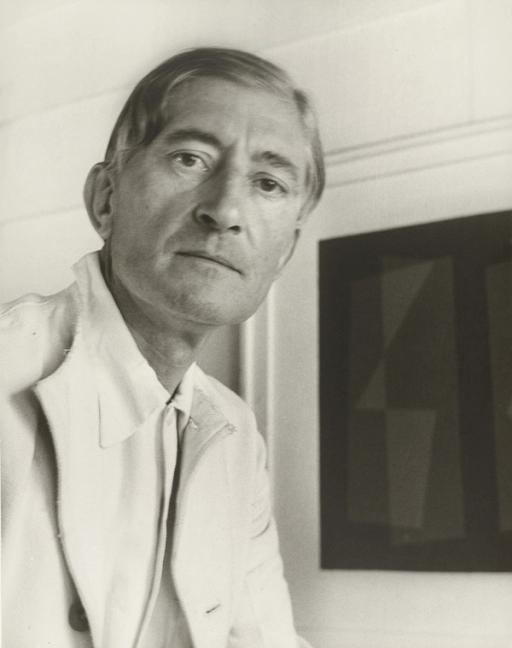
Josef Albers
American, born Germany. 1888–1976 243 works onlineJosef Albers always went back to basics. As a child, he gained skills in carpentry and commercial painting by helping his father with work.
Learn more →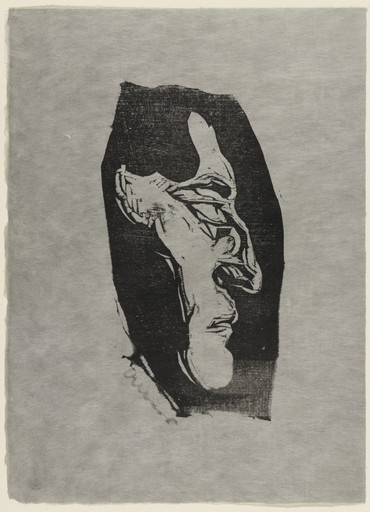


From MoMA Design Store


Installation views
We have identified this work in the following photos from our exhibition history.
Licensing
Artwork or archival images
If you would like to reproduce an image of a work of art in MoMA's collection, or an image of a MoMA publication or archival material (including installation views, checklists, and press releases), please contact Art Resource (publication in North America) or Scala Archives (publication in all other geographic locations).
Audio and film clips
MoMA licenses archival audio and select out of copyright film clips from our film collection. At this time, MoMA produced video cannot be licensed by MoMA/Scala. All requests to license archival audio or out of copyright film clips should be addressed to Scala Archives at [email protected]. Motion picture film stills cannot be licensed by MoMA/Scala. For access to motion picture film stills for research purposes, please contact the Film Study Center at [email protected]. For more information about film loans and our Circulating Film and Video Library, please visit Circulating Film and Video Library.
Text from a publication or the archives
If you would like to reproduce text from a MoMA publication, please email [email protected]. If you would like to publish text from MoMA's archival materials, please fill out this permission form and send to [email protected].
Feedback
This record is a work in progress. If you have additional information or spotted an error, please fill out this feedback form.