Not on view
Double Lunar Dogs, based on Robert Heinlein's science-fiction story "Universe," is about passengers who have been aboard a spaceship for so long that they no longer remember their mission. The small team of astronauts moves through the starry sky in a cabin that resembles a mad-scientist's lab. The fragmented story is told by means of special effects and inserted vignettes created by a stellar group of avant-garde actors, video artists, and musicians, including Spalding Gray, the Residents, and Steina Vasulka.
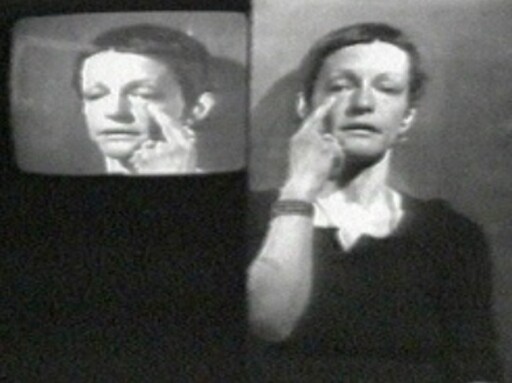
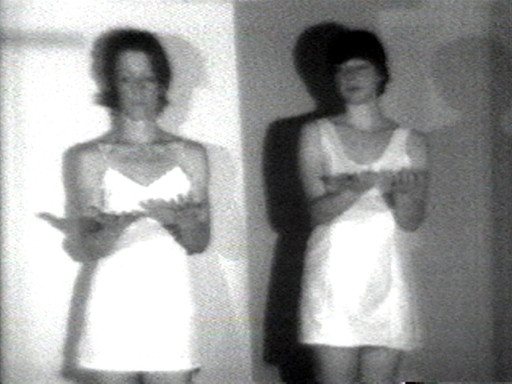
Jonas was among the first artists in the 1970s to combine performance and video. Her work, at times, has expanded to encompass dance and sculpture. She has often adapted her intricate and personal performances into narrative videotapes to give them added dimension. In both mediums, she incorporates her signature gestural actions and symbolic props, such as mirrors, masks, and hearts, as a means of exploring subjectivity and identity.
The Museum of Modern Art, MoMA Highlights, New York: The Museum of Modern Art, revised 2004, originally published 1999, p. 328.
Gallery label from Joan Jonas: Good Night Good Morning, March 17–July 6, 2024
By the 1970s Jonas began to play with narrative and increasingly turned to video effects and animation to articulate her performances in new mediums. For her first video works, the artist drew from the conventions of early cinema, while also exploring what was particular to the new medium of video. For I Want to Live in the Country (And Other Romances) she edits herself in as the protagonist, narrator, and audience, appearing in the corner to watch the image of a screen within a screen. In the 1980s, Jonas experimented with special effects more than ever before with Double Lunar Dogs —a performance she later shot on film and transformed into moving image.
Joan Jonas: Good Night Good Morning, March 17–July 6, 2024
Explore more
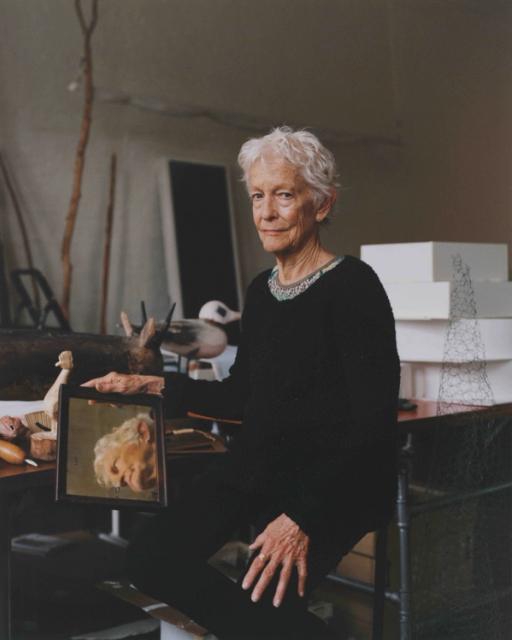
Joan Jonas
American, born 1936 30 works onlineFew artists can claim to have initiated a new form of art. Joan Jonas, however, was crucial to the formation of two— video and performance .
Learn more →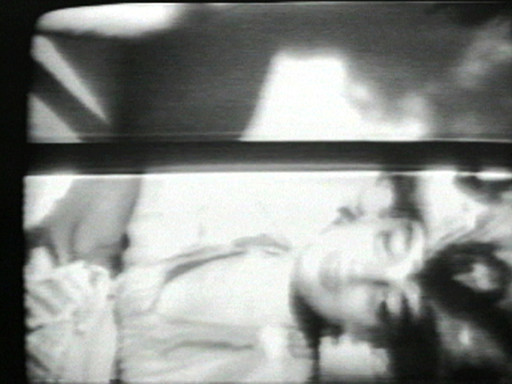

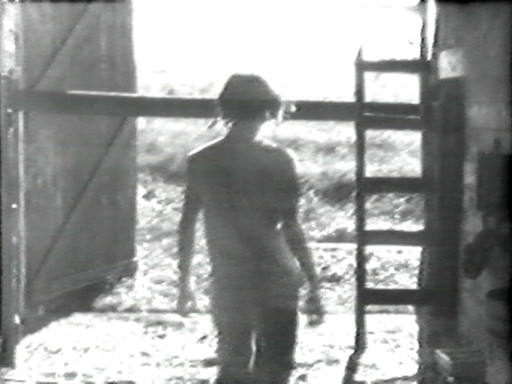
Video
A term describing moving-image artworks recorded onto magnetic tape or digital formats, or generated using other mechanisms such as image-processing tools.
Learn more →
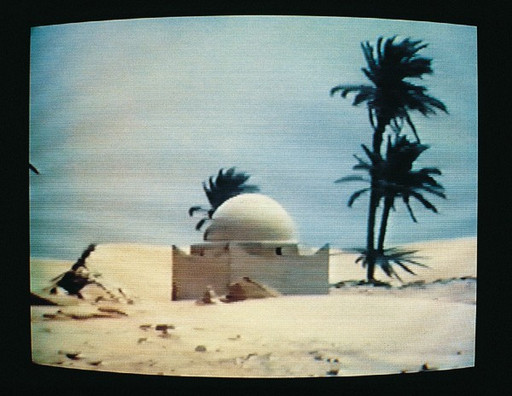

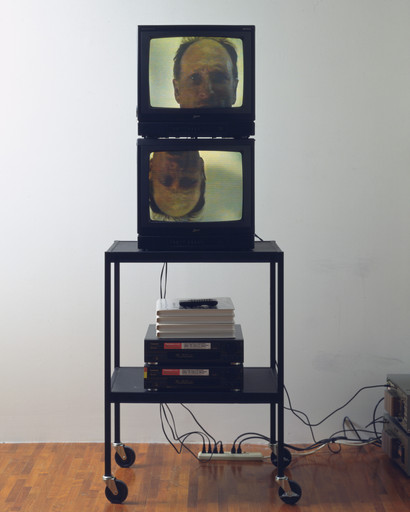

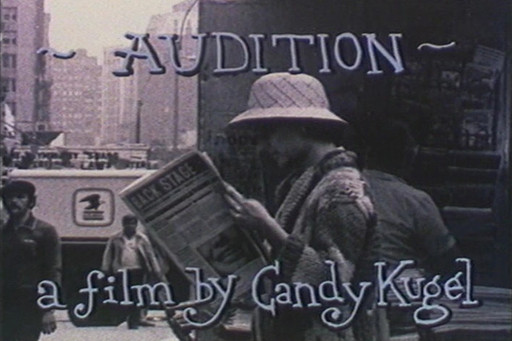
From MoMA Design Store


Licensing
Artwork or archival images
If you would like to reproduce an image of a work of art in MoMA's collection, or an image of a MoMA publication or archival material (including installation views, checklists, and press releases), please contact Art Resource (publication in North America) or Scala Archives (publication in all other geographic locations).
Audio and film clips
MoMA licenses archival audio and select out of copyright film clips from our film collection. At this time, MoMA produced video cannot be licensed by MoMA/Scala. All requests to license archival audio or out of copyright film clips should be addressed to Scala Archives at [email protected]. Motion picture film stills cannot be licensed by MoMA/Scala. For access to motion picture film stills for research purposes, please contact the Film Study Center at [email protected]. For more information about film loans and our Circulating Film and Video Library, please visit Circulating Film and Video Library.
Text from a publication or the archives
If you would like to reproduce text from a MoMA publication, please email [email protected]. If you would like to publish text from MoMA's archival materials, please fill out this permission form and send to [email protected].
Feedback
This record is a work in progress. If you have additional information or spotted an error, please fill out this feedback form.