Gouache, watercolor and graphite on paper
Not on view
This is one of a number of works by Pesce—made for The Museum of Modern Art’s 1972 exhibition Italy: The New Domestic Landscape—that present a third-millennium archeologist’s discovery of an underground southern alpine city from a hundred years earlier. The drawing illustrates an age in which people have settled in various underground pockets, drained of mineral oils and water and sealed off from the outside world by large stones. These “archeological remains” are meant to reflect essential conditions for living, such as “the exploitation of the interior of the planet,” “the importance of space,” “the necessity of isolation,” and “noncommunication as characteristic of human life.” The house is the subject of psychoanalytical and philosophical inquiry that discloses hidden political shades in its direct, if fictional, reflection of life.
9 + 1 Ways of Being Political: 50 Years of Political Stances in Architecture and Urban Design, September 12, 2012–March 25, 2013.
Publication excerpt from an essay by Bevin Cline and Tina di Carlo, in Terence Riley, ed., The Changing of the Avant-Garde: Visionary Architectural Drawings from the Howard Gilman Collection , New York: The Museum of Modern Art, 2002, p. 108.
Gaetano Pesce's drawings of the Period of Contaminations, Housing Unit for Two People, are two of a number of works designed for his installation in The Museum of Modern Art's 1972 exhibition Italy: The New Domestic Landscape. Pesce's work presented a third-millennium archeologist's discovery of an underground southern alpine city from a hundred years earlier. The drawings illustrate an age in which people have settled in various underground pockets, drained of mineral oils and water, and sealed off from the outside world by large stones. These "archeological remains" are meant to reflect on essential conditions for living, such as, "the exploitation of the interior of the planet," "the importance of space," "the necessity of isolation," and "noncommunication as characteristic of human life."
an essay by Bevin Cline and Tina di Carlo, in Terence Riley, ed., The Changing of the Avant-Garde: Visionary Architectural Drawings from the Howard Gilman Collection, New York: The Museum of Modern Art, 2002, p. 108.
Explore more
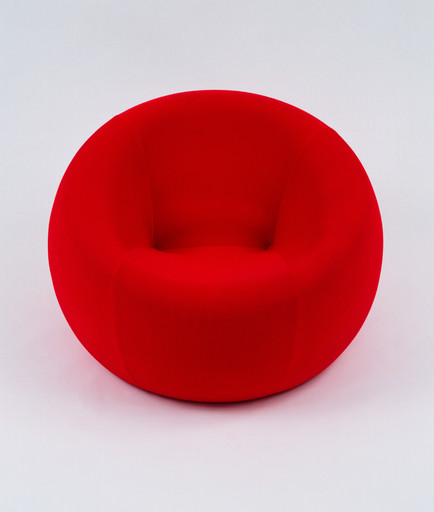
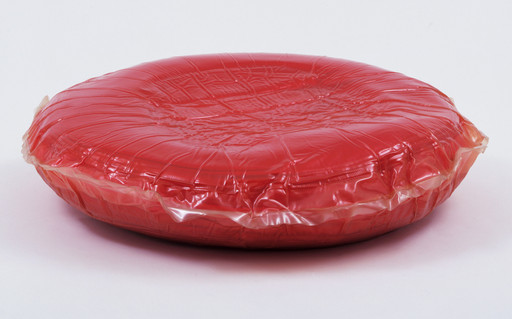
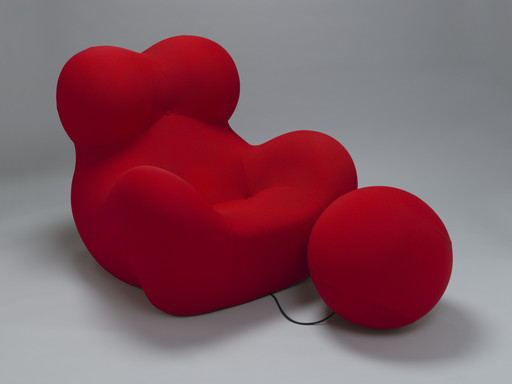
Radical Architecture
A cohort of Italian architects and designers active from the late 1960s through the 1970s. They placed themselves in opposition to the rationalism and functionalism of 20th-century modernism and formed during a tumultuous period characterized by political violence and extremism, student uprisings, and social unrest.
Learn more →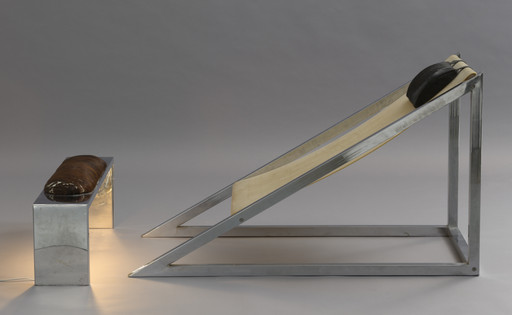


From MoMA Design Store


Installation views
We have identified this work in the following photos from our exhibition history.
Licensing
Artwork or archival images
If you would like to reproduce an image of a work of art in MoMA's collection, or an image of a MoMA publication or archival material (including installation views, checklists, and press releases), please contact Art Resource (publication in North America) or Scala Archives (publication in all other geographic locations).
Audio and film clips
MoMA licenses archival audio and select out of copyright film clips from our film collection. At this time, MoMA produced video cannot be licensed by MoMA/Scala. All requests to license archival audio or out of copyright film clips should be addressed to Scala Archives at [email protected]. Motion picture film stills cannot be licensed by MoMA/Scala. For access to motion picture film stills for research purposes, please contact the Film Study Center at [email protected]. For more information about film loans and our Circulating Film and Video Library, please visit Circulating Film and Video Library.
Text from a publication or the archives
If you would like to reproduce text from a MoMA publication, please email [email protected]. If you would like to publish text from MoMA's archival materials, please fill out this permission form and send to [email protected].
Feedback
This record is a work in progress. If you have additional information or spotted an error, please fill out this feedback form.