By layering latex over plaster, Bourgeois achieved a fleshy, tactile texture in this hanging sculpture. While it most obviously represents a phallus, the work can also be seen as a female torso, as the title suggests; in this reading, the two round forms are the tops of two legs, attaching to their hip joints. This eliding of genders creates ambiguity, as do the work’s dual qualities of erect potency and fragile vulnerability. "From a sexual point of view," Bourgeois said, "I consider the masculine attributes to be very delicate."
Exquisite Corpses: Drawing and Disfiguration, March 14–July 9, 2012.
Gallery label from From the Collection: 1960-69 , March 26, 2016 - March 12, 2017.
"Everything I loved had the shape of people around me—the shape of my husband, the shape of the children," Bourgeois said. "So when I wanted to represent something I love, I obviously represented a little penis." The title of the work, however, lends it ambiguity. In the 1960s Bourgeois began constructing hanging sculptures and using a variety of materialshere plaster and latexto create organic, fleshy sculptures that recall the human body.
From the Collection: 1960-69, March 26, 2016 - March 12, 2017.
Explore more
Louise Bourgeois
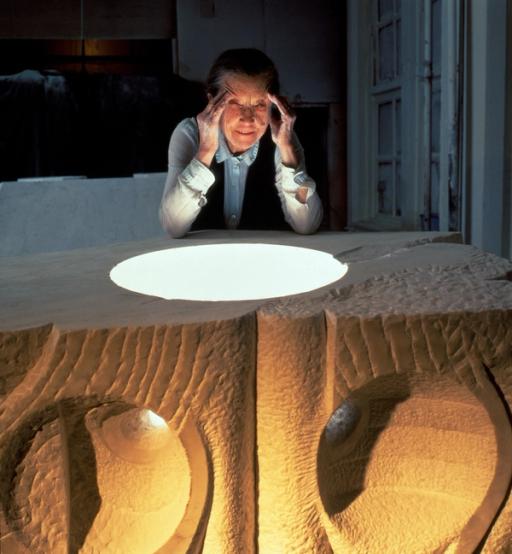
American, born France. 1911–2010 3040 works onlineBorn in Paris in 1911, Louise Bourgeois was raised by parents who ran a tapestry restoration business. A gifted student, she also helped out in the workshop by drawing missing elements in the scenes depicted on the tapestries.
Learn more →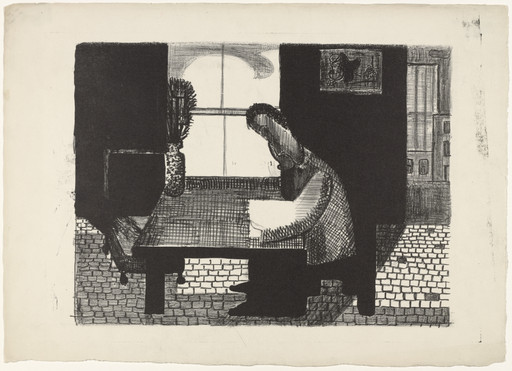
From MoMA Design Store


Installation views
We have identified this work in the following photos from our exhibition history.
Licensing
Artwork or archival images
If you would like to reproduce an image of a work of art in MoMA's collection, or an image of a MoMA publication or archival material (including installation views, checklists, and press releases), please contact Art Resource (publication in North America) or Scala Archives (publication in all other geographic locations).
Audio and film clips
MoMA licenses archival audio and select out of copyright film clips from our film collection. At this time, MoMA produced video cannot be licensed by MoMA/Scala. All requests to license archival audio or out of copyright film clips should be addressed to Scala Archives at [email protected]. Motion picture film stills cannot be licensed by MoMA/Scala. For access to motion picture film stills for research purposes, please contact the Film Study Center at [email protected]. For more information about film loans and our Circulating Film and Video Library, please visit Circulating Film and Video Library.
Text from a publication or the archives
If you would like to reproduce text from a MoMA publication, please email [email protected]. If you would like to publish text from MoMA's archival materials, please fill out this permission form and send to [email protected].
Feedback
This record is a work in progress. If you have additional information or spotted an error, please fill out this feedback form.