Cello fingerboard and scroll with horsehair
Not on view
Like many Surrealist objects, Emak Bakia materialized from a combination of chance discovery and artistic invention. Man Ray found the elegant amputated neck of a double bass at a flea market and paired it with the long, flowing hair of a horse. The light gray horsehair feminizes the instrument's curvaceous forms and is the material typically used to make its bow. Man Ray's enigmatic Basque title for the work, which translates as "leave me alone," is adapted from his 1926 film of the same name. As the title underscores, this object is ultimately an instrument of frustration, from which no music will ever flow.
The Erotic Object: Surrealist Sculpture from the Collection, June 24, 2009–January 4, 2010.
Explore more
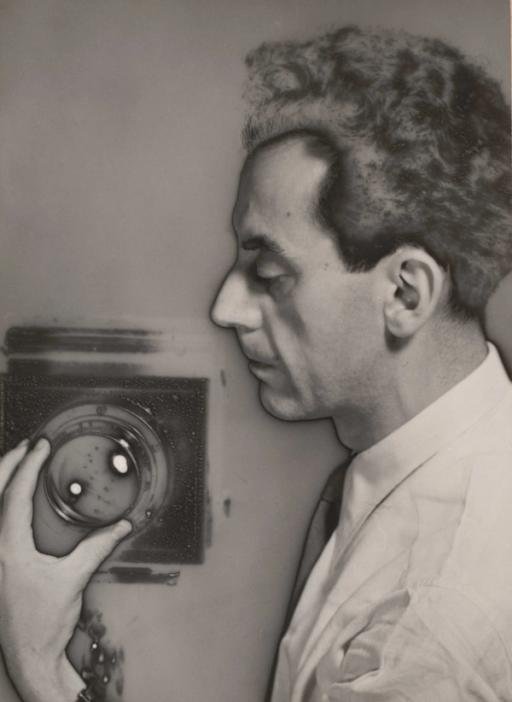
Man Ray (Emmanuel Radnitzky)
American, 1890–1976 193 works onlineSo enthused Man Ray (born Emmanuel Radnitzky) in 1922, shortly after his first experiments with camera-less photography. He remains well known for these images, commonly called photograms but which he dubbed “rayographs” in a punning combination of his own name and the word “photograph.
Learn more →

From MoMA Design Store


Installation views
We have identified this work in the following photos from our exhibition history.
Licensing
Artwork or archival images
If you would like to reproduce an image of a work of art in MoMA's collection, or an image of a MoMA publication or archival material (including installation views, checklists, and press releases), please contact Art Resource (publication in North America) or Scala Archives (publication in all other geographic locations).
Audio and film clips
MoMA licenses archival audio and select out of copyright film clips from our film collection. At this time, MoMA produced video cannot be licensed by MoMA/Scala. All requests to license archival audio or out of copyright film clips should be addressed to Scala Archives at [email protected]. Motion picture film stills cannot be licensed by MoMA/Scala. For access to motion picture film stills for research purposes, please contact the Film Study Center at [email protected]. For more information about film loans and our Circulating Film and Video Library, please visit Circulating Film and Video Library.
Text from a publication or the archives
If you would like to reproduce text from a MoMA publication, please email [email protected]. If you would like to publish text from MoMA's archival materials, please fill out this permission form and send to [email protected].
Feedback
This record is a work in progress. If you have additional information or spotted an error, please fill out this feedback form.