Reinhardt studied both Eastern and Western art history at the undergraduate and graduate levels. He deepened his understanding of Buddhism and other Eastern philosophies by attending the lectures of Zen teacher Daisetz Suzuki at Columbia University. Number 22 shows Reinhardt fusing Eastern and Western traditions by using calligraphic brushwork inspired by Chinese and Japanese calligraphy in a gridded composition influenced by those of de Stijl co-founder [Piet Mondrian] (https://www.moma.org/artists/4057). In classical East Asian painting, the fragility of paper wet with ink limits the artist’s ability to rework the composition. The sturdier canvas support and slower drying oil paints used throughout much of the history of Western painting allow artists to highlight various revision and layering techniques. Although he worked in oil on canvas, Reinhardt chose to restrain himself and not rework his painting’s surface, in keeping with Asian calligraphic traditions. The result is a far more controlled manner of gestural painting than those of the Abstract Expressionists.
In The Studio: Postwar Abstract Painting online course, Coursera, 2017
Explore more
Ad Reinhardt
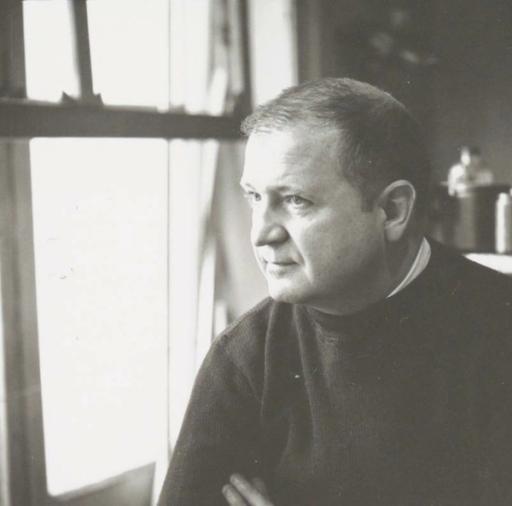
American, 1913–1967 29 works onlineAd Reinhardt was one of the most relentless defenders of the purity of abstraction. For Reinhardt, this manifested as an evolving effort to strip his paintings of everything external to the fundamental fact of paint on canvas.
Learn more →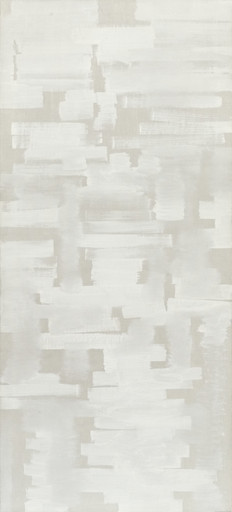
From MoMA Design Store


Installation views
We have identified this work in the following photos from our exhibition history.
Licensing
Artwork or archival images
If you would like to reproduce an image of a work of art in MoMA's collection, or an image of a MoMA publication or archival material (including installation views, checklists, and press releases), please contact Art Resource (publication in North America) or Scala Archives (publication in all other geographic locations).
Audio and film clips
MoMA licenses archival audio and select out of copyright film clips from our film collection. At this time, MoMA produced video cannot be licensed by MoMA/Scala. All requests to license archival audio or out of copyright film clips should be addressed to Scala Archives at [email protected]. Motion picture film stills cannot be licensed by MoMA/Scala. For access to motion picture film stills for research purposes, please contact the Film Study Center at [email protected]. For more information about film loans and our Circulating Film and Video Library, please visit Circulating Film and Video Library.
Text from a publication or the archives
If you would like to reproduce text from a MoMA publication, please email [email protected]. If you would like to publish text from MoMA's archival materials, please fill out this permission form and send to [email protected].
Feedback
This record is a work in progress. If you have additional information or spotted an error, please fill out this feedback form.