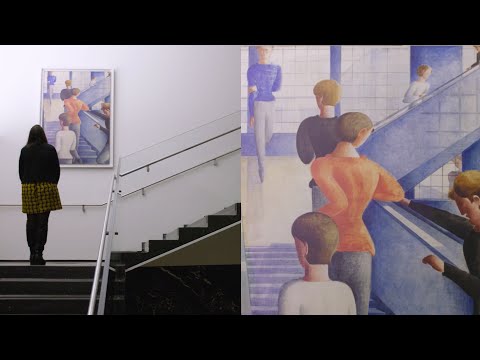
The Bauhaus school was premised on a utopian vision of society based on the integration of technology, art, design, and life. Originally founded in 1919 by architect Walter Gropius in Weimar, Germany, the school moved to Dessau in 1925 and finally to Berlin in 1932. Schlemmer, who taught at the school from 1920 to 1929, made Bauhaus Stairway in response to an announcement that, under pressure from the Nazi party, the school was to close. The Bauhaus shut its doors in 1933, the year after he created this painting.
Best known as a choreographer and as the director of the Bauhaus theater workshop, Schlemmer dedicated his life’s work to investigating the relationships between the human body and its surrounding space. Bauhaus Stairway depicts these interactions in the contrast between static architectural forms and dynamically shifting figures, epitomized by the dancer balancing en pointe. Schlemmer’s bodies are composed of cones, spheres, and cylinders—simplified into almost modular geometric units rather than rendered as individual identities. The three central figures are pictured from behind; those whose faces we do see reveal no expression or emotion. The streamlined bodies on this pivoting staircase seem to move away from us—as if marking the turning point between past hopes and a dark future.
MoMA Highlights: 375 Works from The Museum of Modern Art, New York (New York: The Museum of Modern Art, 2019)
Gallery label from 2008.
Bauhaus Stairway depicts the Bauhaus, a school founded in 1919 by architect Walter Gropius, famous for its visionary integration of technology, art, and design. Although Schlemmer made this painting three years after he left his teaching position at the Bauhaus, the works gridded structure, streamlined modular bodies and predominant palette of primary colors capture the schools vibrant design spirit. The carefully choreographed arrangement of the figures and the man en pointe at the top of the stairs reflects Schlemmers role as the creator of many important dance and theatrical productions at the Bauhaus. Schlemmer painted this work as Hitler assumed power, shortly before the Nazis closed the Bauhaus for good. He was among many artists persecuted by the Nazis, whose work they deemed "degenerate" and often destroyed.
2008.
Explore more
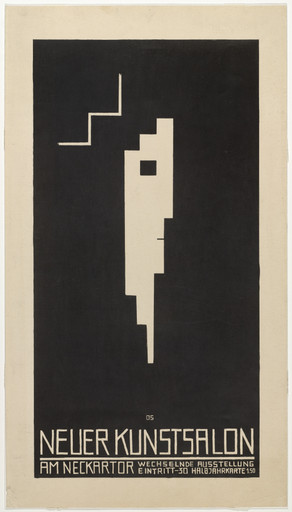
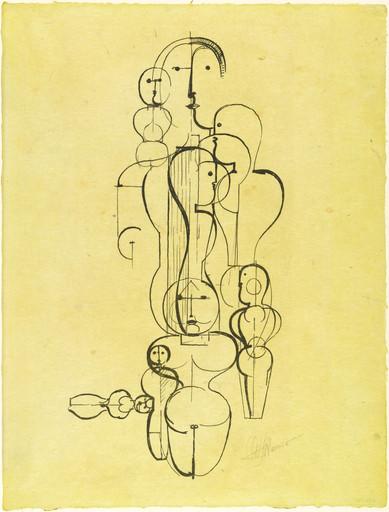
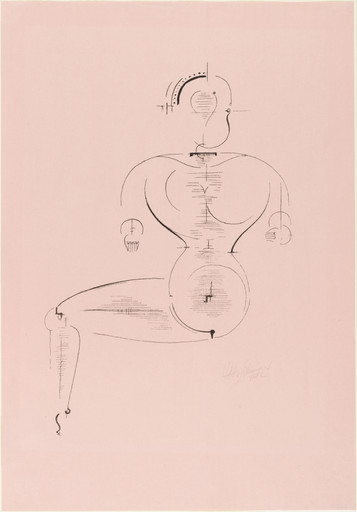
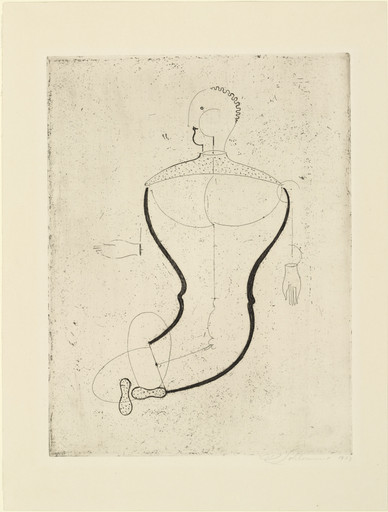
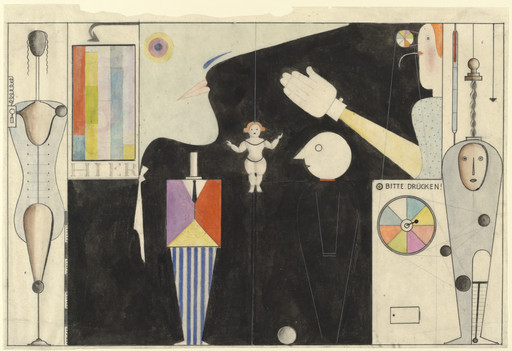
Avant-garde
French for “advanced guard,” originally used to denote the vanguard of an army and first applied to art in France in the early 19th century.
Learn more →
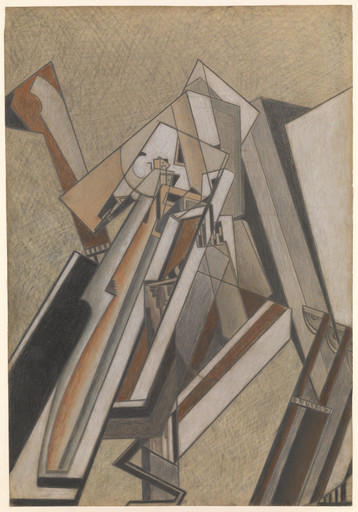
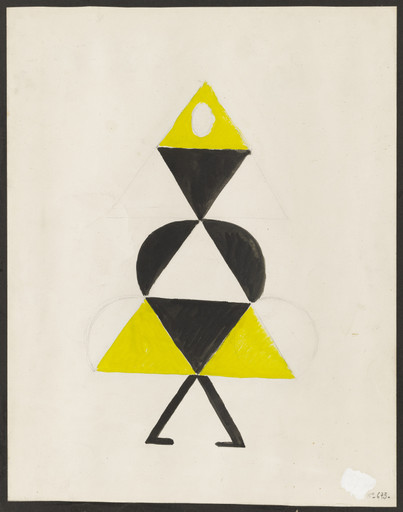
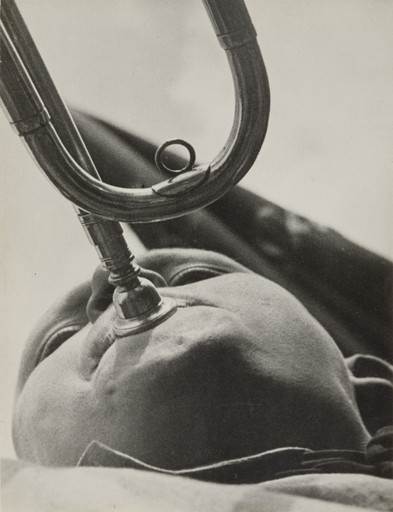
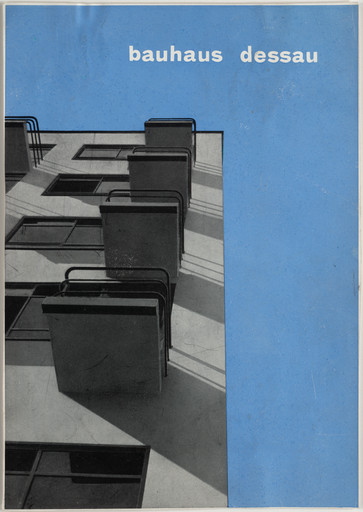
Bauhaus
The school of art and design founded in Germany by Walter Gropius in 1919, and shut down by the Nazis in 1933.
Learn more →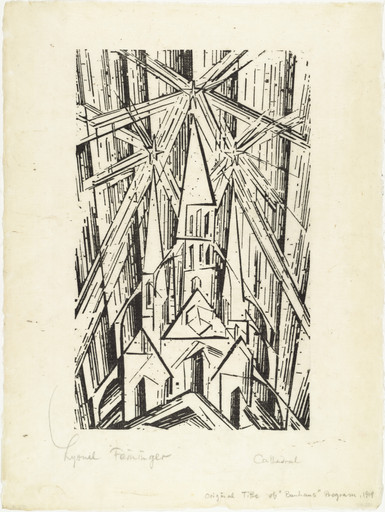




Audio
Audio from the playlist Collection 1980s–Present
Articles and videos
From MoMA Design Store


Installation views
We have identified this work in the following photos from our exhibition history.
Provenance Research Project
This work is included in the Provenance Research Project, which investigates the ownership history of works in MoMA's collection.
The artist, Breslau, Germany. Until 1933
Philip Johnson, New York. Purchased in Stuttgart, March 1933 - 1942 (on extended loan to MoMA 1933-1942)
The Museum of Modern Art, New York. Gift of Philip Johnson, December 1942
Provenance research is a work in progress, and is frequently updated with new information. If you have any questions or information to provide about the listed works, please email [email protected] or write to:
Provenance Research Project
The Museum of Modern Art
11 West 53 Street
New York, NY 10019
Licensing
Artwork or archival images
If you would like to reproduce an image of a work of art in MoMA's collection, or an image of a MoMA publication or archival material (including installation views, checklists, and press releases), please contact Art Resource (publication in North America) or Scala Archives (publication in all other geographic locations).
Audio and film clips
MoMA licenses archival audio and select out of copyright film clips from our film collection. At this time, MoMA produced video cannot be licensed by MoMA/Scala. All requests to license archival audio or out of copyright film clips should be addressed to Scala Archives at [email protected]. Motion picture film stills cannot be licensed by MoMA/Scala. For access to motion picture film stills for research purposes, please contact the Film Study Center at [email protected]. For more information about film loans and our Circulating Film and Video Library, please visit Circulating Film and Video Library.
Text from a publication or the archives
If you would like to reproduce text from a MoMA publication, please email [email protected]. If you would like to publish text from MoMA's archival materials, please fill out this permission form and send to [email protected].
Feedback
This record is a work in progress. If you have additional information or spotted an error, please fill out this feedback form.