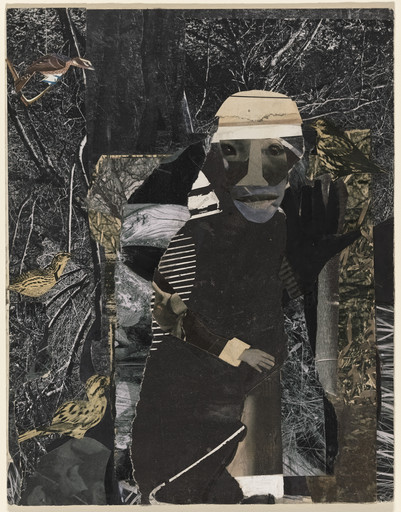
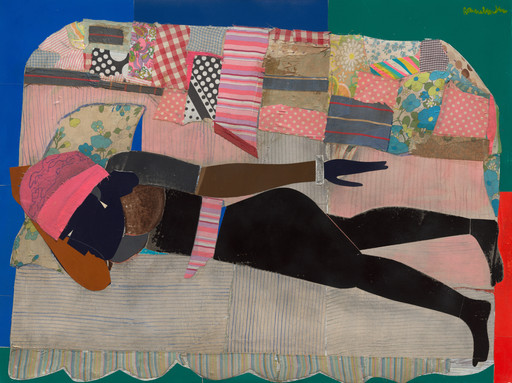
Cut-and-pasted fabrics, paper, and gelatin silver print with acrylic on board
In 1971 Bearden became only the second Black artist to have a solo exhibition at MoMA. Organized by guest curator Carroll Greene, it provided the Museum an opportunity to showcase its recent acquisition of Bearden’s major collage Patchwork Quilt, which was reproduced on the catalogue cover. Friends and supporters celebrated the opening with him, including fellow African American artists Norman Lewis and Ernest Crichlow. The three men had founded Cinque Gallery in New York City in 1969 to provide exhibition opportunities and support for emerging African American artists.
2024
Gallery label from 2022
In 1964, after three decades of living and working in Harlem, Bearden took up collage, cutting and combining found images and photographs to achieve new combinations defined by their fragmentation, texture, and layered depth. He used this approach to capture the complex facets of Black experience in the United States, often depicting scenes from everyday life in the rural South, which many African Americans left to move to northern cities during the Great Migration (1916–70), and scenes from Harlem. Throughout his career, Bearden reworked his own images in different mediums, including this collage, which is shown alongside a later photo reproduction.
2022
Publication excerpt from The Museum of Modern Art, MoMA Highlights , New York: The Museum of Modern Art, revised 2004, originally published 1999, p. 276.
"I try to show," Bearden once said, "that when some things are taken out of the usual context and put in the new, they are given an entirely new character." And a patchwork quilt, no matter how rich its pattern, is always made out of remnants cut from their context—out of scraps of outworn cloth, now put to a new use, and acquiring a nobler quality. Whether faded or frayed, their role in a new design refreshes their meaning and beauty.
Bearden's Patchwork Quilt, made up, in part, of exactly such fragments of cloth, has a share in this kind of ennoblement. A student of many cultures, Bearden took Egyptian tomb reliefs as his inspiration for the figure, with its graceful lines, its distinctive left arm and hand, its sideways posture, and its legs parted as if in midstride. Another influence was the centuries-old sculpture of Benin. These bases in high, specifically African aesthetics claim a regal ancestry for Bearden's lounging African American woman. In fact, his work lives in its cosmopolitan and democratic fusions—of the distinguished heritage of painting and the domestic practice of quilting (in which there is a distinct African American tradition), of analytic art (in the echoes of Cubism) and household decoration, and of everyday leisure and utter elegance.
The Museum of Modern Art, MoMA Highlights, New York: The Museum of Modern Art, revised 2004, originally published 1999, p. 276.
Explore more
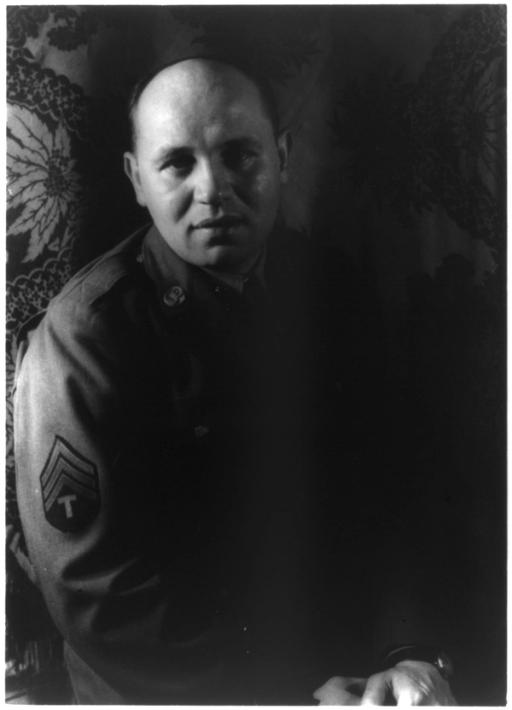
Romare Bearden
American, 1911–1988 25 works onlineRomare Bearden was 53 years old in 1964, the year he made his first series of collages. By that point in his life, he had already had several careers.
Learn more →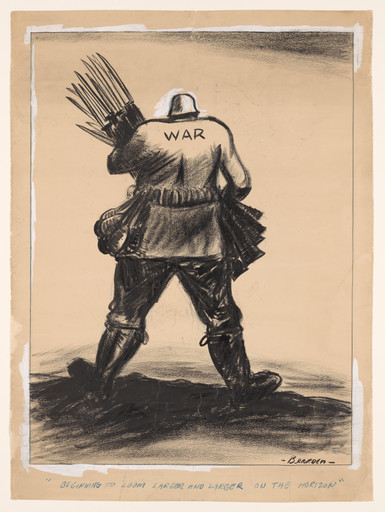


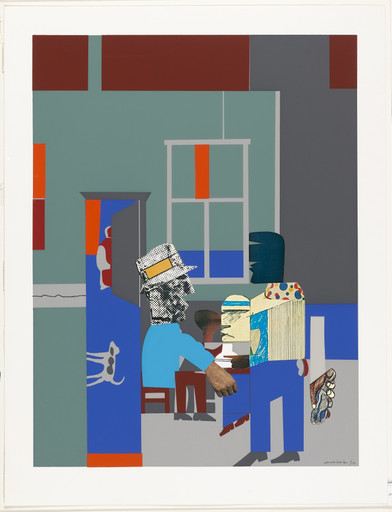
Romare Bearden
Gallery 416Bearden continually reinvented his work over his six-decade career. He first gained acclaim in the 1940s for his figurative drawings and abstract paintings.
Learn more →
From MoMA Design Store


Installation views
We have identified this work in the following photos from our exhibition history.
Licensing
Artwork or archival images
If you would like to reproduce an image of a work of art in MoMA's collection, or an image of a MoMA publication or archival material (including installation views, checklists, and press releases), please contact Art Resource (publication in North America) or Scala Archives (publication in all other geographic locations).
Audio and film clips
MoMA licenses archival audio and select out of copyright film clips from our film collection. At this time, MoMA produced video cannot be licensed by MoMA/Scala. All requests to license archival audio or out of copyright film clips should be addressed to Scala Archives at [email protected]. Motion picture film stills cannot be licensed by MoMA/Scala. For access to motion picture film stills for research purposes, please contact the Film Study Center at [email protected]. For more information about film loans and our Circulating Film and Video Library, please visit Circulating Film and Video Library.
Text from a publication or the archives
If you would like to reproduce text from a MoMA publication, please email [email protected]. If you would like to publish text from MoMA's archival materials, please fill out this permission form and send to [email protected].
Feedback
This record is a work in progress. If you have additional information or spotted an error, please fill out this feedback form.