Not on view
Max Beckmann's Kreuzabnahme (Descent from the cross) presents an unflinching look at bodily suffering—a timely topic in the midst of a seemingly never-ending war. Multiple perspectives are combined to focus the eye on Jesus's oversize corpse, his pale flesh covered in bruises and sores, with coagulated blood pooling around the gaping black holes of the stigmata. His emaciated arms stretch across the picture and in their rigor mortis still mirror the shape of the cross. Beckmann thinly and precisely applied paint in cold, restrained hues, in contrast to his exuberant brushwork for his prewar canvases.
Beckmann possibly made this painting to answer a challenge posed by curator Gustav Hartmann to create a modern work as powerful as medieval German art, which they had viewed together in Frankfurt (along with works by Italian, Flemish, and German Old Masters that significantly influenced Beckmann's style). Beckmann, after spending a few years making only prints, had recently returned to painting.
Heather Hess, German Expressionist Digital Archive Project, German Expressionism: Works from the Collection. 2011.
Explore more
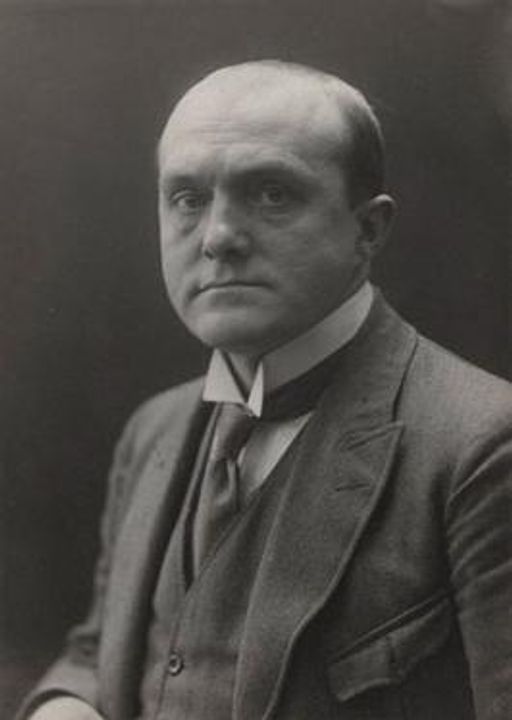
Max Beckmann
German, 1884–1950 218 works onlineMax Beckmann dreamed up a world of actors, cabaret singers, heroes, and thugs, whose dramas unfold on city streets, at masquerades and carnivals, and in candlelit chambers.
Learn more →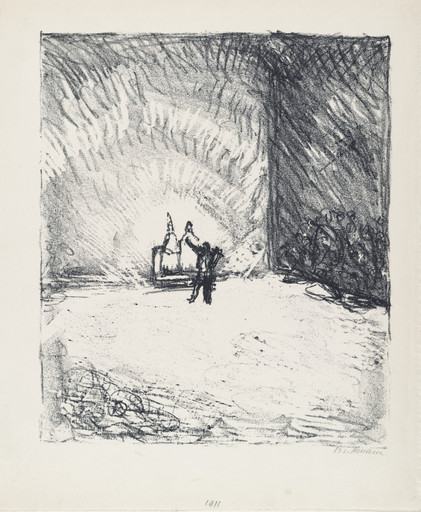
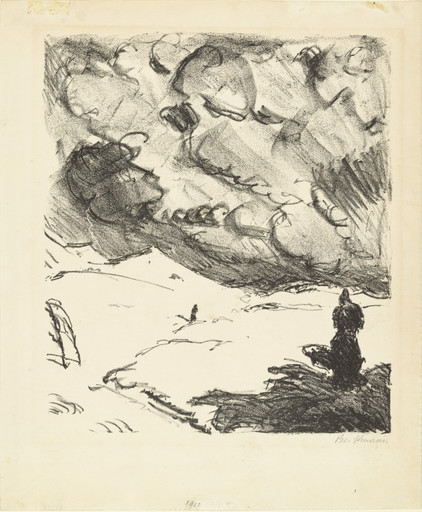
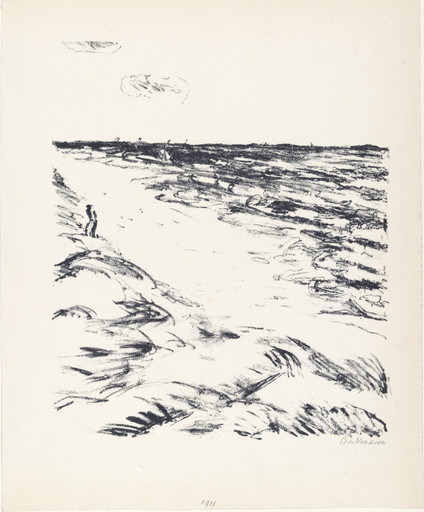
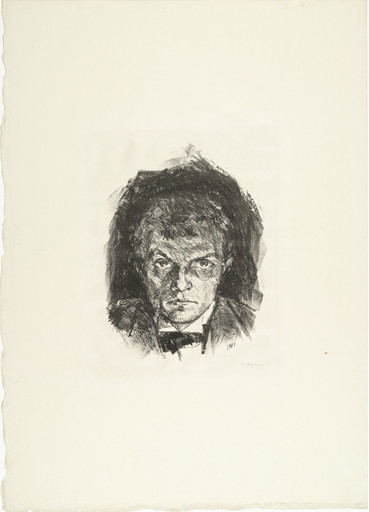
![Max Beckmann. Christ in the Desert (Large Figure) (Christus in der Wüste [Grosse Figur]) from Six Lithographs to the New Testament (Sechs Lithographien zum Neuen Testament)](https://www.moma.org/media/W1siZiIsIjExNzI2NCJdLFsicCIsImNvbnZlcnQiLCItcXVhbGl0eSA5MCAtcmVzaXplIDUxMng1MTJcdTAwM2UiXV0.jpg?sha=83abc8c94e9fd8a4)
Degenerate art
The term adopted by the Nazi regime to describe works deemed to be “an insult to German feeling.” An exhibition of the same name opened in Munich in 1937, which included works in a range of mediums that the Nazis had confiscated from public institutions in Germany.
Learn more →



From MoMA Design Store


Installation views
We have identified this work in the following photos from our exhibition history.
Provenance Research Project
This work is included in the Provenance Research Project, which investigates the ownership history of works in MoMA's collection.
The artist, Frankfurt; sold to Georg Hartmann (1870-1954), Frankfurt; returned to the artist [1]; sold to the Städelsches Kunstinstitut and Städtische Galerie, Frankfurt am Main, 1919 [2]; removed as "degenerate art" by the Reich Ministry for Public Enlightenment and Propaganda, October 26, 1936 [3]; on consignment to Karl Buchholz (1901-1992), Berlin, 1938; to Curt Valentin (1902-1954), New York (sold April 21, 1941) [4]; Estate of Curt Valentin, New York, 1954; acquired by The Museum of Modern Art, New York, 1955 (Curt Valentin Bequest).
[1] The painting was first acquired by Georg Hartmann, but then returned to the Beckmann's studio, because it apparently upset Hartmann's wife (see Göpel 192, p. 134).
[2] Purchased from Beckmann under Director Georg Swarzenski in 1919 (Inv. no. SG 291).
[3] See Beschlagnahmeinventar "Entartete Kunst", "Degenerate Art" Research Center, FU Berlin). See Sara Eskilsson Werwigk, "Ein Gemälde geht ins Exil: Auf den Spuren der Kreuzabnahme von Max Beckmann," Uwe Fleckner, ed., Das verfemte Meisterwerk, Berlin: Akademieverlag, 2009, pp. 105-135). EK inventory number: 15933 (Kreuzabnahme). Included in the exhibitions Der Bolschewismus - große antibolschewistische Schau, Deutsches Museum, Munich, November 7, 1936-January 31, 1937; and Entartete Kunst, Munich (July 19-November 30, 1937) and other venues (Berlin, Leipzig, Düsseldorf, Salzburg, Stettin, Weimar, Vienna). See Beschlagnahmeinventar "Entartete Kunst", "Degenerate Art" Research Center, FU Berlin .
[4] Included in the exhibition Landmarks in Modern German Art, Buchholz Gallery, New York, April 2-27, 1940 (no. 1).
Provenance research is a work in progress, and is frequently updated with new information. If you have any questions or information to provide about the listed works, please email [email protected] or write to:
Provenance Research Project
The Museum of Modern Art
11 West 53 Street
New York, NY 10019
Licensing
Artwork or archival images
If you would like to reproduce an image of a work of art in MoMA's collection, or an image of a MoMA publication or archival material (including installation views, checklists, and press releases), please contact Art Resource (publication in North America) or Scala Archives (publication in all other geographic locations).
Audio and film clips
MoMA licenses archival audio and select out of copyright film clips from our film collection. At this time, MoMA produced video cannot be licensed by MoMA/Scala. All requests to license archival audio or out of copyright film clips should be addressed to Scala Archives at [email protected]. Motion picture film stills cannot be licensed by MoMA/Scala. For access to motion picture film stills for research purposes, please contact the Film Study Center at [email protected]. For more information about film loans and our Circulating Film and Video Library, please visit Circulating Film and Video Library.
Text from a publication or the archives
If you would like to reproduce text from a MoMA publication, please email [email protected]. If you would like to publish text from MoMA's archival materials, please fill out this permission form and send to [email protected].
Feedback
This record is a work in progress. If you have additional information or spotted an error, please fill out this feedback form.