Wojnarowicz worked as an artist, writer, and activist in New York in the 1980s, a period marked by the initial outbreak of AIDS and by the high–profile charges of obscenity against certain artists advanced by senator Jesse Helms and the American Family Association. The imagery in Fire, such as the rattlesnake imprinted with dollar bills in the lower left and the wanted posters of criminalized (and therefore marginalized) subjects, imbues the work with layered personal and political meanings that address the greed, violence, and homophobia the artist perceived in American culture.
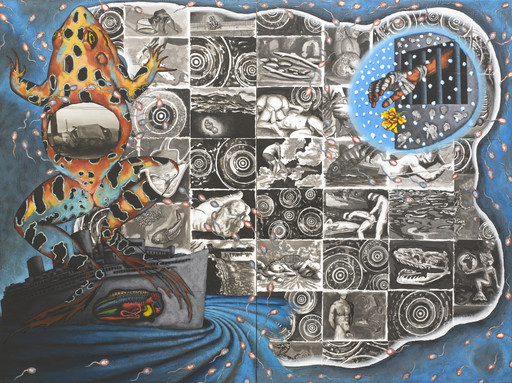
Fire belongs to a series of four paintings in MoMA's collection each relating to one of the classical elements: fire, water, earth, and air. It contains natural, mythic, and symbolic sources of heat and energy, such as a volcano, Satan, and a heart. These are juxtaposed with the personal iconography that recurs throughout Wojnarowicz's work: snakes, a dung beetle, and the map and grocery store advertisements on the right panel—found paper onto which the other elements were collaged or painted. Wojnarowicz used Surrealist techniques, such as dramatic disparities of scale, with a combination of image and text to create contemporary statements that are both fantastical and disturbing.
The Museum of Modern Art, MoMA Highlights since 1980, New York: The Museum of Modern Art, 2007, p. 78.
Gallery label from 2024
Artist, writer, and activist Wojnarowicz first gained public attention in the early 1980s on the streets of downtown New York through his handmade posters and graffiti murals. Fire is one of four paintings in a series titled The Four Elements, in which the artist aimed to complicate narratives from American culture by suffusing them with his own lived experiences. The work contains depictions of natural, mythic, and symbolic sources of heat and energy, such as a volcano, Satan, and a heart. This imagery is combined with iconography that recurs throughout Wojnarowicz’s work: snakes, dung beetles, maps, and advertisements.
2024
Explore more
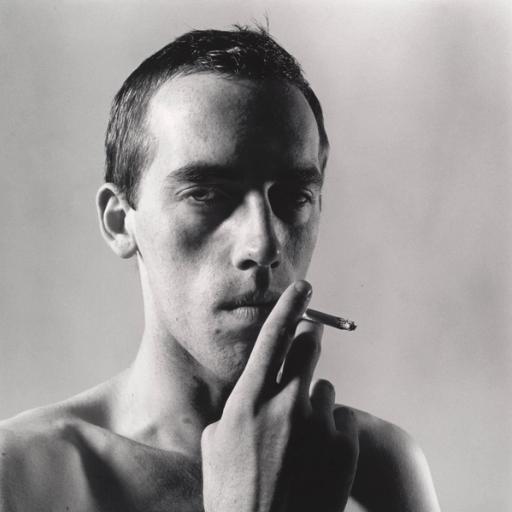
David Wojnarowicz
American, 1954–1992 17 works onlineFor Wojnarowicz, exposing the hypocrisy of an unjust society was a fundamental reason for making art. Through his paintings, photography, sculptures, films, performances, and writing, Wojnarowicz captured the rage felt by those society had cast aside—himself included—and expressed it in ways that still impact us today.
Learn more →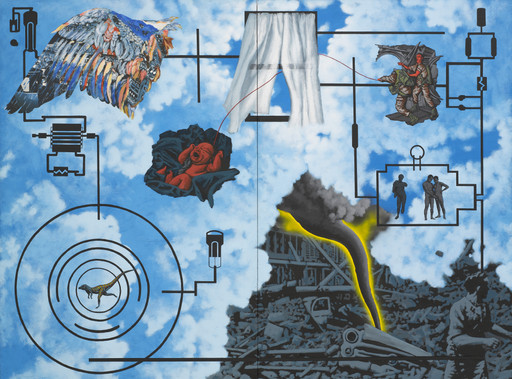

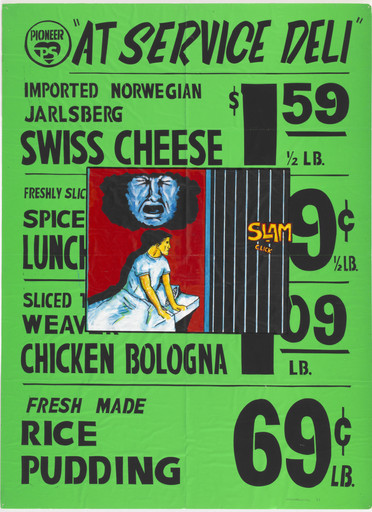
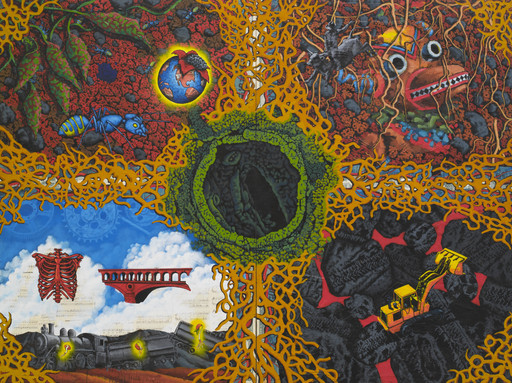
Audio
Audio from the playlist Queer Highlights
Audio from the playlist 1980–Today: Works from the Collection
From MoMA Design Store


Installation views
We have identified this work in the following photos from our exhibition history.
Licensing
Artwork or archival images
If you would like to reproduce an image of a work of art in MoMA's collection, or an image of a MoMA publication or archival material (including installation views, checklists, and press releases), please contact Art Resource (publication in North America) or Scala Archives (publication in all other geographic locations).
Audio and film clips
MoMA licenses archival audio and select out of copyright film clips from our film collection. At this time, MoMA produced video cannot be licensed by MoMA/Scala. All requests to license archival audio or out of copyright film clips should be addressed to Scala Archives at [email protected]. Motion picture film stills cannot be licensed by MoMA/Scala. For access to motion picture film stills for research purposes, please contact the Film Study Center at [email protected]. For more information about film loans and our Circulating Film and Video Library, please visit Circulating Film and Video Library.
Text from a publication or the archives
If you would like to reproduce text from a MoMA publication, please email [email protected]. If you would like to publish text from MoMA's archival materials, please fill out this permission form and send to [email protected].
Feedback
This record is a work in progress. If you have additional information or spotted an error, please fill out this feedback form.