Characterizing Onement, I as “the beginning of my present life,” Newman discovered in this breakthrough work a wealth of visual and conceptual complexity. He began by staining a modestly sized canvas with crimson. Over this richly hued ground, he applied a strip of masking tape, and then used a palette knife to scumble over it with cadmium orange. He had originally intended to remove the tape, leaving a lighter strip edged by orange flickers. Instead, he recognized in the vertical line it formed—which he would call a “zip”—a visual device that distilled painting to its essential qualities of space, color, and figure-ground relationship. Newman would spend the rest of his career exploring the potent possibilities of zips on fields of color, creating compositions whose purpose he described in lofty terms: “The image we produce is the self-evident one of revelation…that can be understood by anyone who will look at it without the nostalgic glasses of history.”
In The Studio: Postwar Abstract Painting online course, Coursera, 2017
Gallery label from 2006.
Newman proclaimed Onement, I to be his artistic breakthrough, giving the work an importance belied by its modest size. This is the first time the artist used a vertical band to define the spatial structure of his work. This band, later dubbed a "zip," became Newman's signature mark. The artist applied the light cadmium red zip atop a strip of masking tape with a palette knife. This thick, irregular band on the smooth field of Indian Red simultaneously divides and unites the composition.
2006.
Explore more
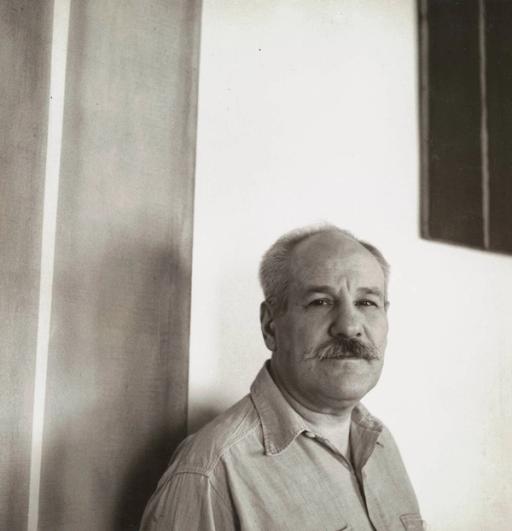
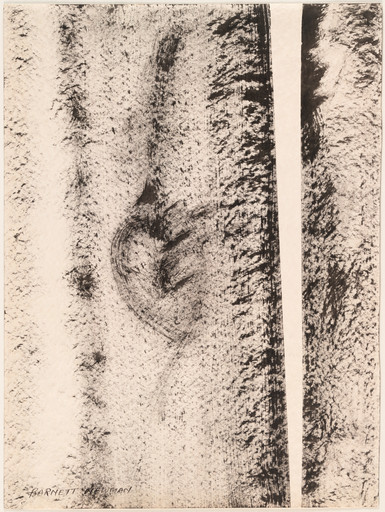
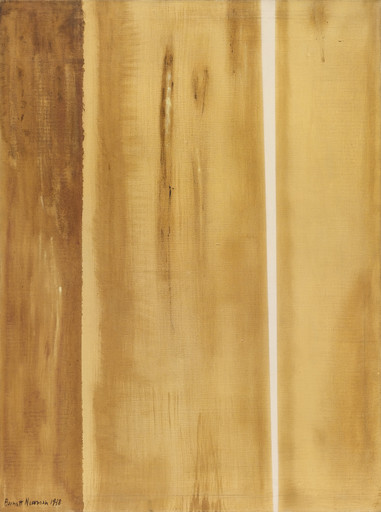
Barnett Newman
American, 1905–1970 61 works onlinePainter and theorist Barnett Newman was one of the most intellectual artists of the New York School. He was born and raised in New York, the son of Polish Jewish immigrants.
Learn more →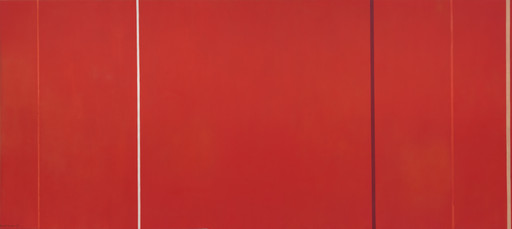
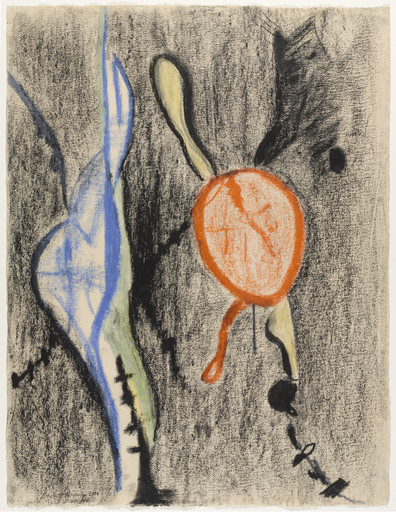
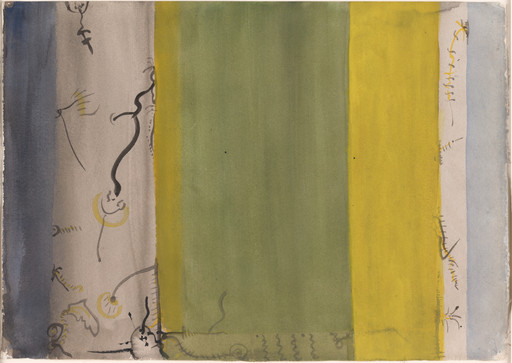
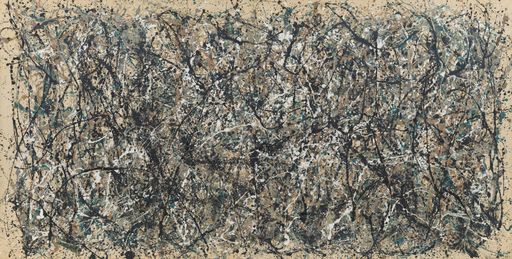
Abstract Expressionism
The dominant artistic movement in the 1940s and 1950s, Abstract Expressionism was the first to place New York City at the forefront of international modern art.
Learn more →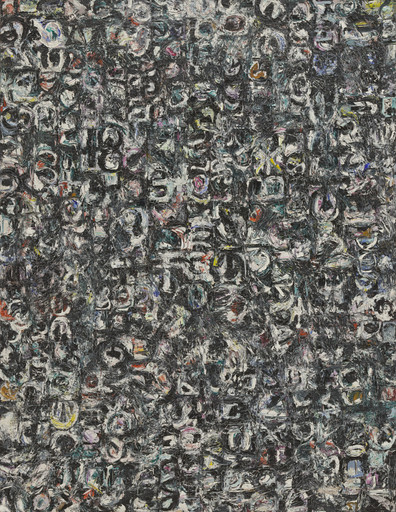

From MoMA Design Store


Installation views
We have identified this work in the following photos from our exhibition history.
Licensing
Artwork or archival images
If you would like to reproduce an image of a work of art in MoMA's collection, or an image of a MoMA publication or archival material (including installation views, checklists, and press releases), please contact Art Resource (publication in North America) or Scala Archives (publication in all other geographic locations).
Audio and film clips
MoMA licenses archival audio and select out of copyright film clips from our film collection. At this time, MoMA produced video cannot be licensed by MoMA/Scala. All requests to license archival audio or out of copyright film clips should be addressed to Scala Archives at [email protected]. Motion picture film stills cannot be licensed by MoMA/Scala. For access to motion picture film stills for research purposes, please contact the Film Study Center at [email protected]. For more information about film loans and our Circulating Film and Video Library, please visit Circulating Film and Video Library.
Text from a publication or the archives
If you would like to reproduce text from a MoMA publication, please email [email protected]. If you would like to publish text from MoMA's archival materials, please fill out this permission form and send to [email protected].
Feedback
This record is a work in progress. If you have additional information or spotted an error, please fill out this feedback form.