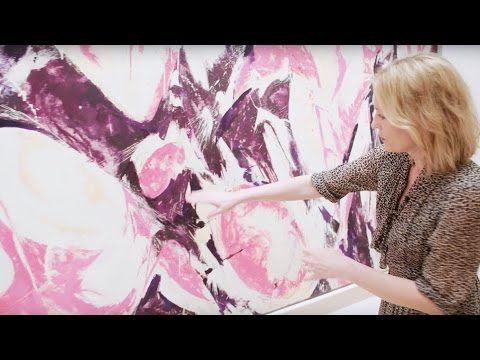
This is one of several large horizontal paintings that Krasner made in the 1960s, late in her career, when she would often use her whole body to apply broad, sweeping strokes of paint to the canvas. Titled after the ancient Greek goddess of the earth, Gaea is composed of floral colors and organic, somersaulting shapes that reflect the artist's abiding fascination with the natural world and its primeval origins. Krasner reinvented her artistic style several times over the course of her career, struggling to pursue an artistic identity separate from her role as wife (or, after 1956, widow) and relentless champion of her husband, Jackson Pollock.
Making Space: Women Artists and Postwar Abstraction, April 19 - August 13, 2017.
Gallery label from Abstract Expressionist New York , October 3, 2010-April 25, 2011.
Krasner reinvented her artistic style several times during the course of her career. In the mid-1960s her work took on a spirit of free invention, embodied in broad, sweeping strokes of paint—quite different from her smaller, thickly painted, and tightly controlled canvases of the late 1940s. Though she painted abstractly, Krasner rejected the notion that her painting was devoid of content—she “wouldn’t dream of” creating a painting from a fully abstract idea, she said. In works like this one, titled after the Earth goddess of the ancient Greeks, the artist claimed to be “drawing from sources that are basic.”
Abstract Expressionist New York, October 3, 2010-April 25, 2011.
Explore more
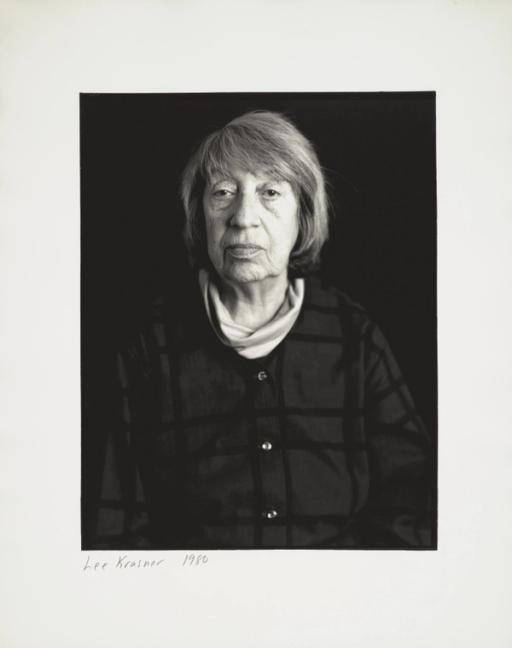
Lee Krasner
American, 1908–1984 12 works onlineLee Krasner was a force of nature, always pushing abstraction forward. Her work over 50 years suggests perpetual, restless reinvention, encompassing portraits, Cubist drawings , collage , assemblage , and large-scale abstract painting.
Learn more →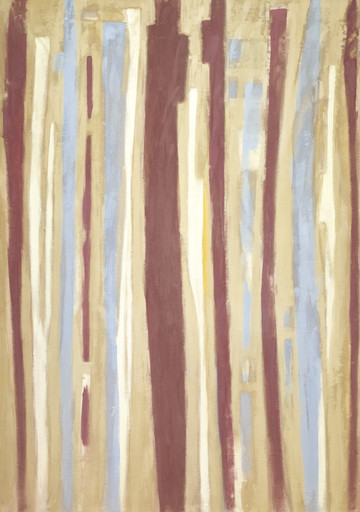
Abstract Expressionism
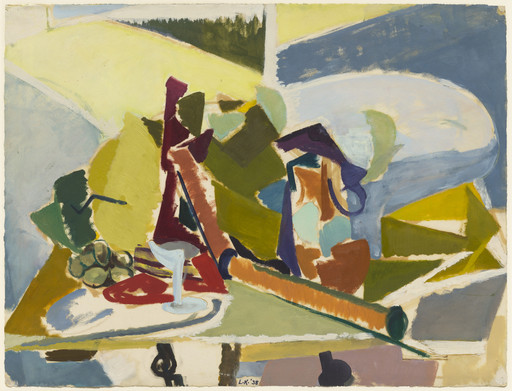
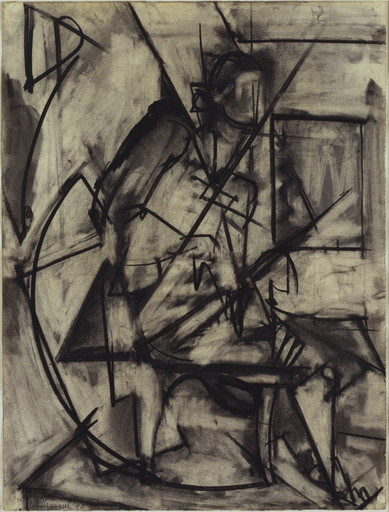
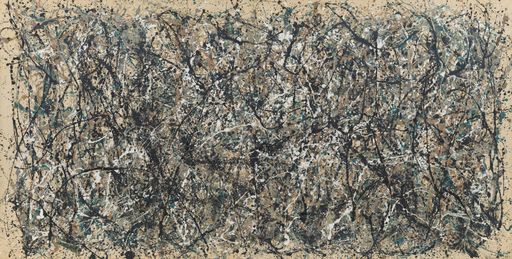
The dominant artistic movement in the 1940s and 1950s, Abstract Expressionism was the first to place New York City at the forefront of international modern art.
Learn more →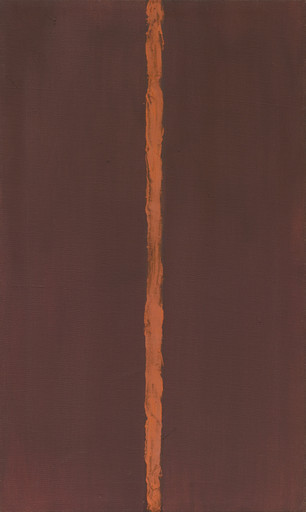
Gestural
Relating to methods of applying a medium, such as paint, to a surface, often with active or sweeping body movements.
Learn more →

Audio
Audio from the playlist Audio Descriptions
Audio from the playlist 1950–1980: Works from the Collection
Articles and videos
From MoMA Design Store


Installation views
We have identified this work in the following photos from our exhibition history.
Licensing
Artwork or archival images
If you would like to reproduce an image of a work of art in MoMA's collection, or an image of a MoMA publication or archival material (including installation views, checklists, and press releases), please contact Art Resource (publication in North America) or Scala Archives (publication in all other geographic locations).
Audio and film clips
MoMA licenses archival audio and select out of copyright film clips from our film collection. At this time, MoMA produced video cannot be licensed by MoMA/Scala. All requests to license archival audio or out of copyright film clips should be addressed to Scala Archives at [email protected]. Motion picture film stills cannot be licensed by MoMA/Scala. For access to motion picture film stills for research purposes, please contact the Film Study Center at [email protected]. For more information about film loans and our Circulating Film and Video Library, please visit Circulating Film and Video Library.
Text from a publication or the archives
If you would like to reproduce text from a MoMA publication, please email [email protected]. If you would like to publish text from MoMA's archival materials, please fill out this permission form and send to [email protected].
Feedback
This record is a work in progress. If you have additional information or spotted an error, please fill out this feedback form.