Casein tempera on hardboard
Not on view
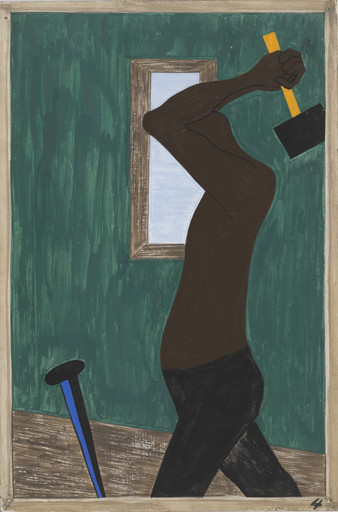
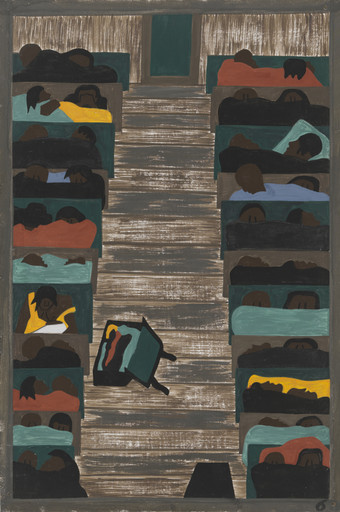
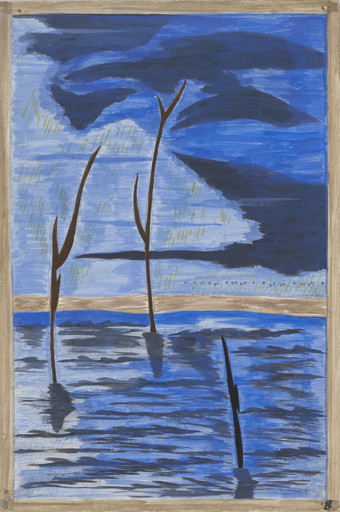
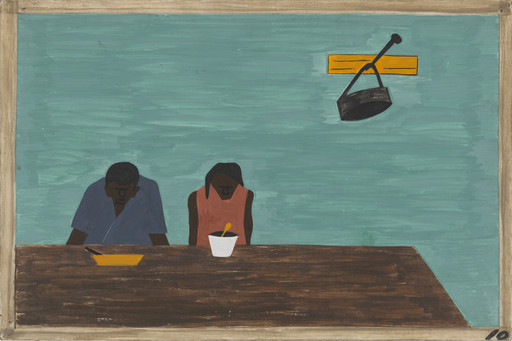
This painting is part of a series of sixty—half of them owned by The Museum of Modern Art, half by The Phillips Collection, Washington, D.C.—that tell the story of the Great Migration, the movement of African-Americans from the rural South to the increasingly industrialized North after World War I. While the series as a whole brings out the human drama of the Great Migration, the selection of six panels included in American Modern: Hopper to O'Keeffe focuses on landscape—the countryside that Lawrence's characters left behind, and the cities they adopted as their new home. Even an abstracted view of a labor camp evokes the workers' physical surroundings, which play their own part in this story.
American Modern: Hopper to O'Keeffe, August 17, 2013–January 26, 2014.
Gallery label from 2012.
These thirty paintings constitute half of the sixty-panel Migration Series, shared between MoMA and the Phillips Collection in Washington, D.C. Lawrence took as his subject the exodus of African Americans from the rural South to Northern cities during and after World War I, when industry's demand for workers attracted them in vast numbers. As the son of migrants, Lawrence had a personal connection to the topic. He researched the subject extensively and wrote the narrative before making the paintings, taking seriously the dual roles of educator and artist.
Lawrence was influenced by the work of the Mexican muralists and earlier artists such as Goya, but he drew his stylistic inspiration primarily from the Harlem community in which he lived. The vivid pattern and color—created in tempera paint as Lawrence worked on all the panels at once—reflect an aesthetic that itself had migrated from the South.
2012.
Explore more
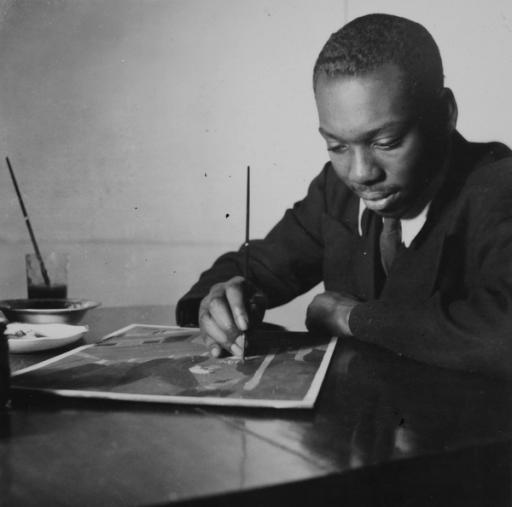
Jacob Lawrence
American, 1917–2000 41 works onlineThough he came of age before the Civil Rights Movement brought African Americans the rights they had long been denied, Lawrence forged a prominent career as an artist, chronicling the story of Black life in America through his paintings.
Learn more →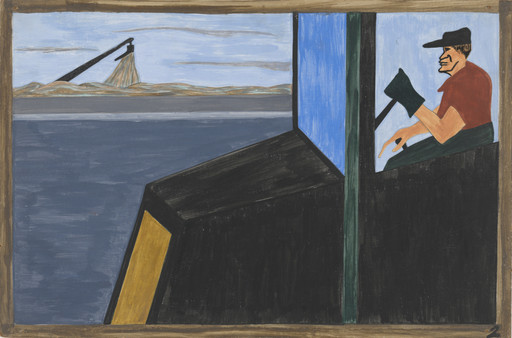

Articles and videos
From MoMA Design Store


Installation views
We have identified this work in the following photos from our exhibition history.
Licensing
Artwork or archival images
If you would like to reproduce an image of a work of art in MoMA's collection, or an image of a MoMA publication or archival material (including installation views, checklists, and press releases), please contact Art Resource (publication in North America) or Scala Archives (publication in all other geographic locations).
Audio and film clips
MoMA licenses archival audio and select out of copyright film clips from our film collection. At this time, MoMA produced video cannot be licensed by MoMA/Scala. All requests to license archival audio or out of copyright film clips should be addressed to Scala Archives at [email protected]. Motion picture film stills cannot be licensed by MoMA/Scala. For access to motion picture film stills for research purposes, please contact the Film Study Center at [email protected]. For more information about film loans and our Circulating Film and Video Library, please visit Circulating Film and Video Library.
Text from a publication or the archives
If you would like to reproduce text from a MoMA publication, please email [email protected]. If you would like to publish text from MoMA's archival materials, please fill out this permission form and send to [email protected].
Feedback
This record is a work in progress. If you have additional information or spotted an error, please fill out this feedback form.