Oil on canvas
In this large painting of pulsating, interpenetrating pistons, orifices, and circuitry, Picabia fuses the mechanical with the biological. The work evidences his predilection for machines, which intensified during a 1913 visit to New York. As one reviewer noted, “Picabia . . . admits to having put all former things behind him and to having grasped the genius of American machinery as the new medium through which his art may be expressed.” The artist also associated I See Again with French dancer Stacia Napierkowska, whom he witnessed rehearsing while onboard the ocean liner that took him from France to New York.
2024
Gallery label from Francis Picabia: Our Heads are Round so Our Thoughts Can Change Direction, November 21, 2016–March 19, 2017
Around 1914, Picabia began to pilfer words and phrases from the encyclopedic French dictionary Petit Larousse for use in his own works. He based this painting’s title on a line from Virgil’s Aeneid published in that source—“Dying, he saw again in memory his dear Argos”—but substituted “Udnie,” a name of his own invention. Picabia associated “Udnie” with memories of watching the dancer Stacia Napierkowska, whose suggestive performances subsequently provoked her arrest, rehearse onboard during his transatlantic journey to New York in 1913.
“Udnie” is also an anagram of the last name of Jean d’Udine, whose theory of synesthesia (published in 1910) linked painting with music and dance through the concept of
rhythm. In this painting, rhythm is intimated via a series of repeated, interpenetrating pistons and quasi-visceral orifices, fusing the mechanical with the biological.
Francis Picabia: Our Heads are Round so Our Thoughts Can Change Direction, November 21, 2016–March 19, 2017
Publication excerpt from MoMA Highlights: 375 Works from The Museum of Modern Art, New York (New York: The Museum of Modern Art, 2019)
Around 1914 Picabia began to pilfer words and phrases from the encyclopedic Petit Larousse dictionary for use in his own works. He based this painting’s title on a line from Virgil’s Aeneid from that source—“Dying, he saw again in memory his dear Argos”—substituting “Udnie,” a name of Picabia’s own invention. The artist associated the name with his memories of French dancer Stacia Napierkowska rehearsing onboard during his transatlantic journey to New York in 1913. “Udnie” is also an anagram of the last name of French musicologist Jean d’Udine, whose theory of synesthesia (published in 1910) linked painting with music and dance through the concept of rhythm.
In this large painting, rhythm is intimated via a series of repeated, interpenetrating pistons and orifices, fusing the mechanical with the biological. The work illustrates Picabia’s predilection for machines, which intensified during his 1913 visit to New York. As one reviewer noted that year, “Picabia . . . admits to having put all former things behind him and to having grasped the genius of American machinery as the new medium through which his art may be expressed.” The painting’s conflation of mechanized movements with erotic bodily forms, along with its half-stolen title, exemplifies the irreverent approach that made Picabia a central figure in the Dada movement during the World War I years.
MoMA Highlights: 375 Works from The Museum of Modern Art, New York (New York: The Museum of Modern Art, 2019)
Explore more
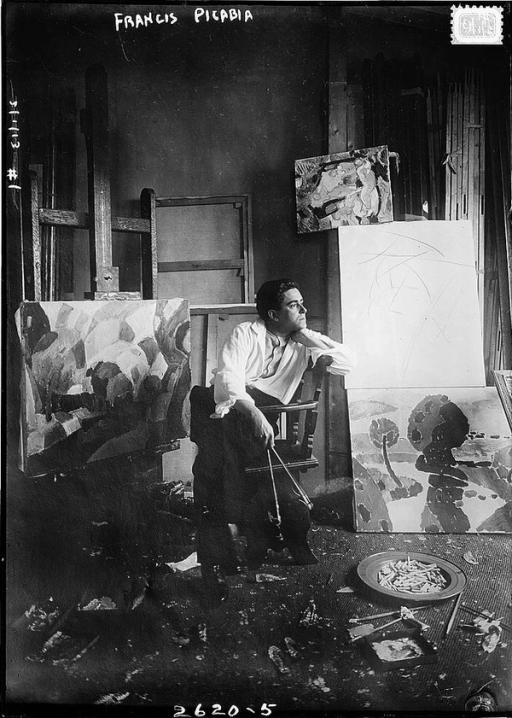
Francis Picabia
French, 1879–1953 79 works onlineIn 1922, Francis Picabia wrote, “If you want to have clean ideas, change them like shirts.” Throughout his audacious and inventive career, which spanned almost 50 years and encompassed painting, performance, poetry, publishing, and film, Picabia lived out that prescription.
Learn more →

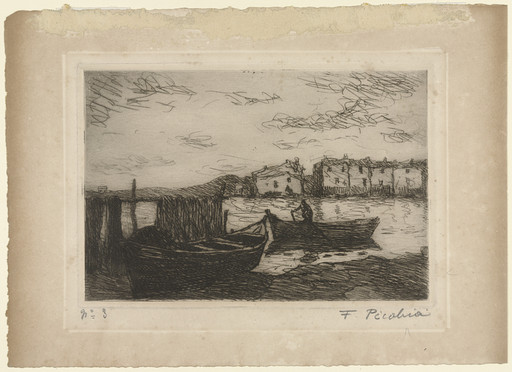
![Francis Picabia. Dances at the Spring [II]](https://www.moma.org/media/W1siZiIsIjI0MzcwNiJdLFsicCIsImNvbnZlcnQiLCItcXVhbGl0eSA5MCAtcmVzaXplIDUxMng1MTJcdTAwM2UiXV0.jpg?sha=8ef3abbd803c7016)
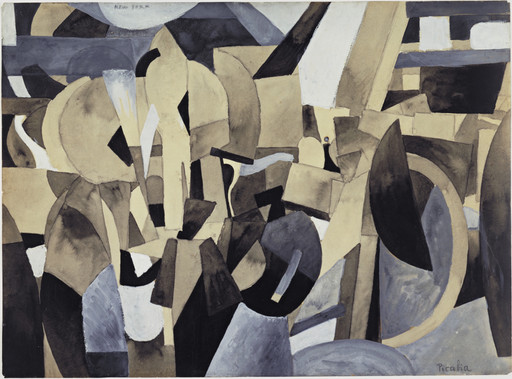
Living in the Age of the Machine
Gallery 505Artists across Europe, Russia, and the United States responded in various ways to this period’s increasing mechanization, industrialization, and public awareness of the machine’s destructive potential.
Learn more →

From MoMA Design Store


Installation views
We have identified this work in the following photos from our exhibition history.
Provenance Research Project
This work is included in the Provenance Research Project, which investigates the ownership history of works in MoMA's collection.
1913/14 - at least 1930, Francis Picabia, Paris.
1930 (?) - 1947, Galerie L'Effort Moderne/ Léonce Rosenberg (1879-1947), Paris.
1947 - ?, Léonce Rosenberg Estate, Paris.
? - 1954, Sidney Janis Gallery, New York, purchased from the Léonce Rosenberg Estate.
1954, The Museum of Modern Art, New York, purchased from Sidney Janis Gallery, New York.
Provenance research is a work in progress, and is frequently updated with new information. If you have any questions or information to provide about the listed works, please email [email protected] or write to:
Provenance Research Project
The Museum of Modern Art
11 West 53 Street
New York, NY 10019
Licensing
Artwork or archival images
If you would like to reproduce an image of a work of art in MoMA's collection, or an image of a MoMA publication or archival material (including installation views, checklists, and press releases), please contact Art Resource (publication in North America) or Scala Archives (publication in all other geographic locations).
Audio and film clips
MoMA licenses archival audio and select out of copyright film clips from our film collection. At this time, MoMA produced video cannot be licensed by MoMA/Scala. All requests to license archival audio or out of copyright film clips should be addressed to Scala Archives at [email protected]. Motion picture film stills cannot be licensed by MoMA/Scala. For access to motion picture film stills for research purposes, please contact the Film Study Center at [email protected]. For more information about film loans and our Circulating Film and Video Library, please visit Circulating Film and Video Library.
Text from a publication or the archives
If you would like to reproduce text from a MoMA publication, please email [email protected]. If you would like to publish text from MoMA's archival materials, please fill out this permission form and send to [email protected].
Feedback
This record is a work in progress. If you have additional information or spotted an error, please fill out this feedback form.