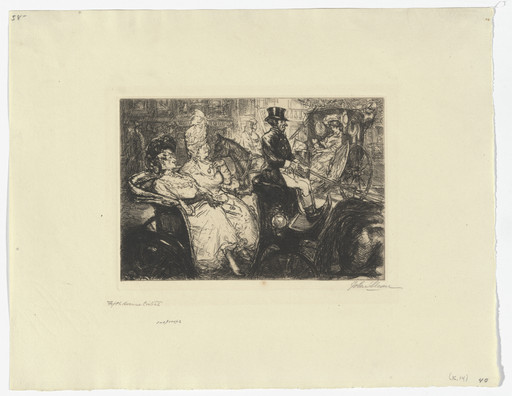
One from a series of ten etchings
Not on view
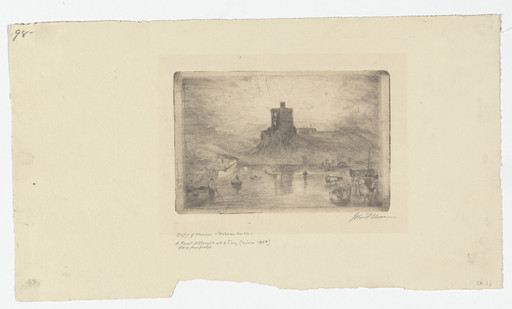
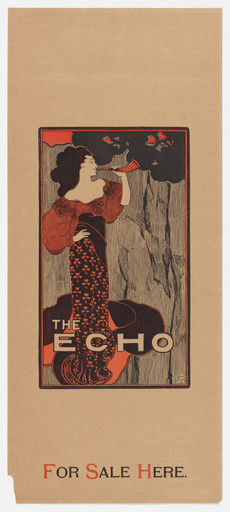
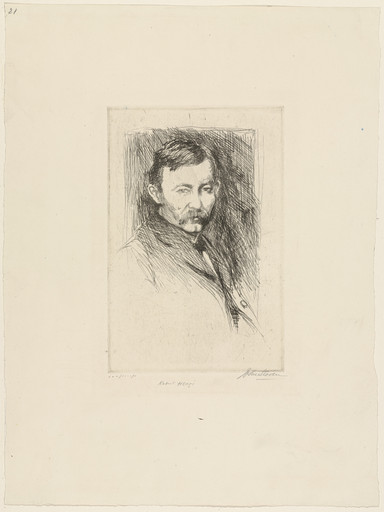
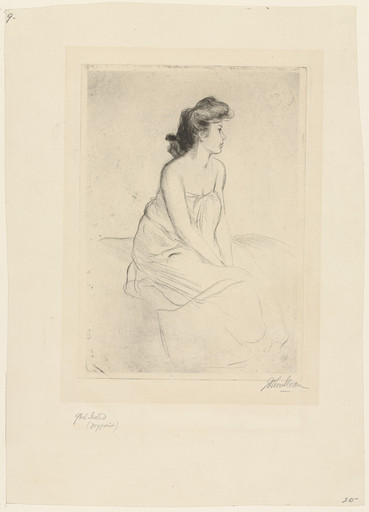
In his late teens, John Sloan worked for a Philadelphia print dealer and bookseller and taught himself to etch by reading a handbook that described the technique. Between 1891 and 1904, he made approximately one hundred etchings for a publisher of calendars, illustrated books, and novelty items. After taking classes with Ash Can School painter Robert Henri, a proponent of realistic depictions of everyday life, Sloan applied these lessons to his printmaking when he embarked on the series New York City Life in 1905–06. Despite critical acclaim for the ten etchings in this series, the public found them too risqué, and Sloan initially exhibited and sold few of them. One of these prints, Turning Out the Light, is an example of the sort of innuendo that some viewers found objectionable. However, in choosing ordinary people for his subjects, Sloan was following the example of artists he admired, including Goya, Dürer, Rembrandt, and Hogarth, as well as contemporary illustrators. In fact, a humanitarian outlook informed much of his art, and part of the appeal of printmaking for him was that it made art more affordable and accessible. As art editor for the Socialist magazine The New Masses from 1910 to 1914, he also published many political and satirical drawings.
Primarily between 1891 and 1937, Sloan completed more than three hundred etchings, as well as a few prints in other mediums, before turning almost exclusively to painting. For printmaking, he usually drew from memory and then worked on his plates with various tools and chemicals, evolving his imagery through several states. Subway Stairs, for example, went through seven such states before Sloan settled on the version shown here. As the demand for his prints rose, he sometimes enlisted the services of professional printers to help print the edition.
an essay by Jennifer Roberts, in Deborah Wye, Artists and Prints: Masterworks from The Museum of Modern Art, New York: The Museum of Modern Art, 2004, p. 120.
Explore more
From MoMA Design Store


Installation views
We have identified this work in the following photos from our exhibition history.
Licensing
Artwork or archival images
If you would like to reproduce an image of a work of art in MoMA's collection, or an image of a MoMA publication or archival material (including installation views, checklists, and press releases), please contact Art Resource (publication in North America) or Scala Archives (publication in all other geographic locations).
Audio and film clips
MoMA licenses archival audio and select out of copyright film clips from our film collection. At this time, MoMA produced video cannot be licensed by MoMA/Scala. All requests to license archival audio or out of copyright film clips should be addressed to Scala Archives at [email protected]. Motion picture film stills cannot be licensed by MoMA/Scala. For access to motion picture film stills for research purposes, please contact the Film Study Center at [email protected]. For more information about film loans and our Circulating Film and Video Library, please visit Circulating Film and Video Library.
Text from a publication or the archives
If you would like to reproduce text from a MoMA publication, please email [email protected]. If you would like to publish text from MoMA's archival materials, please fill out this permission form and send to [email protected].
Feedback
This record is a work in progress. If you have additional information or spotted an error, please fill out this feedback form.