Not on view
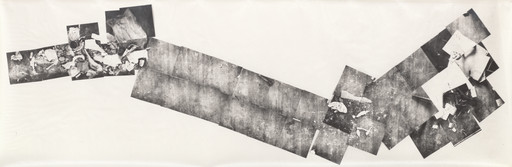
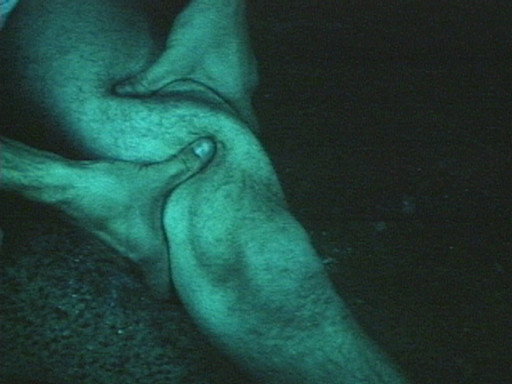
Bruce Nauman's work defies easy categorization and cannot be identified with any particular style. Trained as a painter, Nauman gave up this traditional practice for a plethora of mediums, including sculpture in rubber, steel, fiberglass, and neon, architectural installations, video, photography, and performance. Also important in Nauman's oeuvre has been body art, a movement originating in the 1960s and 1970s in which the artist's own body, rather than traditional materials such as paint or wood, was the medium of choice.
Although the conventional techniques of printmaking would not seem a natural choice for Nauman, he began to work at Cirrus Editions in Los Angeles, a print workshop and gallery opened by Tamarind-trained printer Jean Milant, in 1970. There he experimented with lithography and intaglio mediums, often using unconventional implements such as carpenter's files in lieu of traditional tools. Since that time, printmaking has remained a constant aspect of his creative output.
Although Nauman's first editions derived from his body art, much of his subsequent printed work has dealt with language. Language is among his most important subjects, explored in many mediums. He dissects and deconstructs words and phrases, reverses them, reassembles them, plays with them, depicts them, and recombines them as part of an ongoing conceptual practice. In this example, Violins/Violence, Nauman creates a pun that is verbal, visual, and aural and plays on these two homonyms and on the sound that might be conjured up by his sharply scratched drypoint lines. The theme of language is especially prevalent in his prints, as nearly half are word images. He says of this work, "When I began to see the information as poetry, doing them as prints made sense."
an essay by Sarah Suzuki, in Deborah Wye, Artists and Prints: Masterworks from The Museum of Modern Art, New York: The Museum of Modern Art, 2004, p. 189.
Explore more
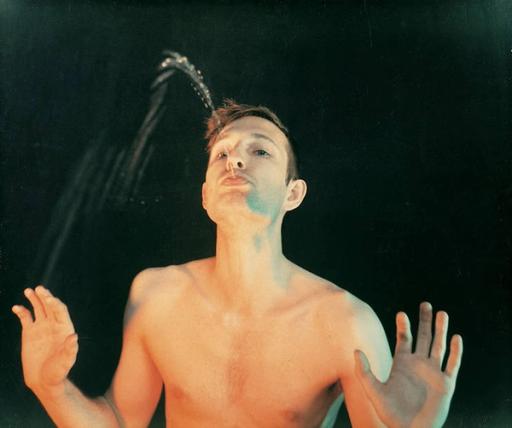
Bruce Nauman
American, born 1941 93 works onlineFor more than 50 years, he has worked in every conceivable artistic medium, dissolving established genres and inventing new ones in the process.
Learn more →
Drypoint
An intaglio printmaking technique that creates sharp lines with fuzzy, velvety edges. A diamond-pointed needle is used to incise lines directly into a bare metal printing plate, displacing ridges of metal that adhere to the edges of the incised lines.
Learn more →
From MoMA Design Store


Installation views
We have identified this work in the following photos from our exhibition history.
Licensing
Artwork or archival images
If you would like to reproduce an image of a work of art in MoMA's collection, or an image of a MoMA publication or archival material (including installation views, checklists, and press releases), please contact Art Resource (publication in North America) or Scala Archives (publication in all other geographic locations).
Audio and film clips
MoMA licenses archival audio and select out of copyright film clips from our film collection. At this time, MoMA produced video cannot be licensed by MoMA/Scala. All requests to license archival audio or out of copyright film clips should be addressed to Scala Archives at [email protected]. Motion picture film stills cannot be licensed by MoMA/Scala. For access to motion picture film stills for research purposes, please contact the Film Study Center at [email protected]. For more information about film loans and our Circulating Film and Video Library, please visit Circulating Film and Video Library.
Text from a publication or the archives
If you would like to reproduce text from a MoMA publication, please email [email protected]. If you would like to publish text from MoMA's archival materials, please fill out this permission form and send to [email protected].
Feedback
This record is a work in progress. If you have additional information or spotted an error, please fill out this feedback form.