Henry Clemens van de Velde
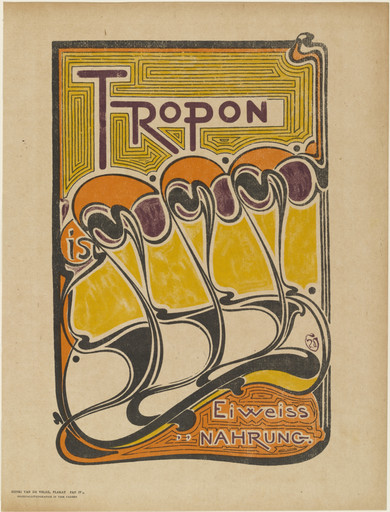
Tropon, l'Aliment Le Plus Concentré (Tropon, the most concentrated nourishment) (Poster advertising protein extract)
1899
Lithograph
In the 1890s Van de Velde used the fashionable, highly stylized language of Art Nouveau to advertise a product as mundane as an egg-based protein extract. The late nineteenth century witnessed a revolution in industrial-food processing, starting with coffee, cocoa, and a range of meat and dairy products. Such processed foods and their burgeoning brand identities rapidly became integral to modern living, transforming traditional patterns of shopping, cooking, and at-home food storage.
Counter Space: Design and the Modern Kitchen, September 15, 2010–March 14, 2011.
Explore more
Art Nouveau (New Art)
An international artistic movement of the late 19th and early 20th centuries that emphasized the unity of the arts and sought to reflect the intensive psychic and sensory stimuli of the modern city.
Learn more →

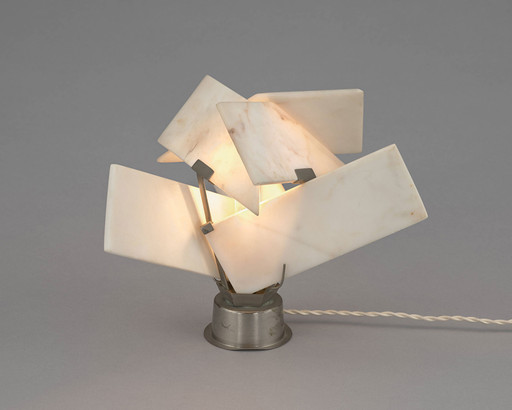
Living Forms
Gallery 516As steam and steel reshaped the modern world, another, quieter revolution took place. While many artists and designers celebrated the machine’s precision, others turned to the vocabulary of nature: the unfolding leaf, the spiral shell, the architecture of growth itself.
Learn more →
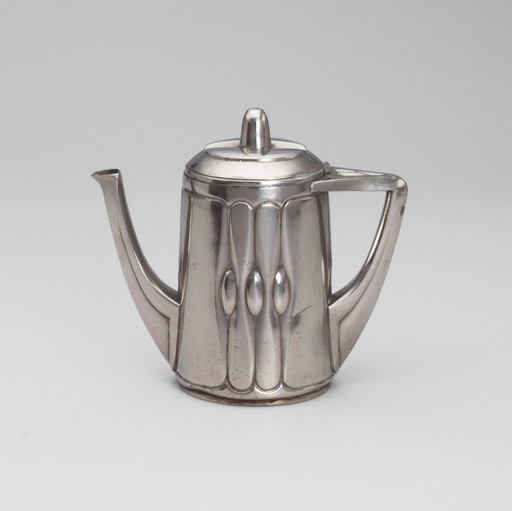
From MoMA Design Store


Installation views
We have identified this work in the following photos from our exhibition history.
Licensing
Artwork or archival images
If you would like to reproduce an image of a work of art in MoMA's collection, or an image of a MoMA publication or archival material (including installation views, checklists, and press releases), please contact Art Resource (publication in North America) or Scala Archives (publication in all other geographic locations).
Audio and film clips
MoMA licenses archival audio and select out of copyright film clips from our film collection. At this time, MoMA produced video cannot be licensed by MoMA/Scala. All requests to license archival audio or out of copyright film clips should be addressed to Scala Archives at [email protected]. Motion picture film stills cannot be licensed by MoMA/Scala. For access to motion picture film stills for research purposes, please contact the Film Study Center at [email protected]. For more information about film loans and our Circulating Film and Video Library, please visit Circulating Film and Video Library.
Text from a publication or the archives
If you would like to reproduce text from a MoMA publication, please email [email protected]. If you would like to publish text from MoMA's archival materials, please fill out this permission form and send to [email protected].
Feedback
This record is a work in progress. If you have additional information or spotted an error, please fill out this feedback form.