Stencil on versos of torn and layered billboard papers
Not on view
Hammons has made a number of works for the street, famously selling snowballs, for example, in downtown Manhattan after a blizzard. For this work he used a stencil to spray-paint the face of Nelson Mandela on buildings and billboards. Mandela, later the president of South Africa, was then nearing the end of a twenty-seven-year prison sentence for fighting the country’s political system of apartheid. The torn billboard paper on which this image appears reflects the work’s reproducibility and portability. Inspired by Mandela, activists in Palestine, Northern Ireland, and elsewhere also painted him as the symbol of their struggle for freedom.
2019
Publication excerpt from an essay by Jennifer Roberts, in Deborah Wye, Artists and Prints: Masterworks from The Museum of Modern Art , New York: The Museum of Modern Art, 2004, p. 212.
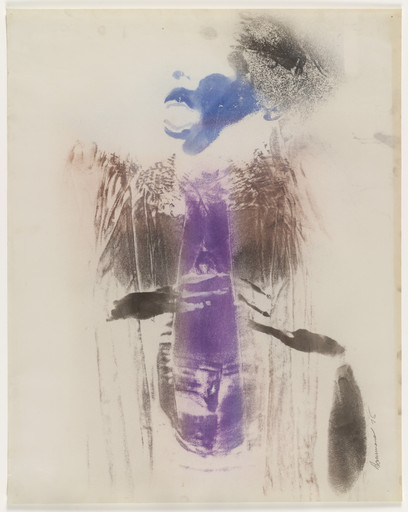
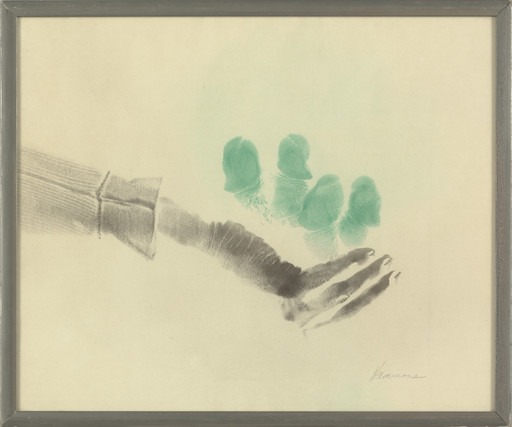
David Hammons's assemblages, installations, and performances address issues relevant to African-American and African culture, identity, and experience. Using unconventional, often found materials, he has created projects that include pyramids of human hair collected from the floors of Harlem barbershops and snowballs that he sells on the sidewalk. His drawings, made from Harlem dirt bounced off a basketball onto paper, could conceptually be termed "prints." Hammon's statement from the 1960s, "I feel it my moral obligation as a black artist to try to graphically document what I feel socially," continues to illuminate his work. An artist who came of age during the height of the civil rights and black nationalist movements, Hammons established his reputation during this period with his series of some five hundred politically charged body prints. Here the artist's body, sometimes clothed, sometimes naked, was smeared with grease and functioned as a printing plate when he pressed himself against a sheet of paper. He then sprinkled dry pigments onto the greasy markings, sometimes adding other imagery in screenprint. Through this reconceptualization of printmaking, a medium steeped in tradition, the artist created his own representations of the black male body. Other printed works he has made over the years have been equally atypical. With his stencil Free Nelson Mandela, Hammons once again utilized a printmaking technique in a kind of performance addressing social and political concerns. Spray-painted on both indoor and outdoor sites while Mandela was still in prison after more than twenty years, the stencil was then sprayed on torn billboard papers to create this print. Its subject is a concrete signifier of what was denied by authorities, but was indeed true for many black South Africans-that the spirit of Mandela remained and that his cause could not be extinguished.
an essay by Jennifer Roberts, in Deborah Wye, Artists and Prints: Masterworks from The Museum of Modern Art, New York: The Museum of Modern Art, 2004, p. 212.
Explore more
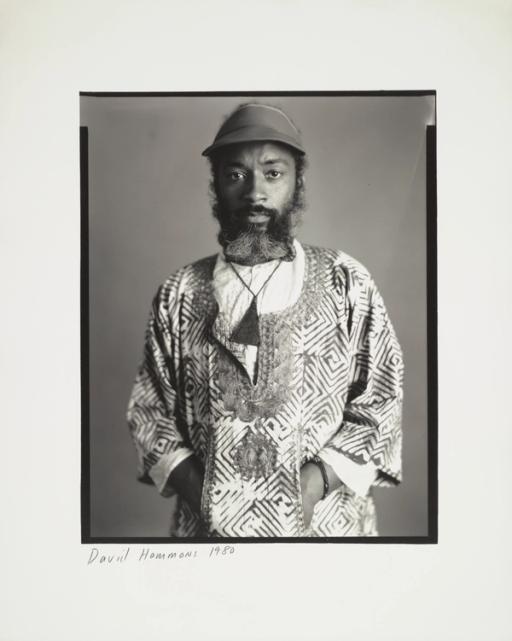
David Hammons
American, born 1943 21 works onlineDavid Hammons once commented that “outrageously magical things happen when you mess around with a symbol." For the past 50 years, Hammons has created a vocabulary of symbols from everyday life and messed around with them in the form of prints, drawings, performances, video, found-object sculptures, and paintings.
Learn more →

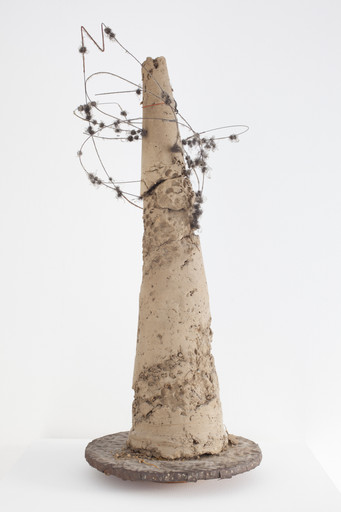
Stencil
Produces an image or pattern by applying pigment to an intermediate object—usually a thin sheet of material such as paper, plastic, wood, or metal—with designed gaps that allow the pigment to reach the exposed portions of a surface below.
Learn more →
From MoMA Design Store


Installation views
We have identified this work in the following photos from our exhibition history.
Licensing
Artwork or archival images
If you would like to reproduce an image of a work of art in MoMA's collection, or an image of a MoMA publication or archival material (including installation views, checklists, and press releases), please contact Art Resource (publication in North America) or Scala Archives (publication in all other geographic locations).
Audio and film clips
MoMA licenses archival audio and select out of copyright film clips from our film collection. At this time, MoMA produced video cannot be licensed by MoMA/Scala. All requests to license archival audio or out of copyright film clips should be addressed to Scala Archives at [email protected]. Motion picture film stills cannot be licensed by MoMA/Scala. For access to motion picture film stills for research purposes, please contact the Film Study Center at [email protected]. For more information about film loans and our Circulating Film and Video Library, please visit Circulating Film and Video Library.
Text from a publication or the archives
If you would like to reproduce text from a MoMA publication, please email [email protected]. If you would like to publish text from MoMA's archival materials, please fill out this permission form and send to [email protected].
Feedback
This record is a work in progress. If you have additional information or spotted an error, please fill out this feedback form.