Although Munch was just thirty-one years old when he created this self-portrait, he represented himself as a spectral figure, with bones at the bottom of the picture serving as a memento mori, or reminder of death. They are balanced by the artist's name and the date at the top of the image; together these details turn it into a kind of tombstone, or sepulchral tablet.
Munch later stated, "Sickness, insanity, and death were the dark angels standing guard at my cradle and they have followed me throughout my life." The darkness of the background allows the bones to appear to be those of the subject's arm, leaning on the picture's frame. The severed, floating head was a familiar motif in art around the turn of the twentieth century, signifying a split between the physical and spiritual worlds.
Edvard Munch: The Scream, October 24, 2012–April 29, 2013.
Explore more
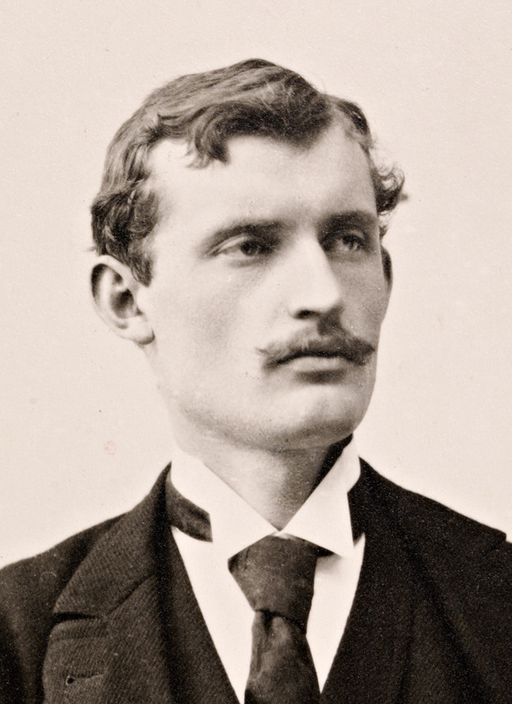
Edvard Munch
Norwegian, 1863–1944 73 works onlineFor Edvard Munch, 1893 was a year of screams. In the fall, the Norwegian artist produced two versions of The Scream , his now iconic image of personal and universal anguish. ” he later wrote.
Learn more →
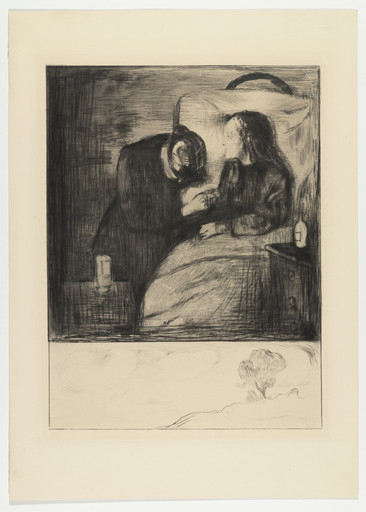
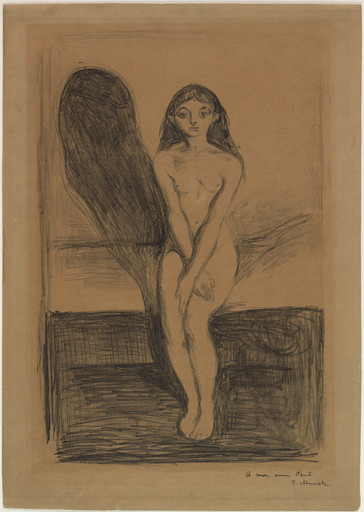
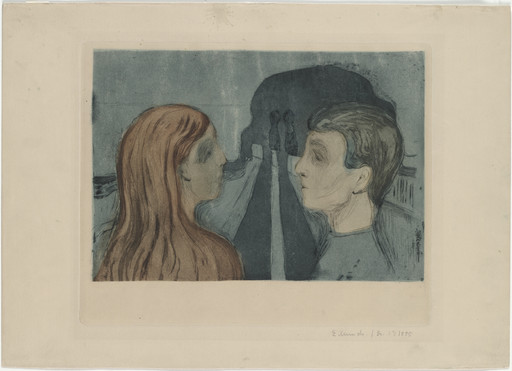
From MoMA Design Store


Installation views
We have identified this work in the following photos from our exhibition history.
Licensing
Artwork or archival images
If you would like to reproduce an image of a work of art in MoMA's collection, or an image of a MoMA publication or archival material (including installation views, checklists, and press releases), please contact Art Resource (publication in North America) or Scala Archives (publication in all other geographic locations).
Audio and film clips
MoMA licenses archival audio and select out of copyright film clips from our film collection. At this time, MoMA produced video cannot be licensed by MoMA/Scala. All requests to license archival audio or out of copyright film clips should be addressed to Scala Archives at [email protected]. Motion picture film stills cannot be licensed by MoMA/Scala. For access to motion picture film stills for research purposes, please contact the Film Study Center at [email protected]. For more information about film loans and our Circulating Film and Video Library, please visit Circulating Film and Video Library.
Text from a publication or the archives
If you would like to reproduce text from a MoMA publication, please email [email protected]. If you would like to publish text from MoMA's archival materials, please fill out this permission form and send to [email protected].
Feedback
This record is a work in progress. If you have additional information or spotted an error, please fill out this feedback form.