It only cost a penny to have your portrait taken in Savannah, Georgia, in 1936. The studio operator—part photographer, part businessman—arranged his favorite examples in a neat grid to attract customers. This window display caught the attention of Evans, who loved the unaffected charm of useful, vernacular photographs and adopted their straightforward look in his own work. He observed, “Documentary? That’s a very sophisticated and misleading word. And not really clear. . . . You see, a document has use, whereas art is really useless. Therefore art is never a document, though it certainly can adopt that style.”
2019
Publication excerpt from MoMA Highlights: 375 Works from The Museum of Modern Art, New York (New York: The Museum of Modern Art, 2019)
In this photographer’s studio window in Savannah, Georgia, there are fifteen blocks of fifteen pictures each, for a total of 225 portraits, less the ones hidden by the letters. Most of the sitters appear at least twice, but altogether there are more than one hundred different men, women, and children: a community.
Evans explored the United States of the 1930s—its people, its architecture, and its cultural symbols (including its photographs)—with the disinterested eye of an archaeologist studying an ancient civilization. Penny Picture Display, Savannah might be interpreted as a celebration of democracy or as a condemnation of conformity. Evans took no side.
The photograph is very much a modern picture—crisp, planar, and resolutely self-contained. But instead of reconfirming a timeless ideal, as artistically ambitious American photographers before Evans generally had aimed to do, it captures a very particular and contemporary moment, rooted in history. And it announces Evans’s allegiance to the plainspoken vernacular of ordinary photographers, such as the portraitist who made the pictures in this window.
MoMA Highlights: 375 Works from The Museum of Modern Art, New York (New York: The Museum of Modern Art, 2019)
Explore more
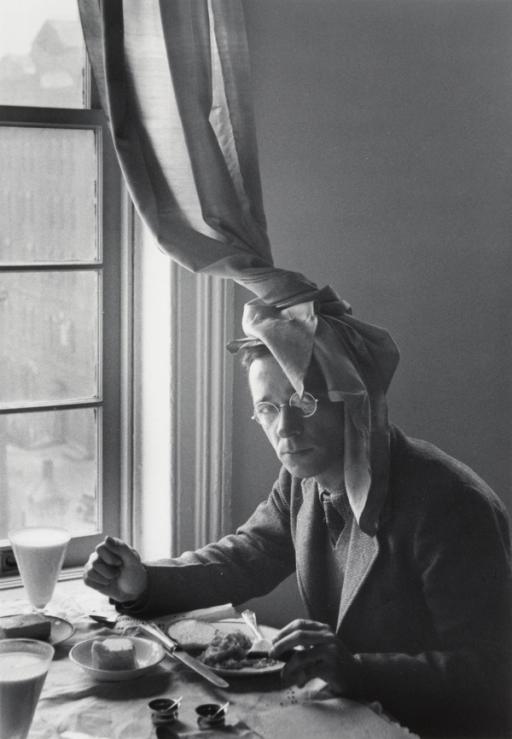
Walker Evans
American, 1903–1975 368 works onlineIn a review of Walker Evans’s first career retrospective , critic Hilton Kramer noted, “Our experience of an Evans photograph may begin with an admiration for its design and a delight in its subject; it ends, however, with an overwhelming sense of the photographer’s own unmistakable temperament.
Learn more →


From MoMA Design Store


Installation views
We have identified this work in the following photos from our exhibition history.
Licensing
Artwork or archival images
If you would like to reproduce an image of a work of art in MoMA's collection, or an image of a MoMA publication or archival material (including installation views, checklists, and press releases), please contact Art Resource (publication in North America) or Scala Archives (publication in all other geographic locations).
Audio and film clips
MoMA licenses archival audio and select out of copyright film clips from our film collection. At this time, MoMA produced video cannot be licensed by MoMA/Scala. All requests to license archival audio or out of copyright film clips should be addressed to Scala Archives at [email protected]. Motion picture film stills cannot be licensed by MoMA/Scala. For access to motion picture film stills for research purposes, please contact the Film Study Center at [email protected]. For more information about film loans and our Circulating Film and Video Library, please visit Circulating Film and Video Library.
Text from a publication or the archives
If you would like to reproduce text from a MoMA publication, please email [email protected]. If you would like to publish text from MoMA's archival materials, please fill out this permission form and send to [email protected].
Feedback
This record is a work in progress. If you have additional information or spotted an error, please fill out this feedback form.