Four chromogenic color prints, printed 1997
Not on view
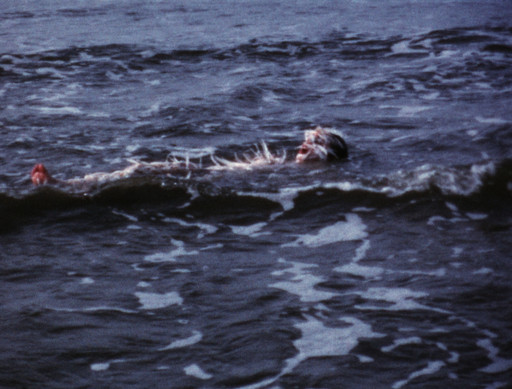
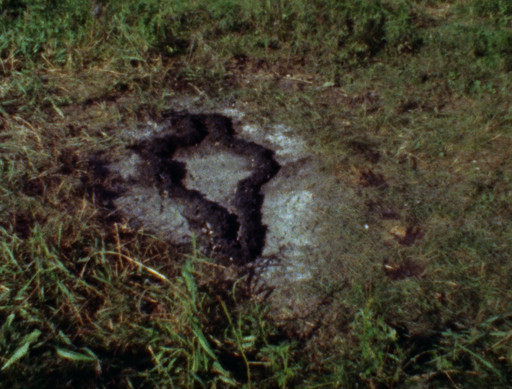
Mendieta was a graduate student at the University of Iowa when she performed and recorded this work. Although she earned her master’s degree in painting, Mendieta also worked with photography, film, and performance. To make this piece, she distorted her appearance with cosmetics, wigs, and various facial expressions, creating these transformations with only the camera as her audience. One of her earliest works, it engages with issues—including self-representation, corporeality, female identity, and the nature of beauty—that she continued to explore for the rest of her career.
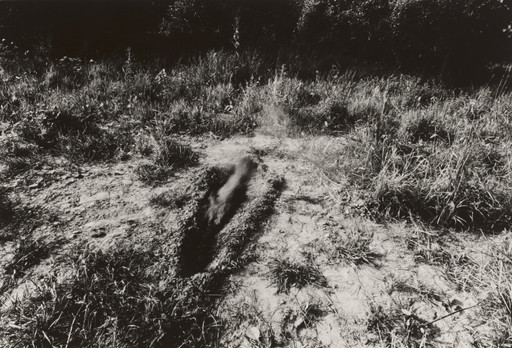
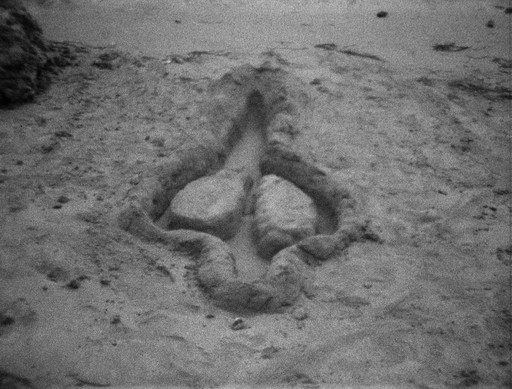
Mendieta had moved to Iowa with her sister at age twelve through Operation Pedro Pan, which brought to the United States more than fourteen thousand unaccompanied Cuban children whose parents were fearful of their future after the Cuban Revolution. The girls lived in residential institutions and foster homes and were not reunited with their family until years later; Mendieta did not return to Cuba until 1980. Her later art addresses her sense of displacement in what she called “earth-body works” and “earth-body sculptures.” In the Silueta series (1973–80), Mendieta made body imprints and silhouettes of herself from organic materials such as leaves, twigs, and blood, which she placed on grass, sand, and other earthen supports, exploring indigenous cultures, personal history, and humanity’s relationship to the land. She explained, “I have thrown myself into the very elements that produced me.”
MoMA Highlights: 375 Works from The Museum of Modern Art, New York (New York: The Museum of Modern Art, 2019)
Explore more
Ana Mendieta
American, born Cuba. 1948–1985 34 works onlineBorn in Cuba, Mendieta moved to Iowa at age 12 with her sister as part of a US government asylum program for adolescents after the Cuban revolution.
Learn more →
Audio
Audio from the playlist 1980–Today: Works from the Collection
From MoMA Design Store


Installation views
We have identified this work in the following photos from our exhibition history.
Licensing
Artwork or archival images
If you would like to reproduce an image of a work of art in MoMA's collection, or an image of a MoMA publication or archival material (including installation views, checklists, and press releases), please contact Art Resource (publication in North America) or Scala Archives (publication in all other geographic locations).
Audio and film clips
MoMA licenses archival audio and select out of copyright film clips from our film collection. At this time, MoMA produced video cannot be licensed by MoMA/Scala. All requests to license archival audio or out of copyright film clips should be addressed to Scala Archives at [email protected]. Motion picture film stills cannot be licensed by MoMA/Scala. For access to motion picture film stills for research purposes, please contact the Film Study Center at [email protected]. For more information about film loans and our Circulating Film and Video Library, please visit Circulating Film and Video Library.
Text from a publication or the archives
If you would like to reproduce text from a MoMA publication, please email [email protected]. If you would like to publish text from MoMA's archival materials, please fill out this permission form and send to [email protected].
Feedback
This record is a work in progress. If you have additional information or spotted an error, please fill out this feedback form.