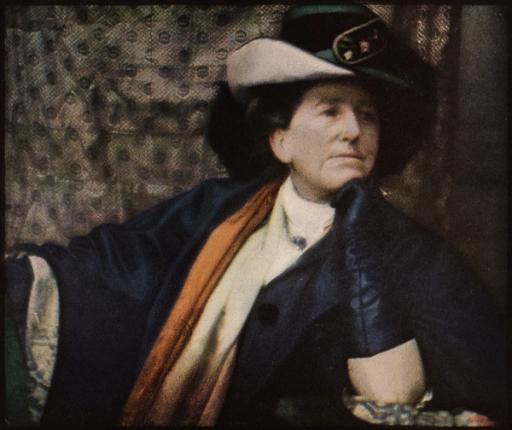
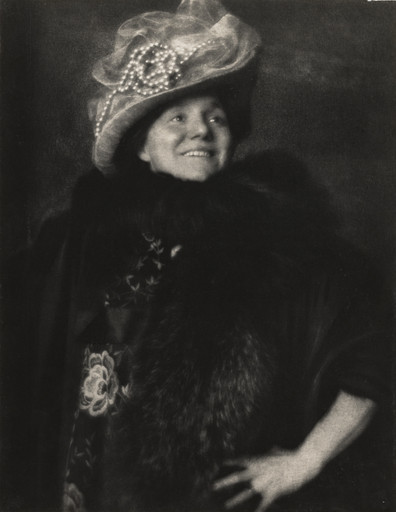
Gum bichromate over platinum print
Propelled by their conviction that photography was art, the Photo-Secessionists turned to the artist portrait as a way to elevate photographers and the ways they were perceived. This form of artistic collaboration was enacted among close friends like Gertrude Käsebier and Clarence H. White, who joined together to create a personal rendering of White and his family at home. It also documented partnerships of inspiration and admiration. Edward Steichen, for example, was heavily influenced by Käsebier’s photography, especially her portraiture. In Steichen’s image of Käsebier, he closely crops his lens on her, keeping surrounding spatial detail slight to encourage a more explicit focus on his subject.
504: A Little Gallery of the Photo-Secession, 2025
Explore more
Gertrude Käsebier
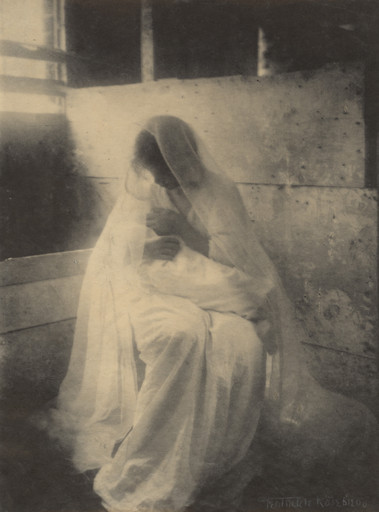
American, 1852–1934 88 works online,” the photographer Gertrude Käsebier asked. Trained at the progressive Pratt Institute in the late 19th century, she quickly established herself as a pictorial photographer—part of a movement devoted to the medium as an art form—and focused on portraits and themes such as motherhood.
Learn more →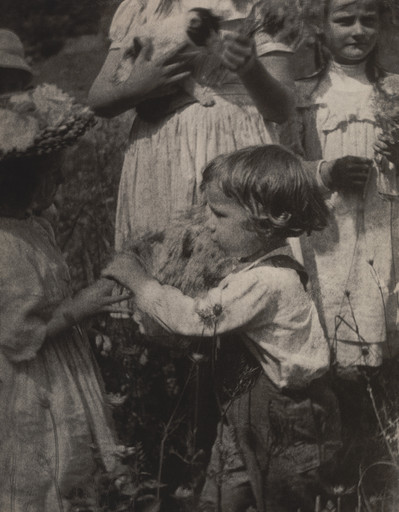
A Little Gallery of the Photo-Secession
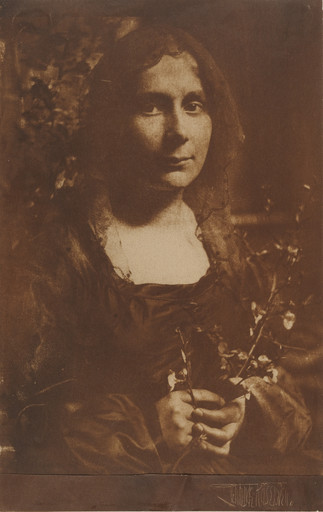
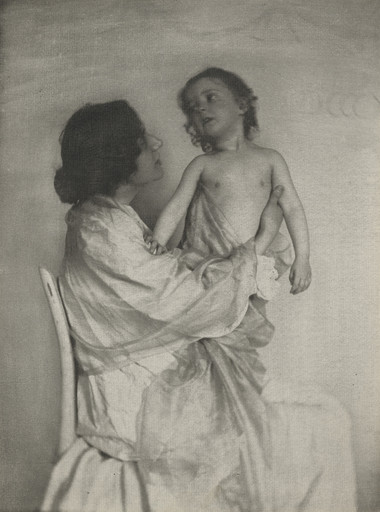
Gallery 504In 1902, a group of photographers banded together in protest against the conventional view of the medium as a mechanical tool.
Learn more →
From MoMA Design Store


Licensing
Artwork or archival images
If you would like to reproduce an image of a work of art in MoMA's collection, or an image of a MoMA publication or archival material (including installation views, checklists, and press releases), please contact Art Resource (publication in North America) or Scala Archives (publication in all other geographic locations).
Audio and film clips
MoMA licenses archival audio and select out of copyright film clips from our film collection. At this time, MoMA produced video cannot be licensed by MoMA/Scala. All requests to license archival audio or out of copyright film clips should be addressed to Scala Archives at [email protected]. Motion picture film stills cannot be licensed by MoMA/Scala. For access to motion picture film stills for research purposes, please contact the Film Study Center at [email protected]. For more information about film loans and our Circulating Film and Video Library, please visit Circulating Film and Video Library.
Text from a publication or the archives
If you would like to reproduce text from a MoMA publication, please email [email protected]. If you would like to publish text from MoMA's archival materials, please fill out this permission form and send to [email protected].
Feedback
This record is a work in progress. If you have additional information or spotted an error, please fill out this feedback form.