Silver dye bleach print (Cibachrome) and Plexiglas wall label with gilded lettering
Not on view
Since the early 1980s, Lawler has photographed in galleries, private collections, storage facilities, auction houses, and museums, persistently reminding her audience that a work of art is an object, that it is bought and sold and owned, and that who owns it and how it is displayed are part of its meaning.
A New York auction of art from the collection of Burton and Emily Tremaine in November 1988 included Andy Warhol’s 1962 painting Round Marilyn. Lawler photographed this iconic image (itself derived from a photograph of the screen goddess) at a preview of the sale, and in her finished work the painting, seventeen inches in diameter, appears at full scale, with the auction–house label (including the estimated sale price) clearly legible. Lawler's piece includes a label of its own that directly addresses the viewer, asking, "Does Andy Warhol make you cry?" It's difficult to imagine being moved to tears by a reproduction of a work of art, or even the work of art itself, while being forced to consider it as a commodity. Warhol's own hyper-awareness of that consideration no doubt helps to explain the prominence Lawler's art has granted to his.
The Museum of Modern Art, MoMA Highlights since 1980, New York: The Museum of Modern Art, p. 112.
Gallery label from 2022
In 1962, shortly after Marilyn Monroe died of a drug overdose, Warhol immortalized the screen icon in his painting Gold Marilyn Monroe. Lawler took this picture of Warhol’s painting when it was auctioned at Christie’s in 1988. In the photo, the painting appears at full scale, with the auction-house label that lists the estimated price clearly legible. Lawler’s work also includes a label of its own that asks, “Does Andy Warhol Make You Cry?” She reminds us that an artwork is an object that is bought and sold and owned, and that who owns it and how it is displayed are part of its meaning.
2022
Explore more
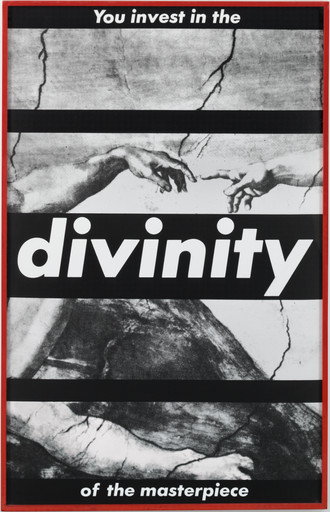
Louise Lawler
American, born 1947 78 works onlineLouise Lawler, whose work raises questions about the production, circulation, and presentation of art, emerged in the 1970s as part of the Pictures Generation—a loosely knit group of artists named for an influential exhibition, Pictures, organized in 1977 by art historian Douglas Crimp at Artists Space in New York.
Learn more →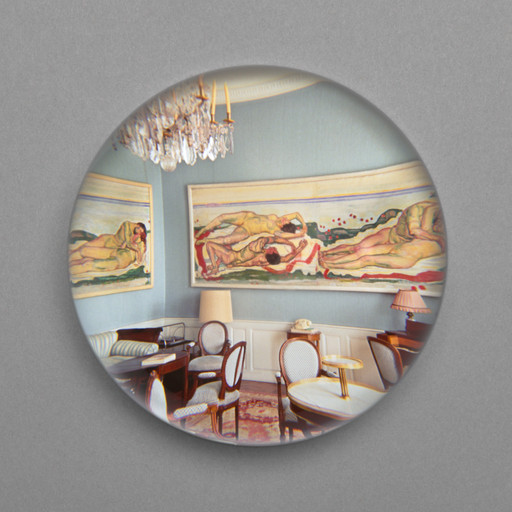

Pictures Generation
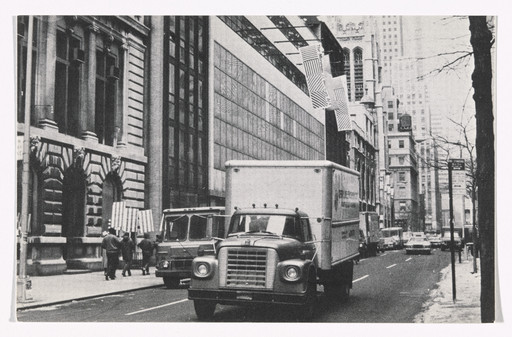
This was an unofficial group of artists who emerged in the late 1970s and early 1980s in New York City.
Learn more →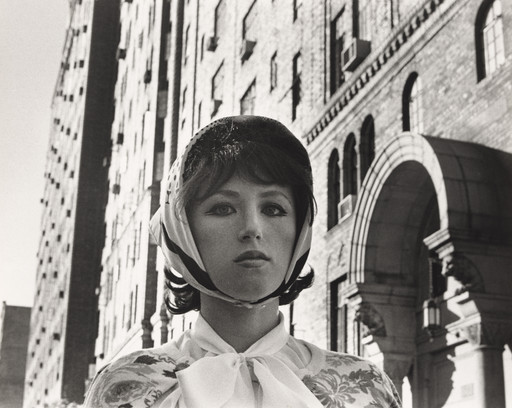

Articles and videos
From MoMA Design Store


Installation views
We have identified this work in the following photos from our exhibition history.
Licensing
Artwork or archival images
If you would like to reproduce an image of a work of art in MoMA's collection, or an image of a MoMA publication or archival material (including installation views, checklists, and press releases), please contact Art Resource (publication in North America) or Scala Archives (publication in all other geographic locations).
Audio and film clips
MoMA licenses archival audio and select out of copyright film clips from our film collection. At this time, MoMA produced video cannot be licensed by MoMA/Scala. All requests to license archival audio or out of copyright film clips should be addressed to Scala Archives at [email protected]. Motion picture film stills cannot be licensed by MoMA/Scala. For access to motion picture film stills for research purposes, please contact the Film Study Center at [email protected]. For more information about film loans and our Circulating Film and Video Library, please visit Circulating Film and Video Library.
Text from a publication or the archives
If you would like to reproduce text from a MoMA publication, please email [email protected]. If you would like to publish text from MoMA's archival materials, please fill out this permission form and send to [email protected].
Feedback
This record is a work in progress. If you have additional information or spotted an error, please fill out this feedback form.