Materialized deep image reconstruction, aggregate of synthetic and biological material, micro-organisms, generative adversarial network
Not on view
“I am interested in the transitory state,” Huyghe has said, “in the in-between.” Blurring boundaries between human imagination, artificial intelligence, data, and physical matter, Mind’s Eye (L) resulted from a sequence of translations. First, the artist prompted a human collaborator to visualize certain objects or ideas while recording their brain activity using functional magnetic resonance imaging (fMRI). Next, a generative adversarial network (GAN), a form of machine learning that draws from vast image databases, helped reconstruct this brain activity in three dimensions. Composed from synthetic and biological material, Mind’s Eye (L) slowly transforms and decays, which means the work is ever in flux.
2025
Research in progress; information about this work may be incomplete.
Explore more
Pierre Huyghe
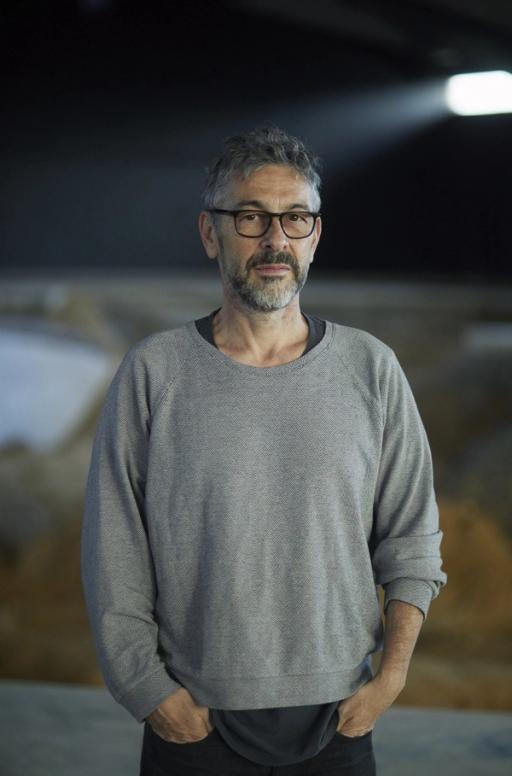
French, born 1962 12 works onlineOf what is unknown. I think that has somehow been a core of my work.” Pursuing interests in contingency and unpredictability, Huyghe creates art forms that incorporate living organisms, such as dogs, turtles, spiders, peacocks, ants, and bees.
Learn more →


From MoMA Design Store


Licensing
Artwork or archival images
If you would like to reproduce an image of a work of art in MoMA's collection, or an image of a MoMA publication or archival material (including installation views, checklists, and press releases), please contact Art Resource (publication in North America) or Scala Archives (publication in all other geographic locations).
Audio and film clips
MoMA licenses archival audio and select out of copyright film clips from our film collection. At this time, MoMA produced video cannot be licensed by MoMA/Scala. All requests to license archival audio or out of copyright film clips should be addressed to Scala Archives at [email protected]. Motion picture film stills cannot be licensed by MoMA/Scala. For access to motion picture film stills for research purposes, please contact the Film Study Center at [email protected]. For more information about film loans and our Circulating Film and Video Library, please visit Circulating Film and Video Library.
Text from a publication or the archives
If you would like to reproduce text from a MoMA publication, please email [email protected]. If you would like to publish text from MoMA's archival materials, please fill out this permission form and send to [email protected].
Feedback
This record is a work in progress. If you have additional information or spotted an error, please fill out this feedback form.