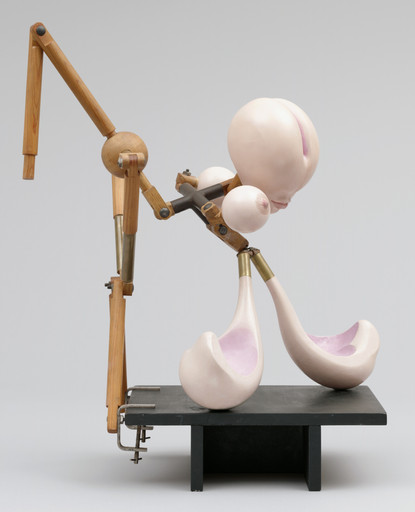
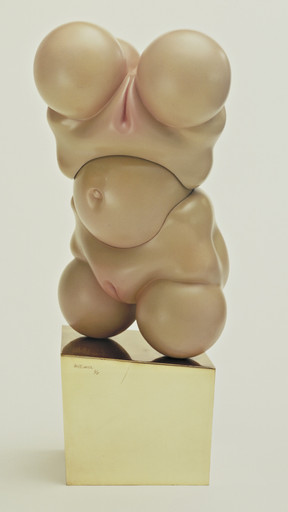
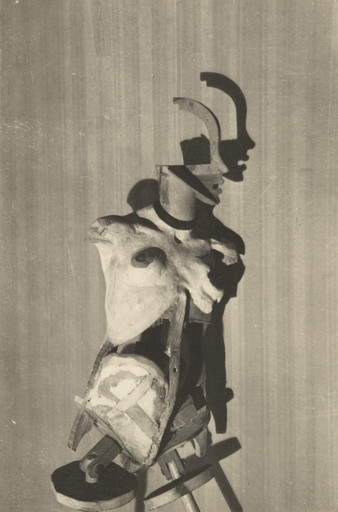
Bellmer constructed his first doll—"an artificial girl with multiple anatomical possibilities," he said—in 1933 in Berlin. He conceived it under the erotic spell of his young cousin Ursula, but he was also inspired by Jacques Offenbach's fantasy opera Les Contes d'Hoffmann (The Tales of Hoffmann, 1880), in which the hero, maddened by love for an uncannily lifelike automaton, ends up committing suicide.
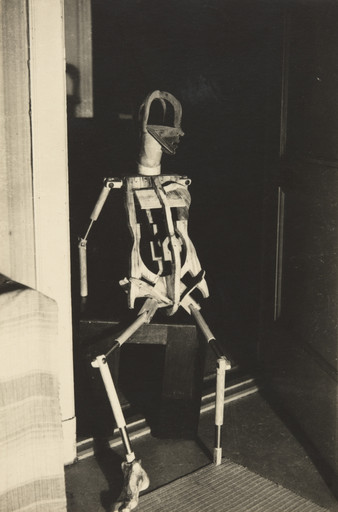
A year later, at his own expense, Bellmer published Die Puppe (The Doll) (reprinted in French, as La Poupée, in 1936), a book of ten photographs documenting the stages of the doll's construction. The pictures created a stir among the Surrealists, who recognized its subversive nature, and French poet Paul Éluard decided to publish eighteen photographs of the doll in the December 1934 issue of the Surrealist journal Minotaure. In 1935 Bellmer constructed a second, more flexible doll, which he photographed in various provocative scenarios involving acts of dismemberment. These transformations of the doll's body offered an alternative to the image of the ideal body and psyche popularized in German fascist propaganda of the 1930s.
The Shaping of New Visions: Photography, Film, Photobook, April 16, 2012–April 29, 2013.
Explore more
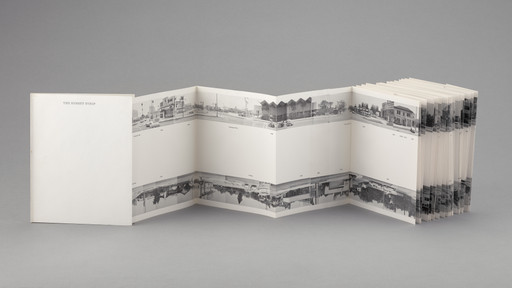
Photobook
An artist’s book in which the art is photo-based. Photographers have been collecting their pictures in books since photography was invented.
Learn more →
From MoMA Design Store


Licensing
Artwork or archival images
If you would like to reproduce an image of a work of art in MoMA's collection, or an image of a MoMA publication or archival material (including installation views, checklists, and press releases), please contact Art Resource (publication in North America) or Scala Archives (publication in all other geographic locations).
Audio and film clips
MoMA licenses archival audio and select out of copyright film clips from our film collection. At this time, MoMA produced video cannot be licensed by MoMA/Scala. All requests to license archival audio or out of copyright film clips should be addressed to Scala Archives at [email protected]. Motion picture film stills cannot be licensed by MoMA/Scala. For access to motion picture film stills for research purposes, please contact the Film Study Center at [email protected]. For more information about film loans and our Circulating Film and Video Library, please visit Circulating Film and Video Library.
Text from a publication or the archives
If you would like to reproduce text from a MoMA publication, please email [email protected]. If you would like to publish text from MoMA's archival materials, please fill out this permission form and send to [email protected].
Feedback
This record is a work in progress. If you have additional information or spotted an error, please fill out this feedback form.