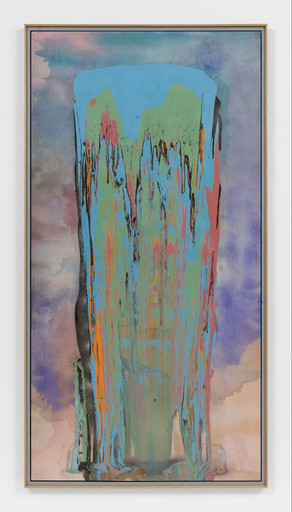
Bowling began making his Map Paintings in his SoHo loft, using an overhead projector and stencils to trace the shapes of continents, including South America, Africa, and Australia, onto monumental canvases. In Raining Down South, Bowling marked these contours as well as outlines of a picture of his mother’s house in Guyana. He then poured paint onto the canvas, allowing each color to slowly stain it. Pigment washed away the demarcated borders of the land, a symbolic acknowledgement of the fluidity of culture and heritage amongst people who share Bowling’s Afro-Caribbean roots.
2024
Explore more
Frank Bowling
British, born British Guiana (now Guyana) 1934 3 works onlineLeaving British Guiana (now Guyana), his country of birth, Frank Bowling arrived in London and joined the National Service in the Royal Air Force in 1953.
Learn more →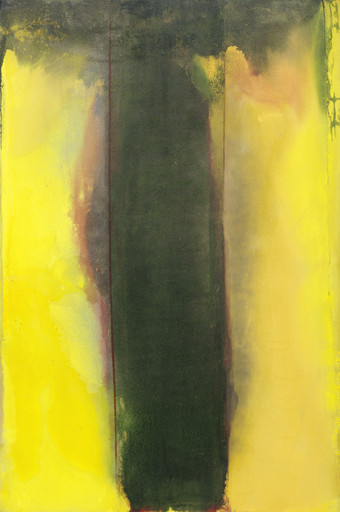
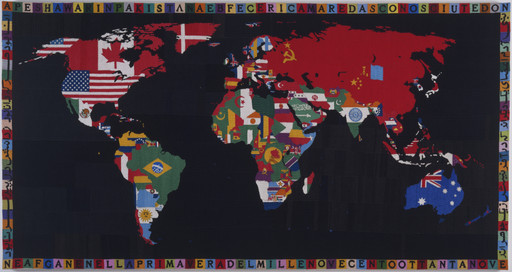
Maps, borders, and networks
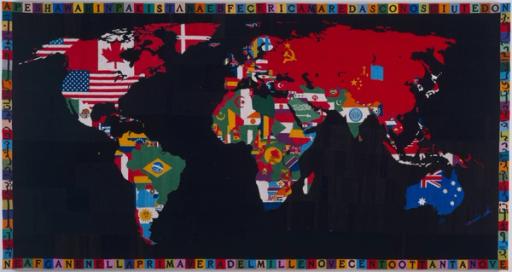
People have been creating maps since ancient times. The earliest map, thought to be a schematic representation of the night sky, was found in the caves of Lascaux, France. It dates to 14,500 BCE.
Learn more →
Stain
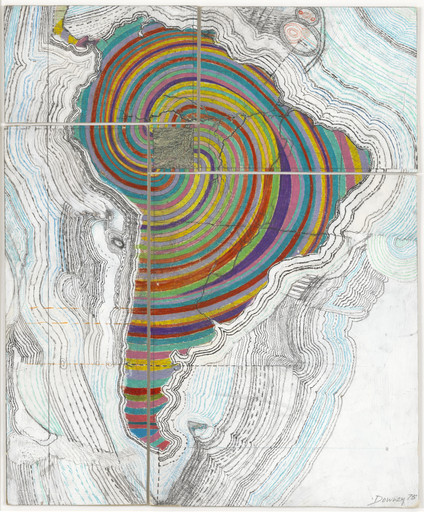
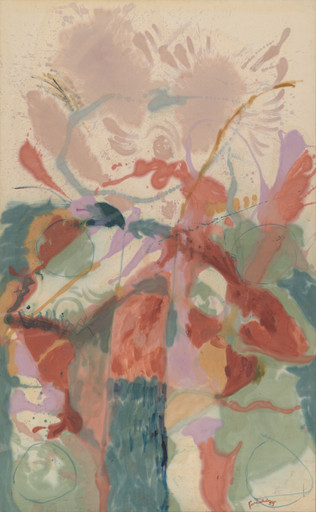
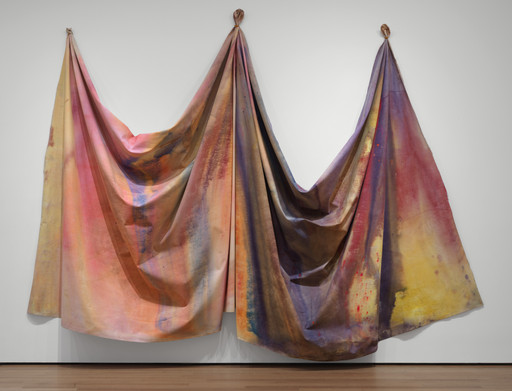
Paint thinned with solvent and applied to the canvas like a wash. Rather than remaining on the surface, a stain is absorbed into the canvas.
Learn more →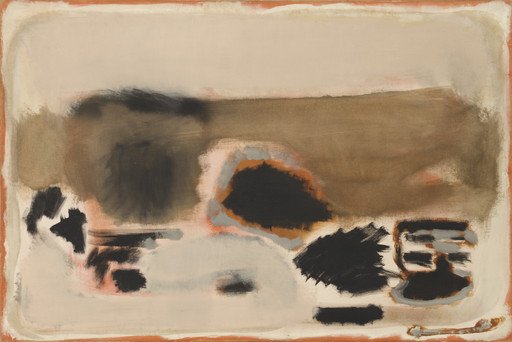

From MoMA Design Store


Licensing
Artwork or archival images
If you would like to reproduce an image of a work of art in MoMA's collection, or an image of a MoMA publication or archival material (including installation views, checklists, and press releases), please contact Art Resource (publication in North America) or Scala Archives (publication in all other geographic locations).
Audio and film clips
MoMA licenses archival audio and select out of copyright film clips from our film collection. At this time, MoMA produced video cannot be licensed by MoMA/Scala. All requests to license archival audio or out of copyright film clips should be addressed to Scala Archives at [email protected]. Motion picture film stills cannot be licensed by MoMA/Scala. For access to motion picture film stills for research purposes, please contact the Film Study Center at [email protected]. For more information about film loans and our Circulating Film and Video Library, please visit Circulating Film and Video Library.
Text from a publication or the archives
If you would like to reproduce text from a MoMA publication, please email [email protected]. If you would like to publish text from MoMA's archival materials, please fill out this permission form and send to [email protected].
Feedback
This record is a work in progress. If you have additional information or spotted an error, please fill out this feedback form.