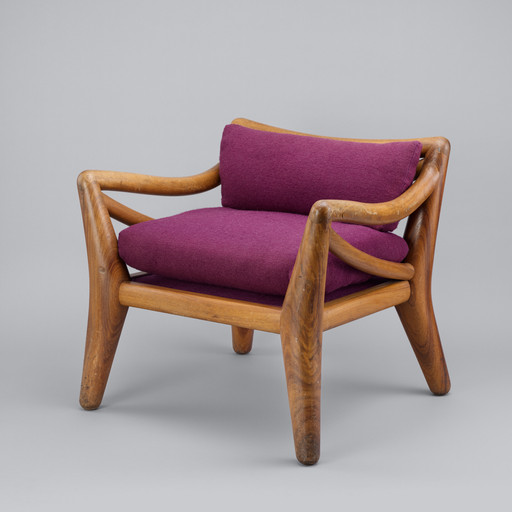
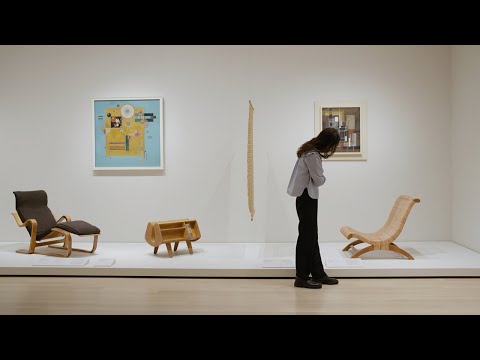
The term butaque refers to a low, curved chair with a wooden frame and seat traditionally made of animal skin; different versions can be found throughout Latin America. It first emerged in Venezuela in the sixteenth century and borrows elements from duhos, seats used by Taino chiefs (or caciques) in the ancient Caribbean, as well as from the X-form folding chairs that Spanish colonizers brought to the Americas. Porset saw the butaque as a reflection of Mexico’s complex cultural identity. For her iconic design, she experimented with dimensions, materials, and ergonomic adjustments to adapt the chair to modern comfort and interiors.
Crafting Modernity: Design in Latin America, 1940–1980, March 08, 2024 – September 22, 2024
Gallery label from Crafting Modernity: Design in Latin America, 1940–1980 (en español) , March 08, 2024 – September 22, 2024
El término butaque se refiere a una silla baja y curva, con estructura de madera y asiento tradicionalmente hecho de cuero de animal; se pueden encontrar diferentes versiones en toda América Latina. Surgió por primera vez en Venezuela en el siglo XVI y toma prestados elementos de las sillas precolombinas conocidas como duhos, así como de las sillas plegables en forma de X que los colonizadores españoles trajeron a América. Porset veía el butaque como un reflejo de la compleja identidad cultural de México. Para su diseño icónico, experimentó con dimensiones, materiales y ajustes ergonómicos para adaptar la silla al confort y los interiores modernos.
Crafting Modernity: Design in Latin America, 1940–1980 (en español), March 08, 2024 – September 22, 2024
Explore more
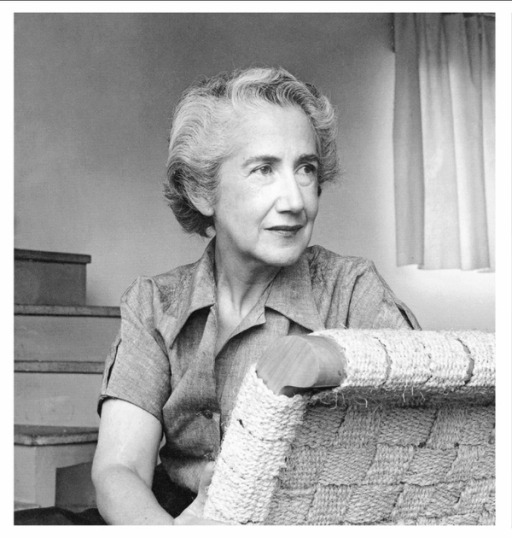
Clara Porset
Mexican, born Cuba. 1895–1981 4 works onlineA design trailblazer, Clara Porset challenged social norms of her era and transformed everyday items into objects of art. Born in Matanzas, Cuba, in 1895, Porset spent significant periods of her life in Mexico, where she is now hailed as a cornerstone figure in Mexican design .
Learn more →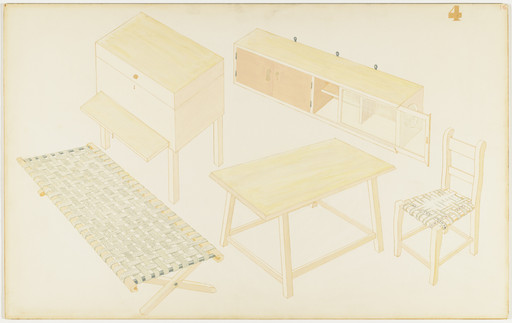





Audio
Audio from the playlist 1880–1950: Works from the Collection
Articles and videos
From MoMA Design Store


Installation views
We have identified this work in the following photos from our exhibition history.
Licensing
Artwork or archival images
If you would like to reproduce an image of a work of art in MoMA's collection, or an image of a MoMA publication or archival material (including installation views, checklists, and press releases), please contact Art Resource (publication in North America) or Scala Archives (publication in all other geographic locations).
Audio and film clips
MoMA licenses archival audio and select out of copyright film clips from our film collection. At this time, MoMA produced video cannot be licensed by MoMA/Scala. All requests to license archival audio or out of copyright film clips should be addressed to Scala Archives at [email protected]. Motion picture film stills cannot be licensed by MoMA/Scala. For access to motion picture film stills for research purposes, please contact the Film Study Center at [email protected]. For more information about film loans and our Circulating Film and Video Library, please visit Circulating Film and Video Library.
Text from a publication or the archives
If you would like to reproduce text from a MoMA publication, please email [email protected]. If you would like to publish text from MoMA's archival materials, please fill out this permission form and send to [email protected].
Feedback
This record is a work in progress. If you have additional information or spotted an error, please fill out this feedback form.