Cut-and-pasted colored paper on paper
Not on view
Looking at the overall shape of this work, what might first come to mind is an intrinsic relationship to pure geometry. However, like many of the artist's works from this period, this study was inspired by empirical observation: one day in 1951, while crossing the Seine River in Paris, Kelly noticed the black shadow of a bridge's arch and its reflection on the water. In 1955, after his return to New York, Kelly executed a wooden relief repeating this shape but making it larger. In this version, which is also in the Museum's collection, he painted the relief white, distancing the motif from its original source and creating an autonomous pictorial statement.
Focus: Ellsworth Kelly, 2007.
Publication excerpt from The Museum of Modern Art, MoMA Highlights , New York: The Museum of Modern Art, revised 2004, originally published 1999, p. 221.
Like most of Kelly's collages from the late 1940s to the early 1950s, Study for White Plaque: Bridge Arch and Reflection was inspired by a real-life experience: the view of the Pont de La Tournelle in Paris arching over the Seine. The darker strip of glossy black paper stretched horizontally across the center indicates the area in deepest shadow; it also separates the bridge's shaded tunnel, or negative space, from its murky reflection.
Executed in France, where Kelly lived from 1948 to 1954, works such as this study provided the genesis for the ensuing development of his art. With their uniquely stylized motifs, these works established the basis for the singular abstract vocabulary that defines his later work.
In 1954–55, after his return to New York, Kelly executed a larger wood relief identical to this image. He painted this work a luminous white, thus distancing the motif from its original source and creating an autonomous pictorial statement. The wood relief is considered a major breakthrough toward his mature emblematic style and was an early forerunner of what came to be known as the shaped canvas.
The Museum of Modern Art, MoMA Highlights, New York: The Museum of Modern Art, revised 2004, originally published 1999, p. 221.
Explore more
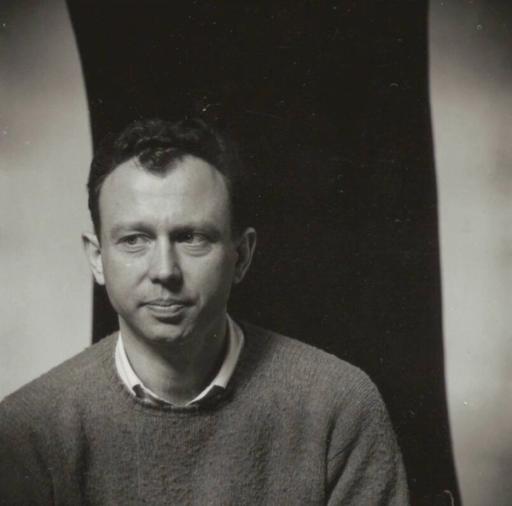
Ellsworth Kelly
American, 1923–2015 338 works onlineIn 1951, the 28-year-old artist Ellsworth Kelly submitted a grant to the Guggenheim Foundation, proposing “an alphabet of plastic pictorial elements, aiming to establish a new scale of painting, a closer contact between the artist and the wall, providing a way for painting to accompany modern architecture.
Learn more →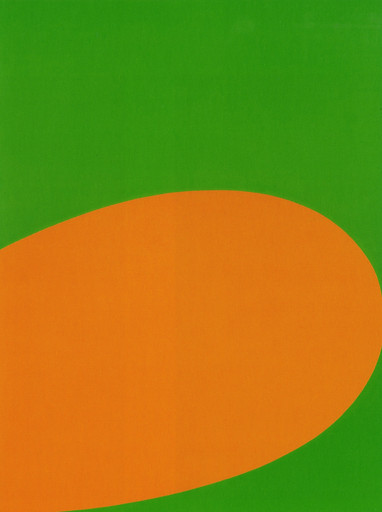


From MoMA Design Store


Installation views
We have identified this work in the following photos from our exhibition history.
Licensing
Artwork or archival images
If you would like to reproduce an image of a work of art in MoMA's collection, or an image of a MoMA publication or archival material (including installation views, checklists, and press releases), please contact Art Resource (publication in North America) or Scala Archives (publication in all other geographic locations).
Audio and film clips
MoMA licenses archival audio and select out of copyright film clips from our film collection. At this time, MoMA produced video cannot be licensed by MoMA/Scala. All requests to license archival audio or out of copyright film clips should be addressed to Scala Archives at [email protected]. Motion picture film stills cannot be licensed by MoMA/Scala. For access to motion picture film stills for research purposes, please contact the Film Study Center at [email protected]. For more information about film loans and our Circulating Film and Video Library, please visit Circulating Film and Video Library.
Text from a publication or the archives
If you would like to reproduce text from a MoMA publication, please email [email protected]. If you would like to publish text from MoMA's archival materials, please fill out this permission form and send to [email protected].
Feedback
This record is a work in progress. If you have additional information or spotted an error, please fill out this feedback form.