Cut-and-pasted printed paper and gouache on board
Emerging from pieces of cut and torn found imagery, Bearden’s mysterious figure exists in both the past, particularly the rural southern life that many African Americans left behind as they moved to northern cities during the Great Migration (1916–70), and the present, as a frequent subject of his work in the 1960s and ’70s. Bearden’s collage technique, for which he is best known, was especially suited to capture this figure: his masterful combination of disparate images, drawn from a variety of sources to create a new being, mimics the transitional role of one who operated between worldly and spiritual planes. His conjur woman, a figure familiar from his own childhood and to many African Americans in general, is magical, both admired and feared for her supernatural abilities and mastery of natural elements; here she floats amid the plants that provide raw material for her medicines and spells. A raised black hand hovers over her shoulder, both a sign from another realm and a perch for a bird.
The year before he made The Conjur Woman, Bearden gathered a group of African American artists in his New York studio to talk about their role and responsibilities in a changing America. His depiction of this figure from black culture, an acknowledgment of her influence explored in a modern visual language, is a powerful example of his response to those discussions.
MoMA Highlights: 375 Works from The Museum of Modern Art, New York (New York: The Museum of Modern Art, 2019)
Gallery label from 2022
In 1964, after three decades of living and working in Harlem, Bearden took up collage, cutting and combining found images and photographs to achieve new combinations defined by their fragmentation, texture, and layered depth. He used this approach to capture the complex facets of Black experience in the United States, often depicting scenes from everyday life in the rural South, which many African Americans left to move to northern cities during the Great Migration (1916–70), and scenes from Harlem. Throughout his career, Bearden reworked his own images in different mediums, including this collage, which is shown alongside a later photo reproduction.
2022
Explore more
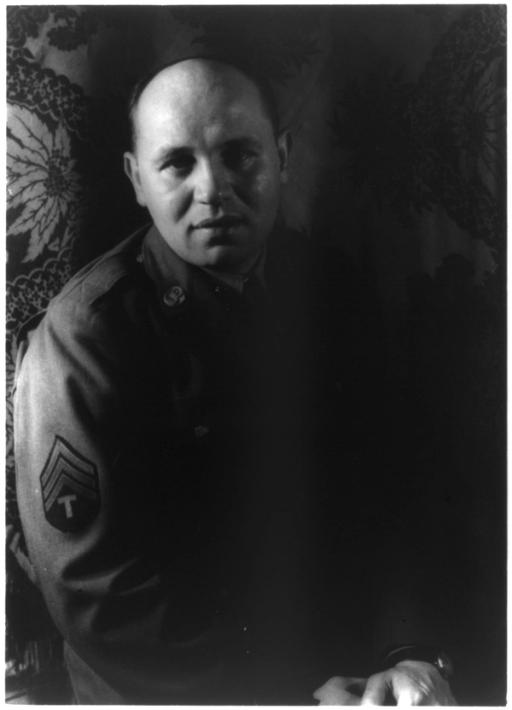
Romare Bearden
American, 1911–1988 25 works onlineRomare Bearden was 53 years old in 1964, the year he made his first series of collages. By that point in his life, he had already had several careers.
Learn more →


Spiral
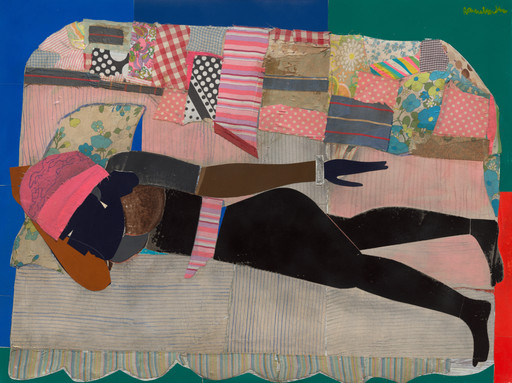
A group of Black artists who gathered in Romare Bearden ’s New York City studio in 1963, originally to discuss how they might support that year’s March on Washington for Jobs and Freedom, organized by Martin Luther King Jr.
Learn more →
Romare Bearden
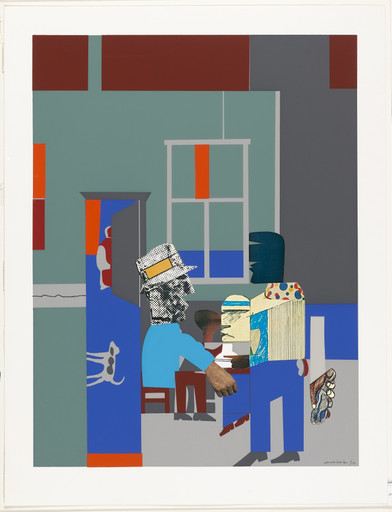
Gallery 416Bearden continually reinvented his work over his six-decade career. He first gained acclaim in the 1940s for his figurative drawings and abstract paintings.
Learn more →

From MoMA Design Store


Installation views
We have identified this work in the following photos from our exhibition history.
Licensing
Artwork or archival images
If you would like to reproduce an image of a work of art in MoMA's collection, or an image of a MoMA publication or archival material (including installation views, checklists, and press releases), please contact Art Resource (publication in North America) or Scala Archives (publication in all other geographic locations).
Audio and film clips
MoMA licenses archival audio and select out of copyright film clips from our film collection. At this time, MoMA produced video cannot be licensed by MoMA/Scala. All requests to license archival audio or out of copyright film clips should be addressed to Scala Archives at [email protected]. Motion picture film stills cannot be licensed by MoMA/Scala. For access to motion picture film stills for research purposes, please contact the Film Study Center at [email protected]. For more information about film loans and our Circulating Film and Video Library, please visit Circulating Film and Video Library.
Text from a publication or the archives
If you would like to reproduce text from a MoMA publication, please email [email protected]. If you would like to publish text from MoMA's archival materials, please fill out this permission form and send to [email protected].
Feedback
This record is a work in progress. If you have additional information or spotted an error, please fill out this feedback form.